
The Netherlands faces a period of extreme summer weather as the Royal Netherlands Meteorological Institute (KNMI) issued a code yellow weather warning for the entire country, citing a combination of high temperatures and the risk of severe thunderstorms. The national heat plan, designed to protect vulnerable groups from the effects of prolonged high temperatures, was activated across all provinces on Thursday, June 20, as the country braces for a potential heatwave.
According to the KNMI, the official government body responsible for weather forecasting, the “code yellow” alert signifies that residents should be prepared for dangerous weather conditions. While actual temperatures are forecast to reach tropical levels, the “perceived temperature”—the combination of heat and humidity—could climb as high as 39 degrees Celsius in some regions. This surge in heat coincides with the official start of the astronomical summer, marking an intense beginning to the season for the Dutch population.
Understanding the National Heat Plan
The national heat plan, or Nationaal Hitteplan, is a structured response protocol activated by the National Institute for Public Health and the Environment (RIVM) when persistent high temperatures are expected. The activation on Thursday serves as a directive for healthcare providers, nursing homes, and local authorities to intensify monitoring of the elderly, chronically ill, and other groups susceptible to heat-related illnesses.

The RIVM advises that the primary goal of the plan is to prevent dehydration and overheating. Guidelines for the public include staying hydrated, wearing light clothing, and remaining indoors during the peak hours of sunlight, typically between 12:00 and 18:00. The RIVM notes that the impact of heat is cumulative; as nights remain warm, the body has less opportunity to recover, increasing the risk of health complications for those without adequate cooling.
Meteorological Context: Heat and Storms
The current weather pattern is characterized by a rapid transition from stable, hot air to unstable atmospheric conditions. Meteorologists from the KNMI have warned that the high temperatures are likely to be interrupted by intense convective activity. These localized thunderstorms carry the risk of heavy rainfall, lightning, and large hail, which can cause significant damage to property and lead to sudden, hazardous road conditions.

The distinction between the heat warning and the storm alert is critical for public safety. While the heat presents a long-term health risk, the thunderstorms pose an immediate threat. The KNMI’s warning system is designed to trigger specific advice for each, emphasizing that residents should secure outdoor furniture and avoid being caught in open areas when storm cells develop. Official updates are provided continuously via the KNMI weather warnings portal, which serves as the primary source for localized alerts.
Potential for a Sustained Heatwave
Whether this weather event officially qualifies as a heatwave depends on sustained readings at the main weather station in De Bilt. By standard Dutch meteorological definition, a heatwave is recorded if the temperature in De Bilt reaches at least 25.0 degrees Celsius for five consecutive days, provided that at least three of those days reach a maximum of 30.0 degrees Celsius or higher.
While temperatures are expected to remain elevated, the exact duration of the heat remains subject to change as the low-pressure systems move across the North Sea. Regional broadcasters, including those in Flevoland and Gelderland, have reported that local municipalities are preparing for increased demand on public services. Infrastructure managers have also been alerted to the potential for rail line expansion and road surface degradation, which are common side effects of prolonged asphalt exposure to extreme heat.
Recommendations for Public Safety
To mitigate the risks associated with these temperatures, authorities emphasize several precautionary measures:
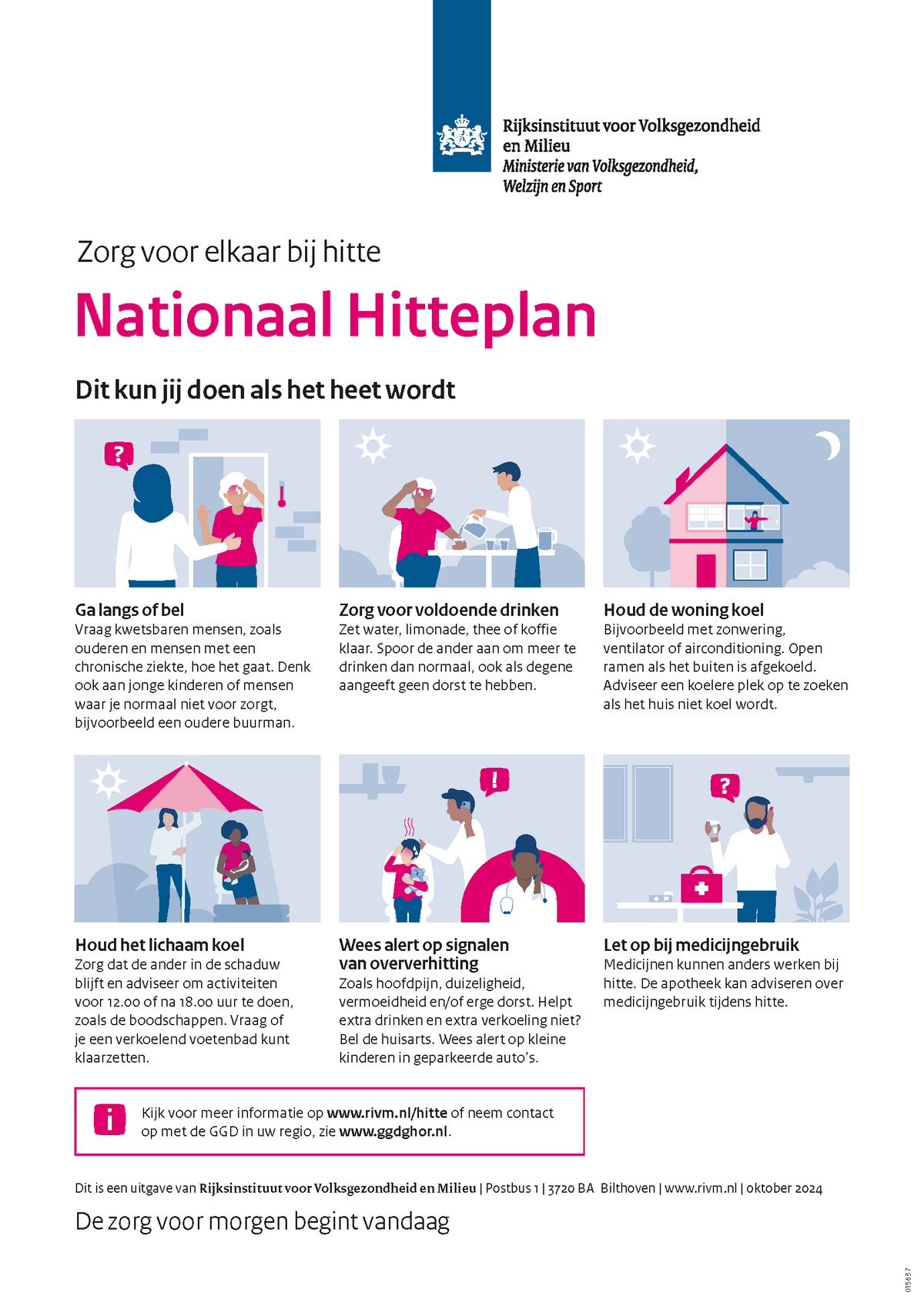
- Hydration: Drink more water than usual, even if not feeling thirsty.
- Cooling: Utilize fans or air conditioning and keep curtains closed during the day to minimize solar heat gain.
- Vulnerable Neighbors: Check on elderly neighbors or those living alone who may struggle to manage the heat.
- Outdoor Activity: Avoid strenuous physical activity during the mid-afternoon.
The current code yellow warning remains in effect until the KNMI releases updated guidance. Residents are encouraged to monitor local news outlets and the official KNMI website for the latest developments regarding the lifting of the heat plan and the status of the storm warnings. Please share your experiences with the heat wave in your region in the comments section below.
Keep reading