As the global appetite for artificial intelligence continues to surge, a critical tension has emerged between the ambition of AI capabilities and the physical limits of the hardware powering them. Modern data centers, the engines of the AI revolution, are consuming electricity at an unprecedented rate. Projections indicate that energy use from AI data centers could double by the end of the decade, creating an urgent sustainability crisis that traditional silicon chips may be unable to solve.
To break through this “energy wall,” researchers are looking away from traditional engineering and toward the most efficient computer known to exist: the human brain. By mimicking the biological architecture of neurons and synapses, a field known as neuromorphic computing aims to redesign hardware from the ground up, moving beyond the rigid structures of conventional computing to create machines that learn and process information with biological efficiency.
Leading this effort is Suchi Guha, a professor of physics at the University of Missouri and a core faculty member with the Materials Science and Engineering Institute. Guha and her team are developing electronic components that function like the synaptic connections in the brain, laying the groundwork for hardware that can store and process information simultaneously—a feat that today’s most powerful GPUs and CPUs struggle to achieve.
The Von Neumann Bottleneck: Why Modern AI is Energy-Hungry
To understand why brain-inspired hardware is necessary, one must first understand the limitation of current computer architecture, often referred to as the Von Neumann bottleneck. For decades, computers have relied on a fundamental separation between the central processing unit (CPU), where “thinking” happens, and the memory (RAM), where data is stored.
Every time a computer performs a task, data must shuttle back and forth between these two distinct areas. In the context of massive AI models, this constant movement of data creates a significant drag on performance and, more importantly, generates immense heat and consumes vast amounts of energy. As AI models grow in complexity, the energy cost of simply moving data becomes a primary barrier to scaling.
The human brain solves this problem through a radically different design. In biology, memory and processing are not separate. they happen in the same place. The connections between neurons, called synapses, both store information (in the form of connection strength) and process signals. This integrated approach allows the brain to perform incredibly complex tasks—from pattern recognition to abstract reasoning—while consuming approximately 20 watts of power, roughly the equivalent of a dim light bulb.
Organic Synapses: Engineering the Interface of Intelligence
The goal of neuromorphic computing is to replicate this biological efficiency in silicon or other conductive materials. Guha’s research focuses on creating “synaptic transistors”—electronic components that can both store and process information in a single location, effectively eliminating the need for data to travel between a processor and a memory bank.
In a study published in ACS Applied Electronic Materials, Guha’s team explored the use of organic materials to build these transistors. Unlike traditional inorganic semiconductors, organic materials can offer flexibility and different electronic properties that may more closely mimic biological systems. However, the researchers discovered that the material itself was not the only factor in determining performance.
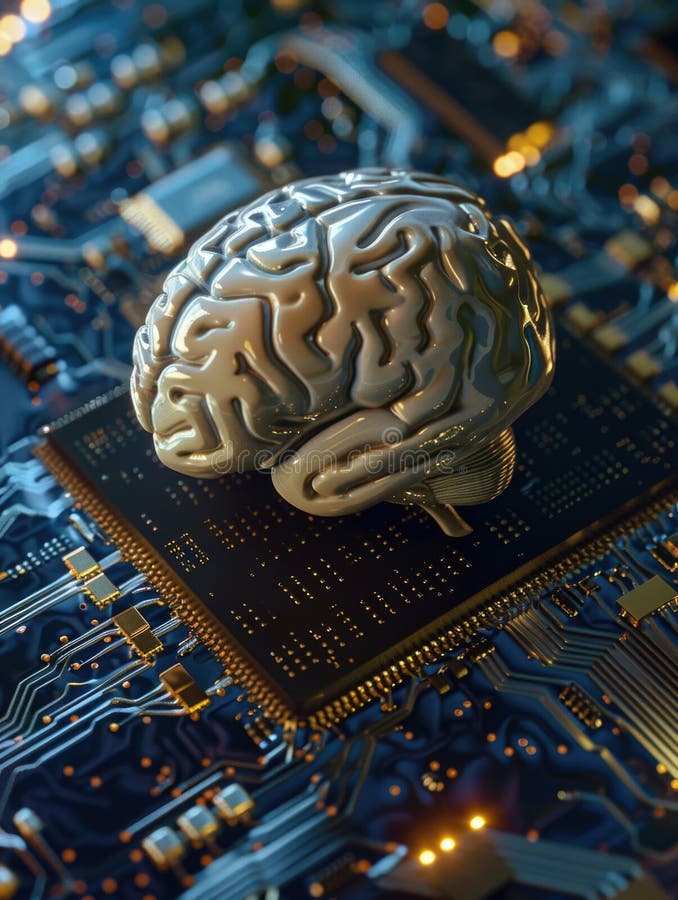
The team tested several organic materials that appeared nearly identical on the surface, yet their performance as synaptic transistors varied dramatically. The key, they found, was the “interface”—the thin boundary where the semiconductor meets the insulating layer inside the device. Even minute structural differences at this boundary could significantly alter how the transistor behaved, influencing its ability to learn and adapt.
“This shows us that performance isn’t just about what a material is made of,” Guha explained. “It’s also about how it interacts with everything around it. Even little structural differences can have a substantial impact.” By identifying how molecular design and interface quality influence synaptic behavior, the research provides a roadmap for building hardware that can adapt its “weight” or strength in response to input, much like a biological synapse does during learning.
What This Means for the Future of AI
While neuromorphic hardware is still in the early stages of development, the implications for the future of technology are profound. If researchers can successfully scale organic synaptic transistors, the result would be a new generation of “brain-like” AI. These systems would not only be faster but would operate at a fraction of the energy cost of current hardware.
The most immediate benefits would likely be seen in “edge computing”—devices that need to process information locally without relying on a massive, energy-hungry cloud server. Examples include:
- Advanced Prosthetics: Limbs that can process sensory data and adapt to a user’s movements in real-time using minimal battery power.
- Autonomous Robotics: Drones or robots capable of complex pattern recognition and decision-making in unpredictable environments without needing a constant link to a data center.
- Medical Diagnostics: Wearable devices that can detect cardiac anomalies or neurological shifts using on-chip learning, alerting patients instantly without compromising privacy or battery life.
Beyond practical gadgets, this shift addresses a global environmental imperative. As the International Energy Agency (IEA) has highlighted in recent reports, the electricity demand of data centers is rising sharply. Transitioning to neuromorphic architectures could decouple the growth of artificial intelligence from the growth of carbon emissions, making “intelligent” machines sustainable.
The Gold Standard of Biology
Despite the rapid pace of AI software development, the hardware remains a legacy of a different era. Guha argues that to achieve true machine intelligence, we cannot simply build faster versions of old tools; we must change the tools themselves.

The human brain remains the gold standard for efficient computation. It possesses an innate ability to learn from very few examples and adapt to new information on the fly, all while operating on a power budget that would be unthinkable for a modern supercomputer. By narrowing the gap between biology and machines, neuromorphic engineering seeks to move AI from a state of “brute force” calculation to a state of elegant, biological efficiency.
As the research progresses from the laboratory to prototype chips, the focus will remain on the molecular level. The ability to precisely engineer the interface between materials will determine whether we can truly replicate the synaptic plasticity that allows the human mind to learn.
The next major milestone for the field will be the integration of these organic synaptic transistors into larger-scale arrays to test their ability to handle complex, multi-layered tasks. Further updates on the scalability of these materials are expected as the University of Missouri and its collaborators continue their work.
Do you believe brain-inspired hardware is the only way to sustain the AI boom, or can traditional silicon be optimized enough to meet the challenge? Share your thoughts in the comments below.
Keep reading