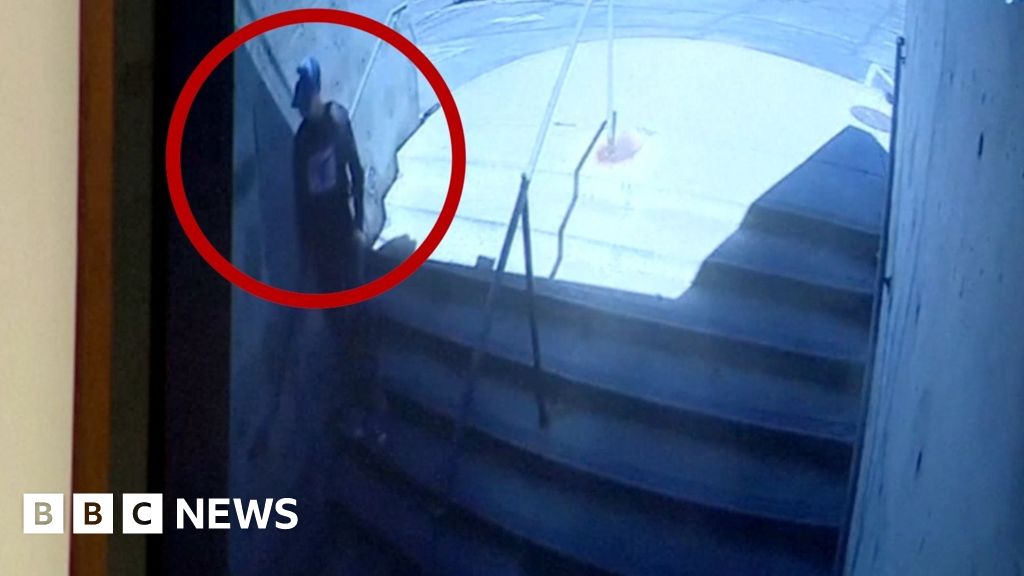
New surveillance footage presented during a preliminary hearing appears to show Tyler Robinson, the man accused of shooting at Charlie Kirk, moving through a parking garage and across a rooftop prior to the incident. The video, introduced as evidence during the second day of court proceedings, provides a visual timeline of Robinson’s movements leading up to the attack.
The footage is part of a broader effort by prosecutors to establish the defendant’s intent and premeditation. According to court records, the video captures Robinson navigating a parking structure and subsequently running across a roof, which investigators believe was used to gain a tactical vantage point or access to the target area. These developments come as the legal process moves toward determining whether there is sufficient evidence to proceed to a full trial.
The incident involving Charlie Kirk, a prominent conservative activist and founder of Turning Point USA, has drawn significant national attention due to the political profile of the target and the nature of the alleged assault. The preliminary hearing serves as a critical juncture where the judge evaluates the strength of the prosecution’s case and the validity of the evidence presented, including the newly surfaced video recordings.
Evidence Analysis from the Preliminary Hearing
During the second day of the preliminary hearing, the prosecution played video clips that they claim identify Tyler Robinson. The footage shows a man matching Robinson’s description walking through a parking garage. The sequence then shifts to show the individual running across a rooftop, a detail that prosecutors argue demonstrates a planned approach to the scene of the shooting.

Legal analysts note that the use of surveillance video is intended to bridge the gap between the suspect’s arrival at the location and the moment the shots were fired. By documenting the path taken—specifically the use of a parking garage and a roof—the state aims to prove that the act was not spontaneous but was instead a coordinated effort. This distinction is vital for the potential application of higher-level charges, such as attempted first-degree murder or hate-crime enhancements, depending on the jurisdiction’s laws.
Defense attorneys typically challenge such footage by questioning the clarity of the images, the accuracy of the timestamps, and whether the person in the video can be definitively identified as the defendant. In this case, the prosecution is relying on a combination of clothing matches and the proximity of the footage to the time of the crime to link Robinson to the movements captured on camera.
The Timeline of the Attack on Charlie Kirk
The attack occurred during an event where Charlie Kirk was speaking, leading to a swift response from security and law enforcement. While the specific logistics of the shooting have been the subject of intense investigation, the introduction of the rooftop footage suggests a level of reconnaissance by the assailant. According to law enforcement reports, the goal of the investigation is to determine if Robinson acted alone or if others provided assistance in scouting the location.

The sequence of events established by the prosecution suggests that Robinson entered the vicinity via the parking garage to avoid detection before ascending to the roof. This movement allowed him to bypass ground-level security checkpoints and position himself closer to the venue. The timing of these movements is being cross-referenced with cell phone tower pings and other digital footprints to create a comprehensive map of the suspect’s actions.
For the global audience following this case, the event highlights the increasing volatility surrounding political discourse in the United States. The targeting of a high-profile political figure like Kirk often triggers wider discussions regarding the security of public forums and the rise of politically motivated violence.
Legal Implications and Next Steps for Tyler Robinson
A preliminary hearing is not a trial to determine guilt or innocence, but a proceeding to decide if there is “probable cause” to believe a crime was committed and that the defendant is the one who committed it. The introduction of the parking garage and rooftop video serves as a primary piece of circumstantial evidence to satisfy this legal threshold.
If the judge finds the evidence sufficient, Robinson will be formally bound over for trial. At that stage, the discovery process will allow the defense to examine the full, unedited versions of the surveillance tapes, as well as any forensic evidence linking the weapon to the suspect. The defense may argue that the footage is inconclusive or that the movements described by the prosecution do not inherently prove criminal intent.

The charges facing Robinson carry significant prison time. Depending on the final indictment, the case could move toward a plea bargain or a high-stakes trial that will likely focus heavily on the defendant’s state of mind and the evidence of premeditation provided by the surveillance footage.
The next scheduled action in the case is the judge’s ruling on whether the evidence presented during the preliminary hearing warrants a trial. This decision will determine if the case proceeds to the superior court for formal adjudication.
We invite readers to share their thoughts on this developing story in the comments section and share this report with others following the legal proceedings.