
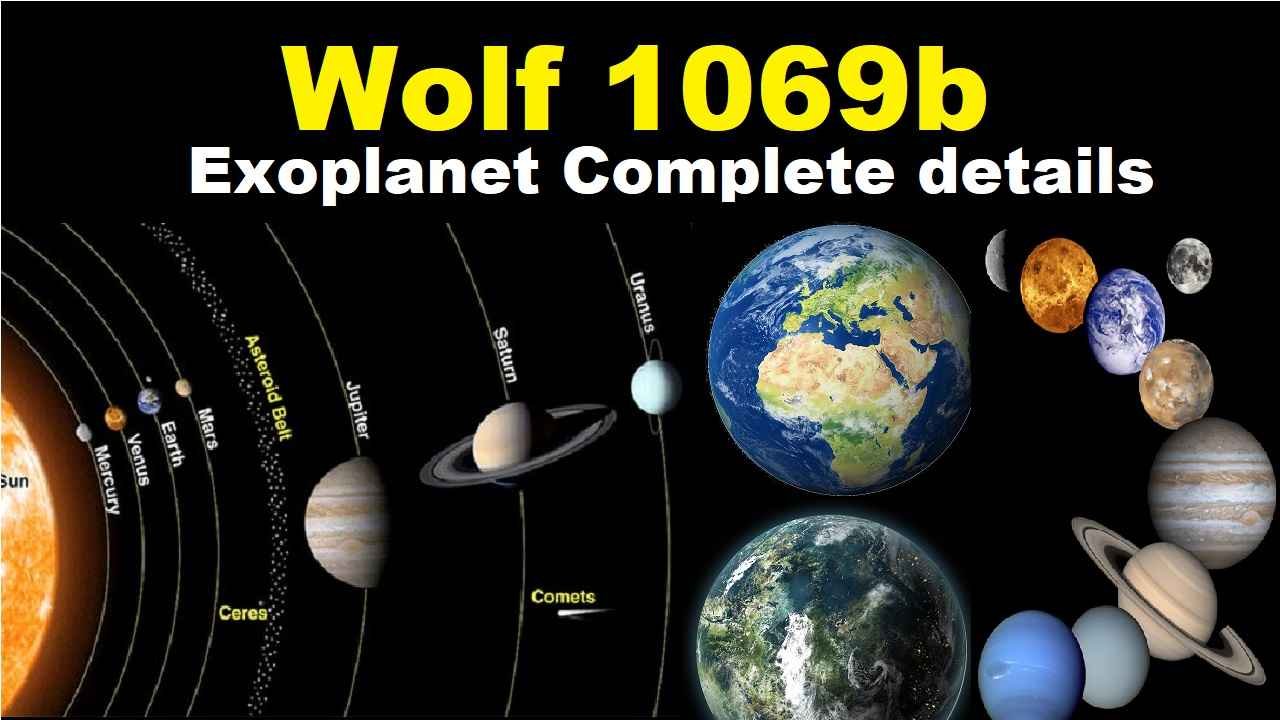
Astronomers have identified a potentially habitable exoplanet, Wolf 1069b, located approximately 31 light-years from Earth, which has captured scientific interest due to its Earth-like mass and temperate surface conditions. While popular media reports have compared its climate to a “tropical beach,” researchers emphasize that the planet’s actual environment remains subject to ongoing atmospheric analysis and orbital study. According to data published by the Max Planck Institute for Astronomy, the planet orbits a red dwarf star and sits within the “habitable zone,” where liquid water could theoretically exist on the surface.
Understanding the Habitable Zone of Wolf 1069b
The classification of Wolf 1069b as potentially habitable stems from its position relative to its host star, Wolf 1069. In astrophysics, the “habitable zone”—often called the Goldilocks zone—refers to the specific orbital distance where a planet receives enough stellar radiation to support liquid water without it boiling away or freezing solid. As detailed in the Astronomy & Astrophysics journal, the planet is roughly 1.26 times the mass of Earth and completes an orbit every 15.6 days.

Unlike Earth, Wolf 1069b is likely tidally locked. This means one side of the planet permanently faces its star while the other remains in perpetual darkness. This phenomenon creates a stark contrast between a day-side, which could potentially experience temperate, beach-like conditions, and a night-side characterized by extreme cold. The researchers note that the presence of an atmosphere is a critical, yet currently unconfirmed, variable that would determine whether heat can effectively circulate to make the entire surface hospitable.
Scientific Criteria for Habitability
When scientists evaluate an exoplanet for potential life, they look for specific indicators beyond just temperature. The NASA Exoplanet Archive maintains that while size and distance are primary factors, the presence of an atmosphere and a protective magnetic field are essential for shielding a planet from stellar radiation. Because Wolf 1069 orbits a red dwarf—a star much cooler and smaller than our Sun—the radiation environment is significantly different from what we experience in our solar system.

The research team, led by Diana Kossakowski at the Max Planck Institute for Astronomy, utilized the CARMENES spectrograph at the Calar Alto Observatory in Spain to detect the planet. By measuring the “wobble” of the star caused by the gravitational pull of the orbiting planet, they were able to confirm the mass of Wolf 1069b. This radial velocity method is a standard tool in modern exoplanetary science, allowing researchers to characterize distant worlds without direct imaging.
Why Proximity Matters in Space Exploration
At 31 light-years away, Wolf 1069b is considered relatively close in the vast scale of the Milky Way galaxy. This distance makes it a prime candidate for future observation by high-powered instruments like the James Webb Space Telescope (JWST). According to the Max Planck Institute’s official project summary, studying this planet provides a unique opportunity to understand how planets form around low-mass stars and whether these systems can host life-sustaining environments.
Current technology does not allow for interstellar travel to these distances, nor does it allow for high-resolution photography of the planet’s surface. The “tropical” descriptions often found in mainstream reports are theoretical models based on the planet’s estimated equilibrium temperature of roughly -23 degrees Celsius (without considering atmospheric greenhouse effects). If a thick atmosphere exists, those temperatures could rise significantly, potentially creating the mild climate necessary for liquid water.
Next Steps for Planetary Research
The scientific community continues to prioritize the characterization of exoplanetary atmospheres. Researchers are currently waiting for the next cycle of observation windows from the James Webb Space Telescope, which may provide the spectroscopic data needed to detect chemical signatures like oxygen, methane, or carbon dioxide in the atmospheres of nearby worlds. These biomarkers are the next essential step in determining if Wolf 1069b is truly a habitable “second Earth.”
As the field of exoplanetary science evolves, the data gathered from the CARMENES survey remains a cornerstone for cataloging potentially Earth-like worlds. Future updates regarding the atmospheric composition of Wolf 1069b will be posted through official Astronomy & Astrophysics announcements. We encourage readers to share their thoughts on the search for life beyond our solar system in the comments section below.