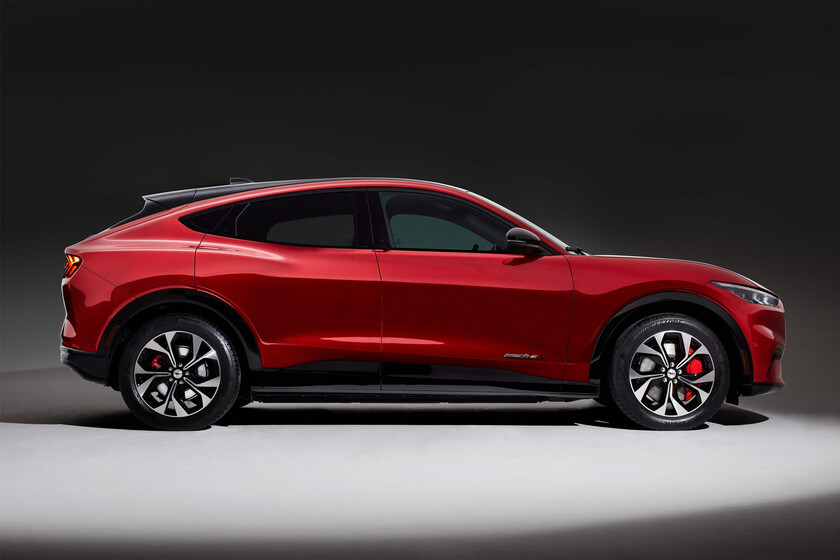
Mexico’s automotive manufacturing sector is shifting toward electric vehicle production, with new domestic projects aiming to challenge established market leaders like the Tesla Model Y. As global demand for zero-emission transportation rises, local manufacturers are leveraging Mexico’s established supply chain and proximity to North American markets to scale production of electric SUVs. These efforts are part of a broader industrial transition as the country seeks to maintain its status as a top-tier global automotive hub while navigating the complexities of the energy transition.
The rise of a homegrown electric SUV capable of competing with the Tesla Model Y represents a significant strategic pivot for Mexico’s industrial base. According to the International Energy Agency (IEA), the global electric vehicle market continues to grow, with battery-electric vehicle sales hitting nearly 10 million units in 2023. By integrating advanced battery management systems and high-torque electric powertrains, Mexican-engineered vehicles are targeting a segment of the market that prioritizes range, performance, and charging infrastructure compatibility—key metrics that have historically defined the success of the Model Y.
The Evolution of Mexico’s Automotive Manufacturing
Mexico’s transition to electric vehicle manufacturing is supported by a robust existing framework of automotive assembly and component production. For decades, the country has served as a primary production site for major global brands, providing a deep pool of skilled labor and engineering expertise. According to the Secretaría de Economía (Ministry of Economy), the automotive industry contributes significantly to Mexico’s GDP, and the integration of electric vehicle assembly is now a national economic priority to ensure competitiveness in the North American trade bloc.
To compete with high-performance models, manufacturers are focusing on modular platforms that allow for rapid scaling. The challenge lies in balancing manufacturing costs with the high price of lithium-ion battery packs. Industry analysts note that by localizing the production of critical components—such as power electronics and thermal management systems—Mexican firms are attempting to reduce logistics costs, which can account for a substantial portion of a vehicle’s final retail price.
Technological Benchmarks and Market Competition
The Tesla Model Y currently sets the industry standard for range and efficiency in the mid-size electric SUV category. Competing models must match or exceed these metrics to gain market share. This includes achieving acceleration times that satisfy consumer expectations for electric performance and ensuring that charging systems are compatible with existing public infrastructure, such as the Tesla Supercharger network or independent universal charging standards.
Engineers are increasingly utilizing lightweight materials, such as high-strength steel and aluminum alloys, to offset the weight of large-capacity battery packs. This structural approach is essential for maintaining vehicle agility and extending range. Furthermore, the development of software-defined vehicle architectures allows manufacturers to push over-the-air updates, a critical feature for modern drivers that ensures the vehicle remains current with the latest safety and performance optimizations.
Economic Impacts and Future Outlook
The long-term success of Mexico-made electric SUVs depends on the continued expansion of the country’s energy grid and the availability of charging stations. Government initiatives, alongside private investments, are aimed at modernizing the electrical infrastructure to support higher demand. According to the World Bank, sustainable development in the manufacturing sector remains a core component of Mexico’s long-term economic strategy, particularly as trade policies increasingly favor low-carbon industrial outputs.

As these vehicles move from prototype phases to mass production, market analysts will be watching for data on production volume and consumer adoption rates. The ability to integrate into the North American supply chain under the terms of the United States-Mexico-Canada Agreement (USMCA) will also play a decisive role in the cost-effectiveness and scalability of these electric SUVs. Manufacturers that successfully navigate these regulatory and supply chain requirements are well-positioned to capture a meaningful portion of the growing electric vehicle segment.
The next major milestone for the domestic electric vehicle industry will be the release of official production figures and safety certification reports for new models currently in the testing phase. Interested readers can monitor updates through the Asociación Mexicana de Distribuidores de Automotores (AMDA), which provides ongoing analysis of the Mexican automotive market. Please share your thoughts on the future of electric vehicle manufacturing in Mexico in the comments section below.
Keep reading