
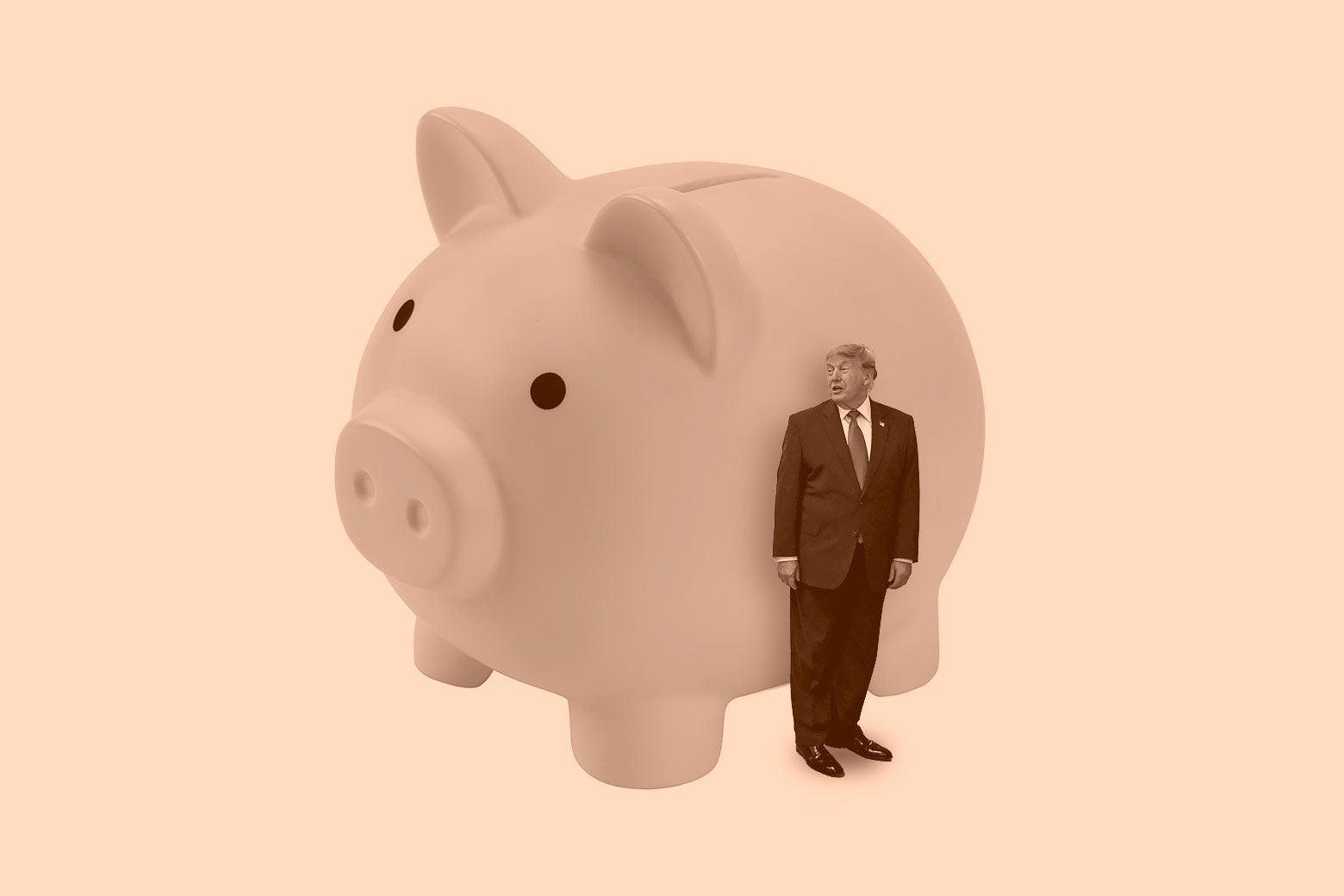
Donald Trump’s business entities received at least $7.8 million from 20 foreign governments during his presidency, according to a January 2024 report by the House Oversight Committee. These payments primarily flowed through the Trump International Hotel in Washington, D.C., and other Trump Organization properties, raising questions about the intersection of private profit and public office.
Financial disclosures filed with the Office of Government Ethics (OGE) during his term showed that Trump maintained ownership of his businesses, though he transferred management to his sons, Donald Trump Jr. and Eric Trump. This arrangement allowed the Trump Organization to continue generating revenue from licensing deals, hotel operations, and real estate rentals while he served as president.
The financial trajectory of the former president during his four years in office was marked by a mix of declining revenues in some sectors and significant windfalls in others. While some Trump-branded properties saw a dip in value or revenue due to political polarization, the Washington, D.C. hotel became a focal point for both domestic lobbyists and foreign diplomats.
How much did Donald Trump earn during his presidency?
Donald Trump reported millions of dollars in annual income through his financial disclosures, though the exact totals varied by year due to the wide reporting ranges permitted by the OGE. According to his 2019 financial disclosure, he reported earning more than $1.5 million from a single licensing deal in the Philippines and millions more from his various hotel and golf course holdings.

The House Oversight Committee’s report, titled “White House for Sale,” detailed that the House Oversight Committee discovered payments from governments including China, Saudi Arabia, and Qatar. China spent the most, with the report stating Chinese government-linked entities spent approximately $2.1 million at Trump properties during his term.
Beyond direct government spending, Trump’s income was bolstered by his existing portfolio of assets. His net worth remained a subject of debate among analysts; Forbes tracked his wealth throughout his term, noting that while his brand value fluctuated, his core real estate holdings continued to generate cash flow, though some properties faced headwinds during the 2020 pandemic.
Which foreign governments spent money at Trump properties?
The House Oversight Committee identified 20 foreign governments that spent money at Trump-owned businesses. The most significant contributors included China and Saudi Arabia. The report found that Saudi Arabia spent significant sums at Trump properties, partly through the state-owned Public Investment Fund, which later invested billions into the LIV Golf league, a venture involving Trump’s sons.

Other nations identified in the spending records included Qatar, Kuwait, and Malaysia. These payments typically took the form of room rentals, event space bookings, and dining expenses at the Trump International Hotel in Washington, D.C. The report emphasized that these payments were made while the U.S. government was conducting diplomatic and economic negotiations with these same nations.
Critics argued these payments violated the Foreign Emoluments Clause of the U.S. Constitution, which prohibits federal officials from accepting gifts or payments from foreign states without the consent of Congress. Trump’s legal team consistently argued that business transactions—such as paying the market rate for a hotel room—did not constitute “emoluments.”
The role of the Trump International Hotel in Washington, D.C.
The Trump International Hotel in Washington, D.C., served as the primary engine for the president’s domestic and foreign business income during his term. Located in the Old Post Office building, the hotel operated under a lease from the federal government, which created a unique situation where the president was both the landlord (via the federal government) and the tenant.
The hotel became a hub for political activity. According to records obtained by the House Oversight Committee, the hotel hosted numerous foreign delegations and lobbyists. This concentration of political power in a privately owned venue led to multiple lawsuits alleging that the hotel functioned as a “pay-to-play” operation.
In May 2022, the Trump Organization sold the hotel to CGI Merchant Group for approximately $375 million, according to public records. The sale ended the direct conflict of interest regarding the lease with the General Services Administration (GSA), though the financial gains from the property’s operation during the presidency remained a point of contention.
Legal challenges and the Emoluments Clause
The financial activities of the Trump Organization led to several high-profile legal battles centered on the Emoluments Clause. Lawsuits were filed by the District of Columbia, the state of Maryland, and members of Congress, alleging that the president’s business interests created an unconstitutional incentive to favor foreign governments that spent money at his properties.
The U.S. Supreme Court eventually dismissed these cases as moot in January 2021, after Donald Trump left office. Because the president was no longer in power, the court ruled that there was no longer a “live” controversy to resolve. However, the litigation forced the disclosure of thousands of pages of financial records that would otherwise have remained private.
Additionally, the New York Attorney General’s office launched a separate civil investigation into the Trump Organization’s asset valuations. In 2024, a New York judge ruled in a civil fraud case that Trump and his company had inflated the value of their assets to secure more favorable loan terms from banks. This case revealed that the financial statements provided to lenders differed significantly from the disclosures provided to the government.
Comparing presidential financial transparency
The level of transparency regarding Donald Trump’s finances differed from that of his predecessors. While most presidents have released their tax returns voluntarily for decades, Trump fought the release of his returns for years, leading to a legal battle that reached the Supreme Court.

In December 2022, the House Ways and Means Committee released six years of Trump’s tax returns. The documents showed that in some years, Trump paid little to no federal income tax, often citing massive business losses to offset his income. For instance, the returns revealed that in 2016 and 2017, he reported significant losses that reduced his taxable income.
This contrast highlighted a systemic gap in U.S. law: the difference between “financial disclosures,” which list assets and income ranges, and “tax returns,” which show actual profit, loss, and tax liability. The Trump administration’s resistance to releasing tax returns prompted calls for new legislation to mandate the public release of tax data for all presidential candidates and incumbents.
The next significant checkpoint regarding these financial matters will be the ongoing appeals process in the New York civil fraud case, where the final payment amounts and business restrictions are being contested in court. For more updates on federal ethics filings and congressional reports, readers can monitor the Office of Government Ethics official website.
Do you think current ethics laws are sufficient to prevent conflicts of interest for U.S. presidents? Share your thoughts in the comments below.