
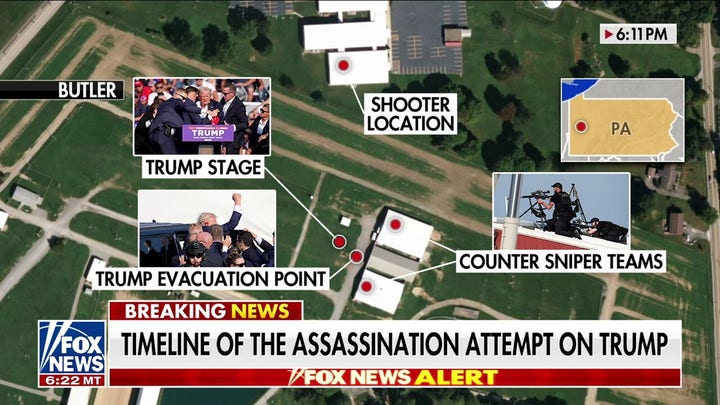
The 2024 United States presidential campaign has been defined by an unprecedented level of volatility, but perhaps no event captured the world’s attention more viscerally than the violent attempts on the life of former President Donald Trump. From the chaotic scenes in Pennsylvania to the high-alert security breach in Florida, these incidents were documented in real-time by thousands of witnesses and official law enforcement agencies. Yet, a disturbing trend has emerged in the aftermath: a significant portion of the American electorate now believes these events were choreographed.
Recent data reveals a profound fracture in the American perception of reality, where Trump assassination attempts staged beliefs have taken root across the political spectrum. While official investigations by the Federal Bureau of Investigation (FBI) and the Department of Justice (DOJ) have provided exhaustive evidence of genuine threats, the rise of “staged” narratives suggests that political polarization has evolved beyond a disagreement over policy into a fundamental disagreement over objective facts.
For a global audience watching the U.S. Democratic process, this phenomenon is more than a domestic curiosity; it is a case study in the erosion of institutional trust. When a substantial percentage of a population views a violent crime—complete with casualties and federal indictments—as a theatrical production, the shared factual baseline required for a functioning democracy begins to collapse.
As an editor who has covered international affairs for nearly two decades, I have seen how disinformation can destabilize regions, but the internal combustion of truth within a superpower is uniquely concerning. The belief that these attacks were “fake” does not exist in a vacuum; it is the result of a sophisticated ecosystem of echo chambers and a systemic decline in the perceived legitimacy of government agencies.
The Data: A Divided Perception of Violence
The scale of this skepticism is revealed in recent polling, which indicates that roughly 30% of Americans believe at least one of the attempts on Donald Trump’s life was staged. This statistic is not evenly distributed; it highlights a paradoxical split in how different political cohorts process crisis events. While many on the right have historically been more susceptible to “deep state” conspiracy theories, current data suggests a surprising number of Democrats also harbor doubts about the authenticity of the attacks.

This divergence suggests that the “staged” narrative is being used as a psychological tool across the aisle. For some, believing the event was fake is a way to dismiss the perceived political advantage gained by the candidate following the attack. For others, it is a reflection of a broader belief that the entire political apparatus is a performance designed to manipulate the electorate. This cognitive dissonance allows individuals to maintain their political biases even when faced with overwhelming physical evidence.
The implications of these findings are stark. When nearly one-third of a population views a legitimate security failure as a “psy-op” or a staged event, the ability of the state to communicate risk or provide a definitive account of public safety is severely compromised. This environment creates a fertile ground for further misinformation, as any official correction is viewed not as a fact, but as part of the “cover-up.”
Verifying the Facts: The Butler and Florida Incidents
To understand the depth of the misinformation, it is necessary to contrast the “staged” narratives with the verified records of the two primary incidents. The first and most prominent occurred on July 13, 2024, during a campaign rally in Butler, Pennsylvania. A gunman, later identified as 20-year-old Thomas Matthew Crooks, opened fire from a nearby rooftop. The attack resulted in the death of one rally attendee, Corey Comperatore, and left two others seriously injured according to official FBI investigative summaries.
The Butler shooting was not a controlled environment. It involved a massive failure in security protocols by the Secret Service, which led to congressional hearings and the eventual resignation of the agency’s director. The presence of a deceased civilian and the forensic evidence gathered from the scene provide an empirical rebuttal to any claim that the event was a staged performance. However, the speed with which conspiracy theories spread on social media—questioning the angle of the shots or the timing of the security response—outpaced the official reporting, allowing the “fake” narrative to solidify before the facts were fully disseminated.

The second significant incident took place on September 15, 2024, at Donald Trump’s golf club in West Palm Beach, Florida. In this instance, a suspect named Ryan Wesley Routh was apprehended after being spotted by a Secret Service agent while hiding in the bushes with a rifle as detailed in Department of Justice filings. Unlike the Butler event, this attempt was thwarted before shots were fired at the former president, yet it followed a similar pattern of immediate skepticism online.
The contrast between these two events—one a bloody tragedy and the other a thwarted breach—demonstrates that the belief in “staged” events is not dependent on the outcome of the attack. Whether there is a casualty or a quiet arrest, the narrative of the “fake attack” persists, fueled by a refusal to accept the findings of the very agencies tasked with protecting the candidates.
The Architecture of Misinformation and the ‘Crisis Actor’ Myth
The belief that the Trump assassination attempts were staged is not a new phenomenon but rather an evolution of the “crisis actor” conspiracy theory. This trope suggests that victims and witnesses in major tragedies—from mass shootings to terrorist attacks—are paid performers hired by the government to manipulate public emotion. By applying this lens to the Trump attacks, skeptics can dismiss the trauma of the victims and the danger faced by the target.
The proliferation of these beliefs is driven by several key factors:
- Algorithmic Amplification: Social media platforms prioritize high-engagement content. Conspiracy theories, which often promise “hidden truths,” generate more engagement than dry, official reports, pushing them into the feeds of undecided or skeptical voters.
- Institutional Decay: A long-term decline in trust toward the FBI, the DOJ, and the Secret Service means that when these agencies release a report, a significant portion of the public views the source as compromised.
- Political Tribalism: In a hyper-polarized environment, accepting the reality of an attack on a political opponent can feel like a “win” for that opponent. To avoid this, some individuals subconsciously rewrite the event as a fabrication.
This psychological mechanism is known as motivated reasoning, where people seek out information that confirms their existing beliefs and ignore evidence that contradicts them. In the case of the Trump attacks, the evidence is physical and forensic, but the “truth” for many is emotional and political.
What In other words for Global Democracy
The emergence of Trump assassination attempts staged beliefs is a warning sign for democracies worldwide. The United States often serves as a bellwether for political trends; the normalization of denying physical reality in the political sphere is a trend that is already appearing in other nations.
When the boundary between “opinion” and “fact” is erased, the possibility of compromise vanishes. If one side believes an event happened and the other believes it was a staged play, there is no common ground upon which to negotiate or govern. This leads to a state of “epistemic fragmentation,” where different groups of people live in entirely different versions of reality.
this skepticism endangers the security of public figures. If the public—and potentially the personnel tasked with protection—believe that threats are staged or “false flags,” the urgency to address genuine security loopholes may diminish. The security failures in Butler were catastrophic; treating them as a theatrical plot rather than a systemic failure prevents the necessary reforms from taking hold.
Key Takeaways on the ‘Staged’ Narrative
- Widespread Skepticism: Approximately 30% of Americans believe at least one attempt on Donald Trump’s life was staged, crossing partisan lines.
- Verified Reality: The July 13 Butler shooting resulted in one death and two injuries, verified by the FBI and local law enforcement.
- Systemic Failure: The “staged” narrative often ignores the documented security lapses that led to congressional investigations and leadership changes at the Secret Service.
- Psychological Drivers: The belief is fueled by “crisis actor” myths and motivated reasoning within a hyper-polarized political climate.
- Democratic Risk: The denial of objective facts undermines the shared reality necessary for stable governance and public safety.
The Path Forward: Confronting the Post-Truth Era
Combating the belief that these events were fake requires more than just presenting facts; it requires a restoration of trust in the process of verification. The role of the free press is critical here. By adhering to rigorous standards of evidence and avoiding the sensationalism that fuels conspiracy theories, journalists can provide a steady anchor in a storm of misinformation.

For the average citizen, the antidote to the “staged” narrative is media literacy. Understanding how algorithms work and recognizing the signs of motivated reasoning can help individuals distinguish between a “bombshell theory” and a verified fact. The danger of the current moment is that the desire for a more exciting or “hidden” truth has overridden the willingness to accept a plain, tragic reality.
The events in Butler and West Palm Beach were not scripts in a political drama; they were violent acts with real-world consequences. To treat them as anything less is to ignore the victims and the fragility of the democratic peace.
The next critical checkpoint in these events will be the ongoing legal proceedings and trials for the suspects involved in the attempts. These court cases, which will be conducted in public record with the presentation of forensic evidence, will provide the final, legal confirmation of the events. We will continue to monitor the court filings and official testimonies as they emerge.
Do you believe that the rise of “staged” narratives is an inevitable result of social media, or is it a deeper symptom of political decay? Share your thoughts in the comments below and share this article to join the conversation on the future of truth in politics.