
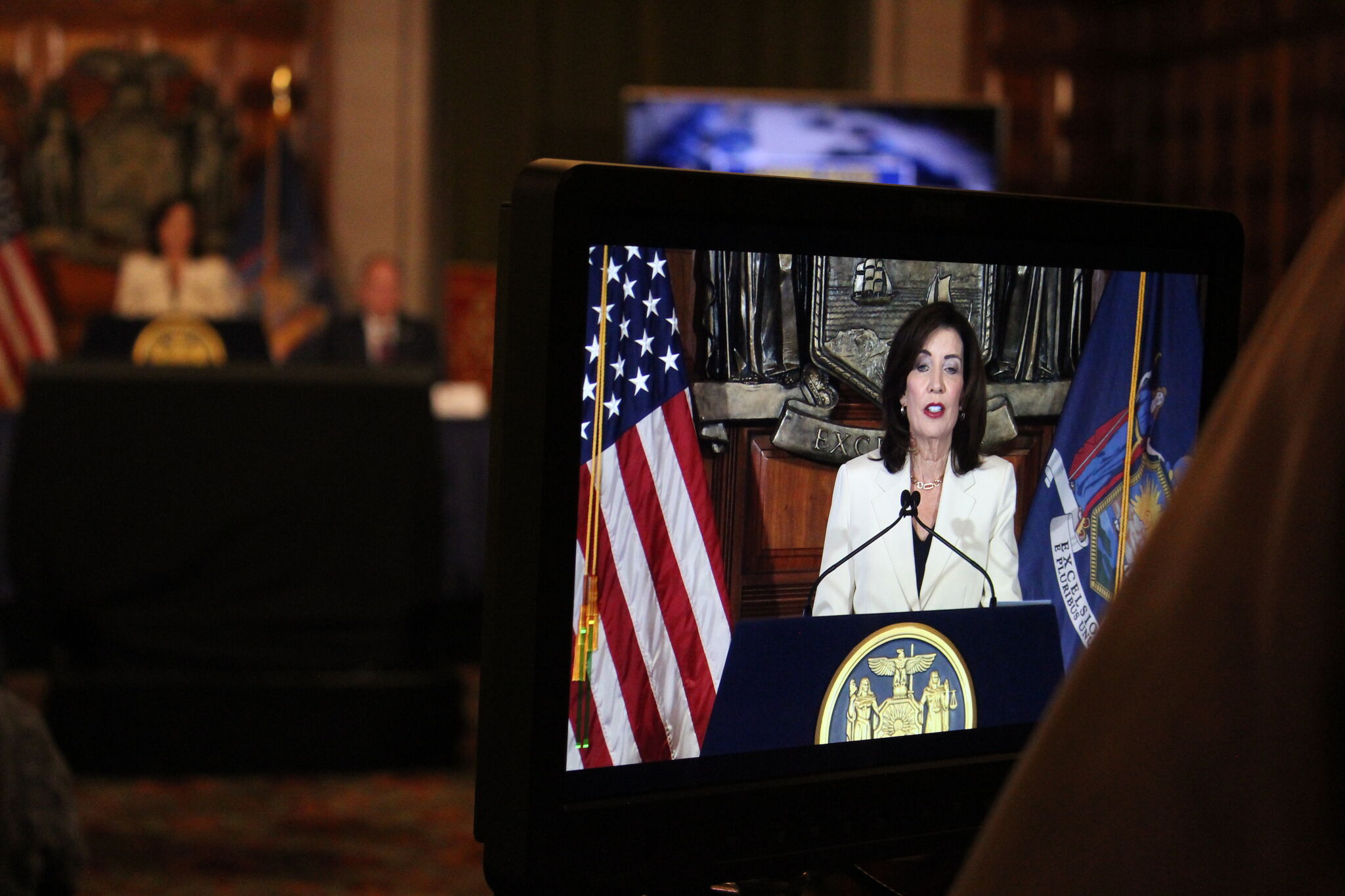
Governor Kathy Hochul has announced a tentative agreement on New York’s massive state budget, signaling a potential end to the high-stakes negotiations that typically define the legislative season in Albany. The proposed framework, valued at approximately $268 billion, seeks to balance essential public services with new revenue streams and targeted policy reforms designed to address the rising cost of living for millions of residents.
However, the announcement of a “deal” has not been met with universal consensus. While the Governor’s office presents the agreement as a breakthrough, several lawmakers have publicly disputed the notion that a final, comprehensive deal is in place. This friction highlights a recurring theme in New York politics: the gap between a “general agreement” on broad priorities and the granular, often contentious, details of the final legislative text.
The stakes are exceptionally high as the state navigates a complex economic landscape. The budget is not merely a financial ledger but a policy manifesto, incorporating everything from a controversial new tax on second homes to aggressive new penalties for reckless driving. As the state prepares for potential shifts in federal funding and policy under a changing national administration, the internal stability of New York’s fiscal planning has become a primary focus for policymakers and taxpayers alike.
For residents, the outcome of these negotiations will dictate the quality of public transportation, the accessibility of affordable housing, and the cost of basic insurance. With the budget deadline looming, the discrepancy between the Governor’s optimism and the legislators’ caution suggests that the most difficult negotiations may still lie ahead.
The $268 Billion Blueprint: New York’s Fiscal Path
The overarching scale of the New York state budget deal is staggering, with total spending projected at roughly $268 billion. This figure represents one of the largest state budgets in United States history, reflecting the immense cost of maintaining infrastructure and social services for a population of nearly 20 million people. According to official state projections and budgetary frameworks, the spending is designed to sustain critical investments in education, healthcare, and public safety New York State Division of the Budget.
A central pillar of the Governor’s strategy is the mitigation of “cost-of-living” pressures. Inflation has disproportionately affected low- and middle-income New Yorkers, particularly in urban centers like New York City and Buffalo. The budget framework attempts to address this through a combination of expanded social safety nets and targeted tax credits. However, funding these initiatives requires a delicate balance of spending and revenue generation, which has become the primary flashpoint between the executive branch and the State Legislature.
The budget also serves as a strategic hedge against federal uncertainty. With shifts in the White House often leading to changes in Medicaid reimbursement rates and infrastructure grants, Governor Hochul has emphasized the need for a resilient state-level financial cushion. By securing a deal that stabilizes state revenues now, the administration aims to protect New York from sudden shocks in federal funding that could otherwise lead to drastic service cuts or emergency tax hikes.
Targeting Wealth: The New Second-Home Tax
One of the most debated elements of the tentative agreement is the introduction of a new tax specifically targeting second-home owners. This measure is designed to generate significant new revenue while shifting the tax burden toward wealthier individuals who own property in New York but do not reside there as their primary residence.
The second-home tax is part of a broader effort to address the housing crisis. By increasing the cost of maintaining non-primary residences, the state hopes to discourage speculative real estate investment and potentially increase the availability of housing for permanent residents. While the exact percentages and thresholds are still being refined in the final legislative language, the inclusion of this tax indicates a shift toward more aggressive progressive taxation to fund state priorities New York State Department of Taxation and Finance.
Critics of the measure, including some lawmakers and real estate lobbyists, argue that such a tax could alienate seasonal residents who contribute significantly to local economies in upstate New York and the Hamptons. They suggest that a decrease in second-home ownership could lead to a decline in local business revenue and a drop in property values in tourist-heavy regions. Despite these concerns, the Governor has maintained that the revenue generated is essential for funding statewide infrastructure and social programs.
Public Safety and Auto Reform: The ‘Super Speeders’ Crackdown
Beyond the balance sheets, the budget deal incorporates several high-profile policy changes aimed at public safety and consumer protection. Most notably, the agreement includes a “Super Speeders” crackdown bill. This legislation is designed to impose significantly harsher penalties—including steeper fines and more aggressive license suspensions—on drivers caught traveling at extreme speeds on New York highways.

The “Super Speeders” initiative is a response to a rising trend of high-speed reckless driving that has led to an increase in fatal accidents across the state. By creating a specific legal category for extreme speeding, the state intends to create a stronger deterrent against behavior that endangers other motorists and pedestrians. This move aligns with a broader statewide push to reduce traffic fatalities through both enforcement and infrastructure improvements.
In addition to traffic safety, the budget framework includes reforms to auto insurance. Governor Hochul has pushed for changes that aim to lower premiums for the average driver while closing loopholes that have allowed insurance fraud to persist. These reforms are intended to make insurance more affordable and transparent, though the specific mechanisms for implementing these changes are still being debated by the legislature. The goal is to ensure that New Yorkers are not paying inflated rates due to systemic inefficiencies or fraudulent claims within the insurance industry.
A House Divided: Why Lawmakers are Pushing Back
Despite the Governor’s proclamation of a deal, the atmosphere in Albany remains tense. Several legislators have pointed out that while there may be a “general agreement” on the broad strokes of the budget, the “devil is in the details.” The disagreement often centers on the specific allocation of funds and the exact wording of the new tax laws.
For many lawmakers, a deal is not a deal until the final legislative text is drafted, reviewed, and approved by the relevant committees. The friction typically arises from “carve-outs” or specific exemptions that lawmakers want for their constituents. For example, while a second-home tax may be acceptable in principle, a representative from a rural district may fight for exemptions that protect small-scale family cottages or specific types of seasonal rentals.

there is a fundamental disagreement over the state’s spending trajectory. Some fiscal conservatives within the legislature argue that the $268 billion spending plan is unsustainable and could lead to long-term debt issues if economic growth slows. They are pushing for more stringent spending caps and a greater emphasis on reducing the state’s overall footprint. Conversely, progressive members of the legislature argue that the budget does not go far enough in addressing the housing crisis or funding public education, leading to a stalemate over the final figures.
Looking Ahead: The Road to Final Approval
The path from a tentative agreement to a signed law is often fraught with last-minute amendments and political maneuvering. The next critical step will be the formal presentation of the budget bill to the State Assembly and the State Senate. Once the bill is introduced, it will undergo a series of votes and potential revisions before it can be sent back to the Governor’s desk for her signature.
Observers will be watching closely to see if the “Super Speeders” and second-home tax provisions survive the legislative process intact. If lawmakers successfully negotiate the specific exemptions they desire, the deal may move forward quickly. However, if the gap between the Governor’s vision and the legislators’ demands remains wide, New York could face another budget deadlock, potentially leading to a government shutdown or the implementation of a stop-gap budget.
the resolution of this conflict will serve as a bellwether for Governor Hochul’s relationship with the legislature and her ability to enact her policy agenda. As the state balances the needs of its most vulnerable citizens with the demands of its wealthiest residents, the final version of the $268 billion budget will define New York’s priorities for the coming fiscal year.
The next confirmed checkpoint for the budget process will be the formal legislative vote in the State Assembly and Senate, following the finalization of the bill’s language. Official updates and the full text of the proposed budget will be made available through the New York State Government portals.
We invite our readers to share their thoughts on the proposed second-home tax and auto insurance reforms in the comments below. Please share this article to keep others informed on New York’s fiscal developments.