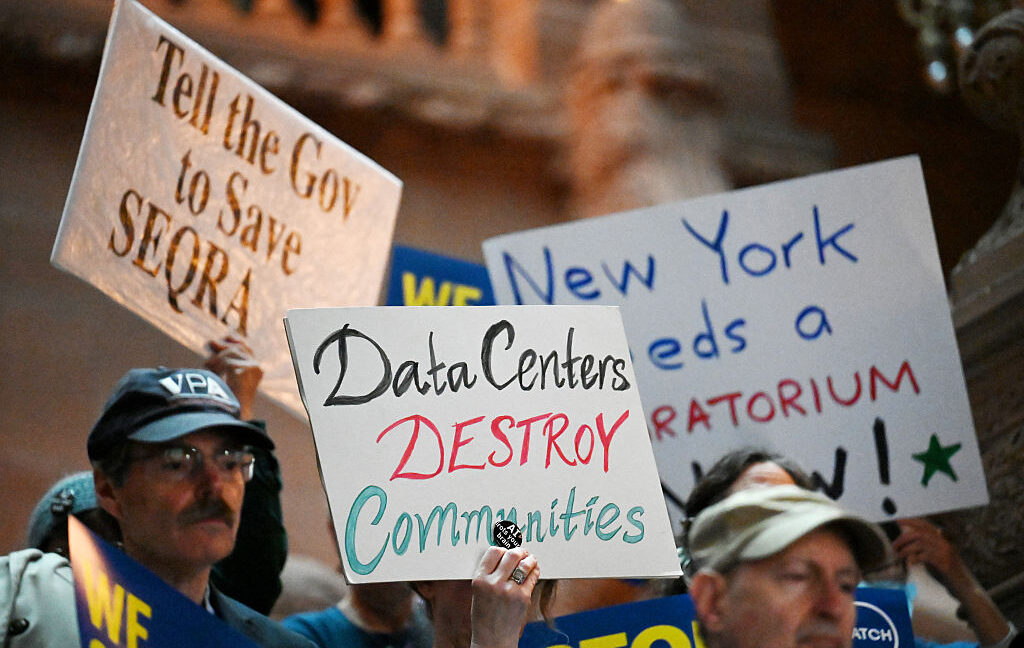
New York has become the first state to implement a one-year moratorium on the construction of massive new data centers, a move that signals a significant shift in how state governments are balancing the rapid expansion of artificial intelligence infrastructure with environmental and energy stability. Governor Kathy Hochul announced the temporary ban on Tuesday, effectively halting new projects that use 50 megawatts or more of power until the state can establish “consistent standards” for responsible development.
This decision places New York at the center of a growing national debate over the physical footprint of the digital economy. As AI model training and cloud computing demand unprecedented amounts of electricity and water, local communities and regulators are increasingly questioning the long-term impact on regional power grids. According to state officials, the pause is intended to provide a window for the administration to determine what “consistent standards” for responsible data center development in New York should look like.
The Regulatory Framework and Industry Impact
The moratorium specifically targets high-capacity data centers, setting a threshold at 50 megawatts. By pausing these developments, New York is prioritizing grid stability over the immediate expansion of AI-related hardware. This regulatory pause is not an outright cancellation of future projects, but rather a strategic hold designed to force a formal review of how data centers impact local energy costs and infrastructure.

For the technology sector, this represents a notable hurdle. Data center developers often require long lead times for site selection, permitting, and energy procurement. A one-year delay in a state as significant as New York may force companies to shift their infrastructure investments to jurisdictions with fewer restrictions. The state government has indicated that the moratorium will remain in place until “consistent standards” for responsible data center development are finalized.
National Concerns and Legislative Trends
New York’s policy shift mirrors broader concerns shared by lawmakers across the United States. In recent months, opposition to large-scale data center construction has mounted in several regions, driven by local concerns regarding the high consumption of local water supplies for cooling systems, risks of pollution, and the potential for increased electricity rates for residents. The strain on aging electrical grids has become a primary point of contention, as data centers often require dedicated, high-voltage power connections that can compete with residential and commercial demand.

At the federal level, this tension has led to early legislative efforts aimed at curbing unbridled growth. Bernie Sanders (I-Vt.) and Alexandria Ocasio-Cortez (D-N.Y.) have introduced legislation seeking a possible nationwide construction ban. These proposals highlight the intensifying friction between the rapid pace of the global AI race and the domestic priorities of environmental protection and energy affordability.
Political Divide Over AI Infrastructure
The push to regulate data centers has not received uniform support across the political spectrum. While some Democrats cite environmental and grid stability as immediate priorities, many Republicans have expressed skepticism toward federal intervention in the sector. Critics of the moratorium approach, including Donald Trump, have argued that such moratoriums would threaten America’s lead in the AI race. The argument posits that if the U.S. restricts the physical infrastructure necessary for AI development, it may inadvertently allow international competitors to pull ahead in the development of advanced computing capabilities.
This ideological split underscores the complexity of the issue for policymakers. The challenge lies in managing the immediate, tangible needs of local power grids and water supplies while simultaneously fostering a technological environment that supports the high-performance computing required for future AI breakthroughs. For now, the focus in New York remains on the one-year study period, which will likely serve as a litmus test for how other states approach the management of data center growth in the coming years.
As the state moves forward with its review, stakeholders in the energy, technology, and environmental sectors are expected to participate in upcoming public hearings and policy discussions. Further details regarding the specific metrics for these “consistent standards” are expected to be released as the state completes its evaluation.
Related reading