By Jonathan Reed | News Editor, World Today Journal | London, UK
New York Democrats are advancing a bold proposal to amend the state constitution and permit mid-decade redistricting—a move that would allow lawmakers to redraw congressional and legislative districts outside the usual once-a-decade cycle tied to the U.S. Census. The amendment, introduced last month, has ignited fierce opposition from Republicans, who warn it could be weaponized to manipulate election outcomes, and raises questions about whether New York is setting a precedent for other states grappling with gerrymandering and shifting populations.
The push comes as Democrats nationwide face pressure to counter Republican-led redistricting efforts that have reshaped districts to favor their party in recent years. In New York, where Democrats hold a narrow majority in the State Assembly and a supermajority in the Senate, the amendment would require approval from voters in a statewide referendum—likely in 2026, if the legislative process moves forward. But the timing and mechanics of the proposal have already sparked legal challenges and partisan recriminations.
At the heart of the debate is whether mid-decade redistricting violates federal or state constitutional principles, particularly the Voting Rights Act and the New York Constitution’s equal protection clause. Republicans argue the amendment is a cynical attempt to reverse losses in the 2022 elections, while Democrats insist it’s a necessary tool to adapt to demographic shifts and prevent future GOP gains. The stakes could hardly be higher: A successful amendment could redefine New York’s political landscape ahead of the 2024 elections, and beyond.
Why New York’s Amendment Stands Out in a National Battle
New York is not the first state to consider mid-decade redistricting. Since the Supreme Court’s 2019 Rucho v. Common Cause decision—which declared partisan gerrymandering a political question beyond federal courts’ reach—states have increasingly turned to legislative fixes. Florida, Ohio, and Michigan have all experimented with special sessions or independent commissions to redraw maps after population changes or legal rulings. But New York’s proposed constitutional amendment is unique in its scope: It would allow lawmakers to redraw districts without a census trigger, potentially every two years.
Proponents, including State Assembly Speaker Carl Heastie (D-Bronx), argue that the state’s population growth—particularly in urban areas like New York City and Long Island—has outpaced the once-a-decade census. “We can’t wait another 10 years to reflect reality,” Heastie said in a statement last month. “This amendment ensures every vote counts, no matter where you live.”
Critics, however, point to the amendment’s timing. Republicans note that New York Democrats lost two congressional seats in 2022 after redrawing districts following the 2020 Census—a process that already favored Democrats. State Senator Mike Lawler (R-Newburgh), a vocal opponent, called the proposal “a blatant attempt to rig the system” in a recent interview. “They’re not fixing anything—they’re trying to break the rules to keep power.”
Legal and Political Hurdles Ahead
The amendment’s path to approval is fraught with obstacles. Under New York’s constitution, any amendment must pass two consecutive legislative sessions and then be approved by voters in a referendum. Given the narrow margins in the State Assembly (where Democrats hold a 79–64 majority), even minor shifts in support could derail the effort. Legal challenges are likely. The New York Court of Appeals has already ruled on redistricting disputes, and civil rights groups may intervene to argue that mid-decade changes disproportionately affect minority communities.
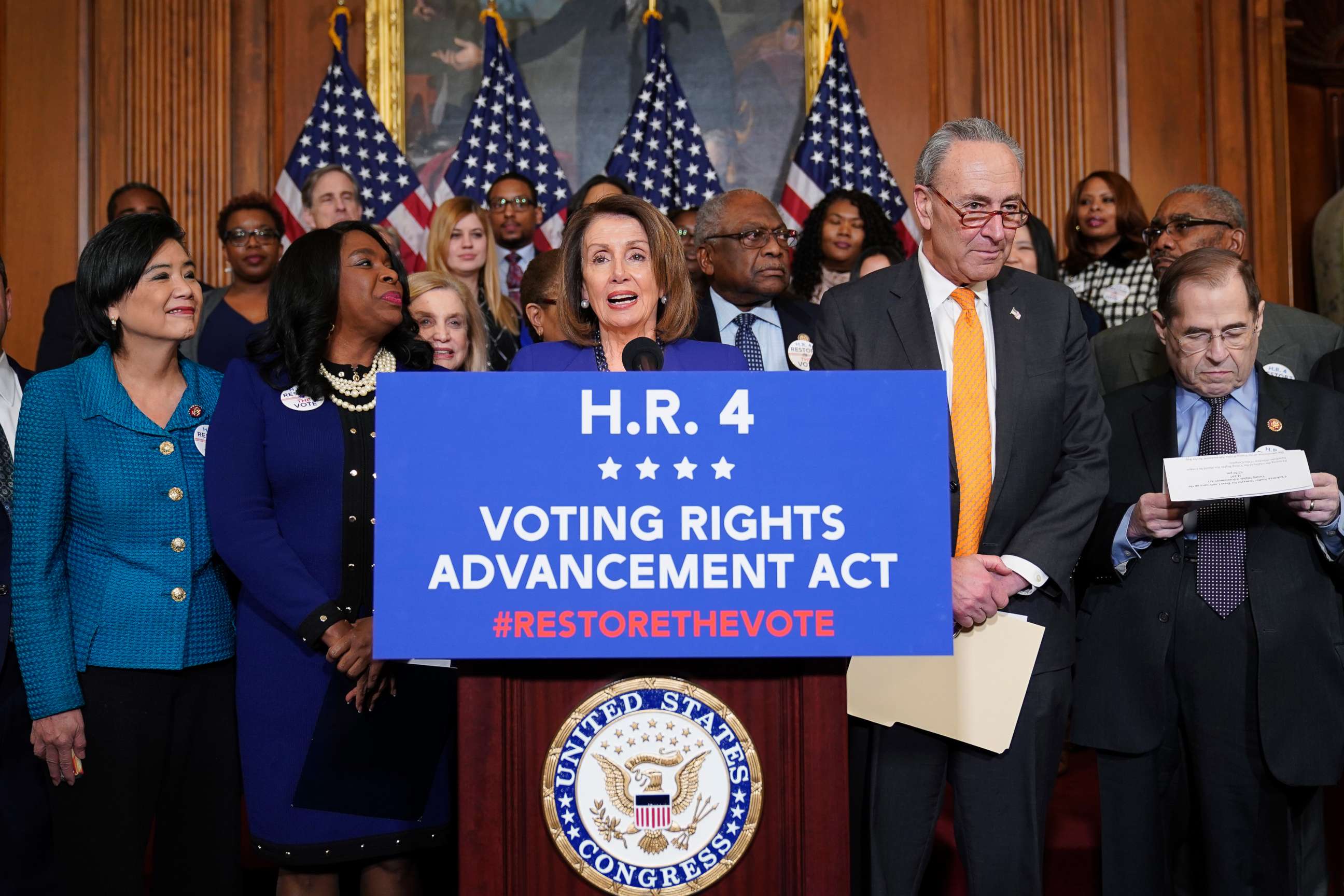
One major question is whether the amendment would trigger a federal review under the Voting Rights Act. The U.S. Department of Justice has historically scrutinized redistricting plans for discriminatory effects, and some legal experts suggest the proposal could invite preclearance requirements for New York. “This is uncharted territory,” said Joshua Tucker, a political scientist at New York University, in a recent analysis. “If it passes, other states will watch closely—and the courts will have to decide if it’s a solution or a loophole.”
Who Stands to Gain—or Lose?
The amendment’s impact would vary sharply by region. Urban areas like New York City, Buffalo, and Rochester—where Democratic support is strongest—could see districts consolidated to protect incumbents, while suburban and rural districts might be redrawn to dilute Democratic votes. Conversely, Republicans argue that mid-decade changes could help them regain ground in areas where Democratic margins have eroded, such as Long Island and parts of the Hudson Valley.
For voters, the implications are direct. If approved, the amendment could lead to:
- More frequent elections: Districts might be redrawn as often as every two years, increasing political volatility.
- Shifted representation: Incumbents in safe seats could face unexpected competition, while marginal districts might see their boundaries altered dramatically.
- Legal uncertainty: Lawsuits over fairness and compliance with the Voting Rights Act would likely drag on for years.
Democrats also face a messaging challenge. While they frame the amendment as a corrective to gerrymandering, Republicans are framing it as a power grab. A Pew Research poll from October found that 68% of Americans—including majorities in both parties—believe gerrymandering is a “major problem.” Yet only 35% support mid-decade redistricting as a solution, suggesting the amendment’s success hinges on convincing voters it’s about fairness, not partisan advantage.
What Happens Next?
The amendment’s first hurdle is the State Assembly’s Ways and Means Committee, which is scheduled to hold hearings in early November. If the committee approves it, the full Assembly will vote, followed by the State Senate. Assuming it passes both chambers, the amendment would then go to voters in 2026—too late to affect the 2024 elections but potentially reshaping the 2026 and 2028 cycles.
In the meantime, legal battles are likely. The New York Court of Appeals has already weighed in on redistricting disputes, and advocacy groups like the ACLU and the Bradley Foundation may file amicus briefs arguing for or against the amendment’s constitutionality.
Key Takeaways
- The amendment would allow New York to redraw districts without a census trigger, potentially every two years.
- Democrats say it’s necessary to adapt to population shifts; Republicans call it a power grab.
- Legal challenges are expected, with potential Voting Rights Act implications.
- Approval would require voter referendum in 2026, too late for 2024 but critical for 2026/2028.
- Other states may follow if New York’s amendment succeeds.
Where to Follow Updates
For the latest on New York’s redistricting amendment and its national implications, monitor:
- The New York State Assembly’s Ways and Means Committee for hearing schedules.
- The New York State Senate for legislative updates.
- The New York Court of Appeals for potential legal rulings.
- The U.S. Department of Justice’s Voting Rights Division for federal oversight.

The next critical checkpoint is the Ways and Means Committee hearings in early November. If you have questions about how this could affect your district—or if you’d like to share your perspective—leave a comment below or share this article to help others stay informed.
Related reading