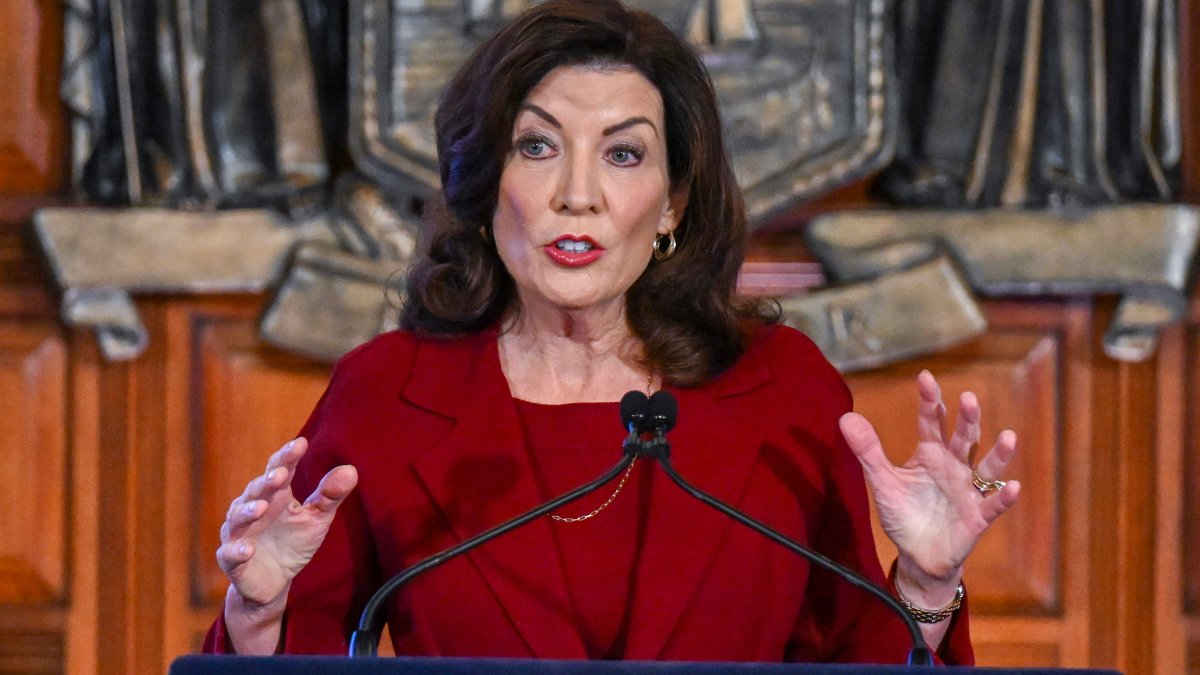
New York has officially enacted legislation that makes it a crime to block access to a house of worship, marking a significant shift in how the state manages public demonstrations near religious institutions. The new law, signed into effect by Governor Kathy Hochul on Tuesday, establishes clear legal consequences for individuals who obstruct entry to synagogues, mosques, churches, or any other place of religious gathering, or who engage in behavior that would cause worshippers to reasonably fear for their physical safety.
This legislative development follows a period of heightened tension across the state, characterized by frequent and often raucous protests outside various religious sites. These demonstrations have frequently been tied to geopolitical events, particularly those involving real estate seminars or community events centered on Israel and the West Bank. The new mandate, which creates a misdemeanor criminal charge for interference with access, also empowers law enforcement to establish 50-foot security perimeters around houses of worship where protests are prohibited. For further details on the legislative process, readers may consult the official press portal of the New York State Governor.
Balancing Public Safety and First Amendment Rights
The introduction of these “buffer zones” has sparked a robust debate regarding the intersection of religious liberty and the constitutional right to free speech. Governor Hochul, in a statement accompanying the signing of the bill, emphasized that every New Yorker possesses the fundamental right to practice their faith without intimidation. By codifying these protections, the state aims to provide a clear, uniform standard for police intervention in scenarios where protests threaten to disrupt religious services or intimidate congregants.

However, the move has drawn sharp criticism from civil liberties advocates who express concern that such broad authority could be leveraged to suppress nonviolent activism. Donna Lieberman, executive director of the New York Civil Liberties Union (NYCLU), has been a vocal opponent of the measure. In public remarks, Lieberman argued that the law risks chilling legitimate political expression at a critical juncture, suggesting that the effort to trade away civil liberties is both unnecessary and reflective of poor governance. The NYCLU’s recent statements provide additional context on their ongoing opposition to these types of restrictive measures.
Legal Precedents and the Challenge of Enforcement
The constitutionality of protest-free zones remains a complex legal landscape. The U.S. Supreme Court has historically scrutinized such restrictions, most notably in the 2014 case McCullen v. Coakley. In that instance, the Court unanimously struck down a 35-foot “buffer zone” law in Massachusetts that applied to abortion clinics, ruling that it placed an undue burden on speech rights by restricting traditional public forums. Legal experts are now evaluating whether the New York statute, which applies statewide to all houses of worship, can survive similar constitutional challenges given the precedent set by the Supreme Court’s decision in McCullen.

Beyond the state-level law, municipal governance is also evolving. In New York City, local officials have pursued complementary measures to increase transparency regarding how the New York Police Department (NYPD) manages demonstrations. These local efforts aim to balance the need for security with the requirement for clear, publicly accessible rules on how and when security perimeters are implemented. This multi-layered approach reflects a broader trend of local governments attempting to navigate the volatile nature of modern public protests.
Contextualizing the Protests
The demonstrations that catalyzed this legislation have been diverse in their origins and objectives. Some protests have been directed at real estate events hosted by religious organizations, with activists arguing these events facilitate the expansion of settlements in occupied territories. Conversely, many Jewish leaders have condemned these protests as antisemitic, noting that some gatherings in areas like Queens have included rhetoric that crosses the line into hate speech, including the chanting of pro-Hamas slogans. In several instances, these demonstrations have escalated into physical altercations between opposing groups, necessitating increased police presence.
The inclusion of mosques within the scope of the new law is a notable aspect of its application. While much of the recent public discourse has focused on synagogues, religious leaders from various faiths have previously reported being the targets of protests, harassment, or vandalism. By applying the law to all houses of worship, the state government is attempting to establish a neutral framework that protects all religious communities from interference, regardless of the specific nature of the protests directed at them.
Key Considerations for the Public
As the state prepares to implement these new regulations, several questions remain regarding enforcement and the potential for future litigation. The following summary outlines the current state of the policy:

- Legal Status: The law is now in effect, creating a misdemeanor charge for obstructing access to religious venues.
- Security Perimeters: Police are authorized to designate 50-foot zones where protests are prohibited to ensure the safe entry and exit of congregants.
- Constitutional Debate: Critics contend the law may be vulnerable to legal challenges based on First Amendment protections, citing previous Supreme Court rulings on similar buffer zones.
- Scope: The legislation applies universally to all houses of worship across New York State, including synagogues, mosques, and churches.
The path forward will likely involve ongoing monitoring by both civil rights organizations and law enforcement to determine how these perimeters are enforced in practice. For those interested in tracking the implementation of these policies, updates can typically be found through the New York State Senate website, which publishes legislative updates and session reports. As the situation evolves, the effectiveness of these measures in balancing the right to peaceful assembly with the right to religious practice will remain a central point of civic conversation.
We invite our readers to share their perspectives on this development in the comments section below. How should states balance the protection of religious freedom with the preservation of public protest rights? Join the conversation and stay informed on this and other critical business and policy updates by subscribing to our newsletter.
Keep reading