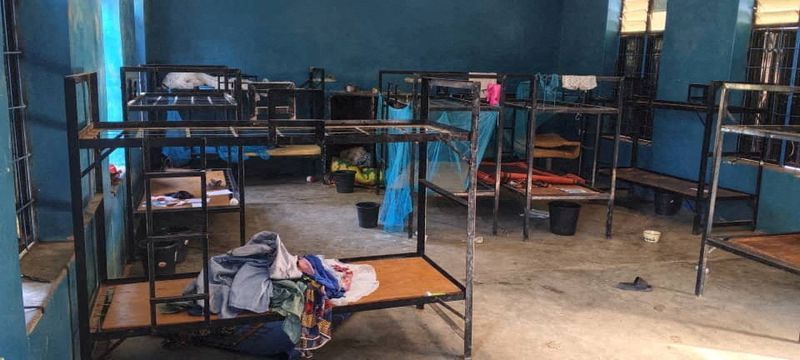
Niger School Kidnapping: A Nation Gripped by Fear and a Crisis in Education
A wave of anxiety continues to engulf families in Niger State, Nigeria, two weeks after the mass abduction of students from a Catholic school in Madalla. While initial assurances from authorities suggested a swift resolution, the lack of concrete updates and a confusing official response are fueling despair and highlighting a deeply entrenched crisis of insecurity plaguing the region.
The brazen kidnapping,which occurred on January 7th,saw an estimated 215 students taken from St. Mary’s Secondary School. The christian Association of Nigeria (CAN) in Niger State initially reported the children were “doing fine and will be back soon.” Though, this statement has been followed by a deafening silence, leaving parents trapped in a harrowing limbo, desperately seeking facts about their children’s fate.
A Landscape of Uncertainty and Unidentified Perpetrators
the identities of the kidnappers remain unknown. authorities believe they are hiding within the dense, sprawling forests that characterize Nigeria’s largest state. Crucially, no ransom demands have been made, adding another layer of complexity to the situation. This absence of a clear motive raises concerns beyond financial gain, perhaps indicating a more complex and sinister agenda.
“The government says that it’s taking action,but up to now,we haven’t got any information,” laments Emmanuel Bala,chairman of the school’s Parent-Teacher Association,whose 13-year-old daughter is among the missing. ”The past two weeks have not been easy at all.It is not something that people can imagine. We are feeling deeply sad.”
The frustration is palpable. Another parent, a civil servant within Niger State, expressed initial hope following a meeting with National security Advisor Nuhu Ribadu, believing a rescue operation was imminent. “Unfortunately, days have passed, and we are left with little hope,” he confided, requesting anonymity for fear of professional repercussions. This fear underscores the climate of intimidation that pervades the region.
Official Response Raises Questions and Fuels Distrust
The handling of the crisis by authorities has been marred by confusion and a perceived lack of openness. A week after the abduction, parents were unexpectedly summoned to the school to register their missing children with the police – a process initiated after Niger State Governor Mohammed Umar Bago publicly questioned the accuracy of reported kidnapping numbers.
“The government and the public need evidence of the fact that children were actually abducted,” stated Reverend Father Stephen Ndubuisi-Okafor, of the Catholic Diocese overseeing the school, during the registration process.This statement, while intended to clarify the situation, inadvertently cast doubt on the parents’ accounts and fueled accusations of government downplaying the severity of the crisis.
Police spokesperson Wasiu Abiodun defended the delayed registration, citing the need to avoid “rushing to conclusions” during the ongoing investigation. However, he confirmed police documentation currently lists 215 students as still captive, raising questions about whether all parents have been able to register their children. Bishop Bulus Yohanna, CAN chairman for Niger State and head of the school, explained that incomplete registration is due to the remote location and limited network connectivity, hindering communication with some families.
A Recurring Nightmare: The Legacy of Abduction in Nigeria
This latest incident is not an isolated event. It is a grim reminder of a “relentless cycle of terror” that has plagued Nigeria for over a decade,beginning with the infamous 2014 abduction of nearly 300 schoolgirls from Chibok,Borno State. While some of the Chibok girls have been released, approximately 90 remain unaccounted for.
The tactics employed by Boko haram – initially driven by ideological motivations – have now been adopted by criminal gangs seeking ransom payments, exploiting a security vacuum and demonstrating the authorities’ apparent inability to effectively counter thes threats.The #BringBackOurGirls movement, which gained global prominence following the Chibok abductions, has issued a scathing open letter to President Bola Ahmed Tinubu, highlighting that at least 1,800 students have been kidnapped as 2014.
Education Under Siege: The Long-Term Consequences
The escalating insecurity is having a devastating impact on education in Nigeria. Amnesty International reports that nearly 20,500 schools have been closed in seven northern states following the St. Mary’s school attack. Nigeria already faces a notable educational crisis, with approximately 20 million children out of school, notably in the north, largely due to parental fears of kidnapping.
The psychological toll on surviving students is immense. Thirteen-year-old Stephen Samuel, who managed to escape the abduction, poignantly expressed the uncertainty facing