
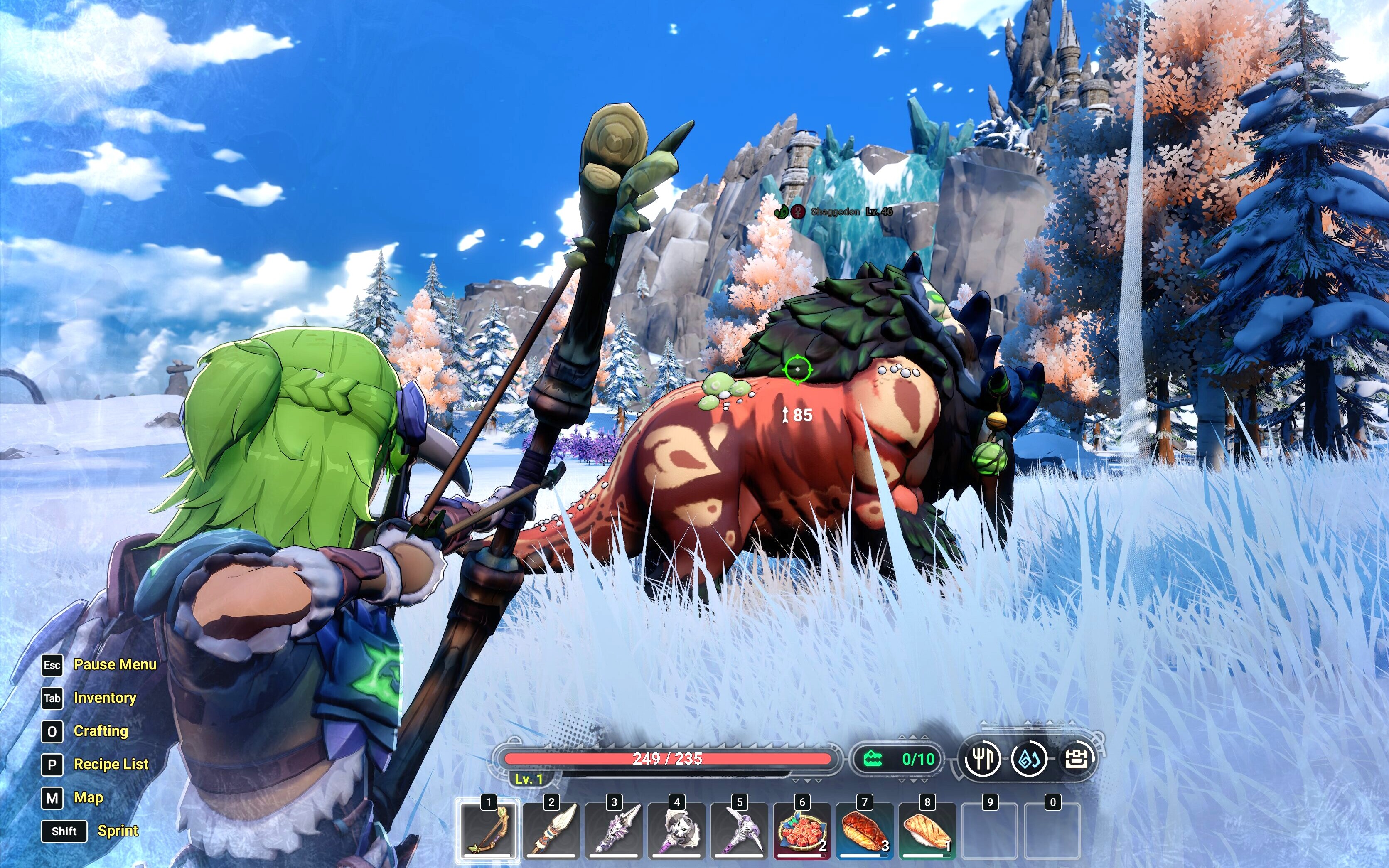
The landscape of creature-collection games faces renewed scrutiny following the announcement of new titles that bear striking visual and mechanical similarities to the long-running Pokémon franchise. As independent developers push the boundaries of the genre, the industry is closely monitoring potential legal responses from Nintendo Co., Ltd. and The Pokémon Company, which have historically maintained a rigorous stance on intellectual property enforcement.
Recent industry discourse has centered on the emergence of games that utilize art styles and monster-design philosophies reminiscent of the iconic Nintendo series. While these titles often aim to capture the nostalgia and mechanics that made the genre a global phenomenon, they also invite comparisons that raise questions regarding copyright and trade dress protections. Legal experts note that while game mechanics are generally difficult to copyright, specific artistic expressions and character designs are protected under international intellectual property law, as outlined by the World Intellectual Property Organization (WIPO).
Intellectual Property Challenges in Creature-Collection Games
The threshold for legal action in the gaming industry often hinges on the distinction between “inspiration” and “infringement.” Nintendo has established a clear precedent for protecting its assets. Most notably, in September 2024, The Pokémon Company and Nintendo filed a patent infringement lawsuit against Pocketpair, the developer of the popular title Palworld. According to an official statement from Nintendo Co., Ltd., the lawsuit seeks an injunction and compensation for damages, claiming that the game infringes on multiple patent rights.

This ongoing litigation marks a significant moment for indie developers. Many studios now operate under the assumption that any project featuring creature-capture mechanics will be scrutinized for potential overlap with existing patents. The Japan Patent Office provides frameworks for these protections, which companies like Nintendo actively utilize to maintain their market position. For developers, the challenge lies in creating innovative gameplay loops that do not inadvertently replicate the specific technological implementations patented by major industry players.
Market Response and Genre Evolution
Despite the legal risks, the genre continues to expand. Players are increasingly drawn to titles that iterate on the “monster-taming” formula, often requesting features that have been absent from official Pokémon releases for years. This demand creates a vacuum that smaller studios are eager to fill. However, the commercial success of these games often acts as a double-edged sword; high visibility increases the likelihood of attracting legal attention from rights holders.
Industry analysts point out that the success of the Pokémon franchise—which remains the highest-grossing media franchise in history, as documented by Statista—creates a massive incentive for competitors. Yet, the barrier to entry is no longer just about development quality; it is about navigating a complex web of patents that cover everything from movement systems to interaction mechanics within a 3D environment.
Future Legal Outlook
The outcome of the current litigation involving Pocketpair will likely set a tone for the industry for the next decade. If Nintendo succeeds in enforcing its patent claims, it could force a shift in how independent developers approach the design of creature-collection systems. Conversely, a ruling in favor of the developer could embolden more studios to explore the genre with greater creative freedom.

For now, developers are exercising increased caution. Many are prioritizing unique artistic directions and distinct mechanical innovations to differentiate their products from the established giants. As the industry awaits further developments in the pending court filings, the focus remains on whether intellectual property law will stifle competition or merely ensure that new market entrants innovate rather than imitate.
The next major checkpoint in the ongoing patent litigation between Nintendo/The Pokémon Company and Pocketpair will be determined by the Tokyo District Court, where the case is currently pending. Updates regarding court hearings or official settlements will be provided by the parties through their respective corporate portals. Readers are encouraged to share their perspectives on the balance between creative inspiration and legal protection in the comments section below.