
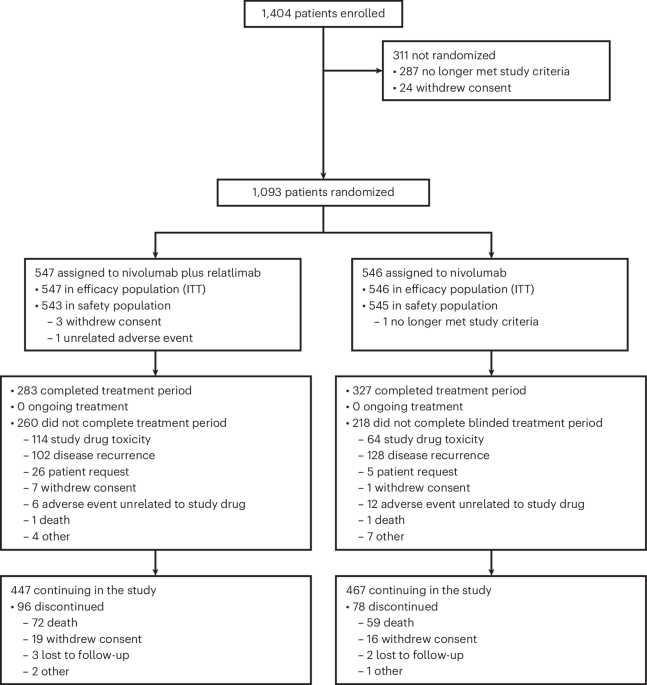
“`html
Adjuvant Nivolumab and Relatlimab for Resected Melanoma: A Detailed Analysis
The landscape of melanoma treatment is continually evolving, with ongoing research refining strategies to improve outcomes for patients. Recent findings from the RELATIVITY-098 trial, presented at both the 2025 American Society of Clinical Oncology (ASCO) Annual Meeting and the European Society for Medical Oncology (ESMO) Congress 2025, have provided crucial insights into the role of combination immunotherapy – specifically, nivolumab and relatlimab - following surgical resection of stage III/IV melanoma. This article delves into the nuances of these results, exploring the implications for clinical practice and future research directions in melanoma treatment. Understanding these advancements is paramount, especially given the rising incidence of melanoma globally; the American Cancer Society estimates over 100,000 new melanoma cases will be diagnosed in the US alone in 2025 (American Cancer Society, 2025).
RELATIVITY-098 Trial: Key Findings and Implications
The RELATIVITY-098 trial investigated whether adding relatlimab,a LAG-3 blocking antibody,to nivolumab,a PD-1 inhibitor,would enhance recurrence-free survival (RFS) in patients who had undergone complete resection of stage III or IV melanoma. The study enrolled individuals who had already benefited from surgical intervention, aiming to consolidate that benefit with adjuvant immunotherapy.However, the primary endpoint of RFS did not demonstrate a statistically meaningful enhancement with the combination compared to nivolumab monotherapy. This unexpected result prompted a deeper investigation into potential biomarkers that might explain the lack of observed benefit.Researchers discovered a strong correlation between the absence of tumor-infiltrating lymphocytes (TILs) expressing LAG-3 and a lack of response to the relatlimab/nivolumab combination.
Understanding LAG-3 and its Role in Melanoma Immunity
Lymphocyte-activation gene 3 (LAG-3) is an immune checkpoint receptor expressed on T cells. It functions as a negative regulator of T cell activity, essentially putting the brakes on the immune response. Blocking LAG-3 with antibodies like relatlimab is intended to release these brakes, allowing T cells to more effectively target and destroy cancer cells. However, the RELATIVITY-098 data suggest that LAG-3 expression on TILs is a prerequisite for relatlimab to exert its effect. If the tumor microenvironment lacks these LAG-3+ T cells, the addition of relatlimab does not provide a significant advantage. This highlights the importance of immunotherapy biomarkers in personalizing treatment strategies.
Did You Know? LAG-3 is not the only immune checkpoint being targeted in melanoma. Other checkpoints, such as CTLA-4 and TIM-3, are also under investigation as potential therapeutic targets.
Correlative Data: The Importance of TIL Profiling
The correlative data from RELATIVITY-098 are arguably the most significant takeaway from the study. analysis revealed that





![QLED TV Lifespan: How Long Does It Last? [Expert Insights]](https://i0.wp.com/www.bgr.com/img/gallery/how-long-will-a-qled-tv-actually-last-heres-what-experts-say/l-intro-1765477196.jpg?resize=150%2C100&ssl=1 "QLED TV Lifespan: How Long Does It Last? [Expert Insights]")