
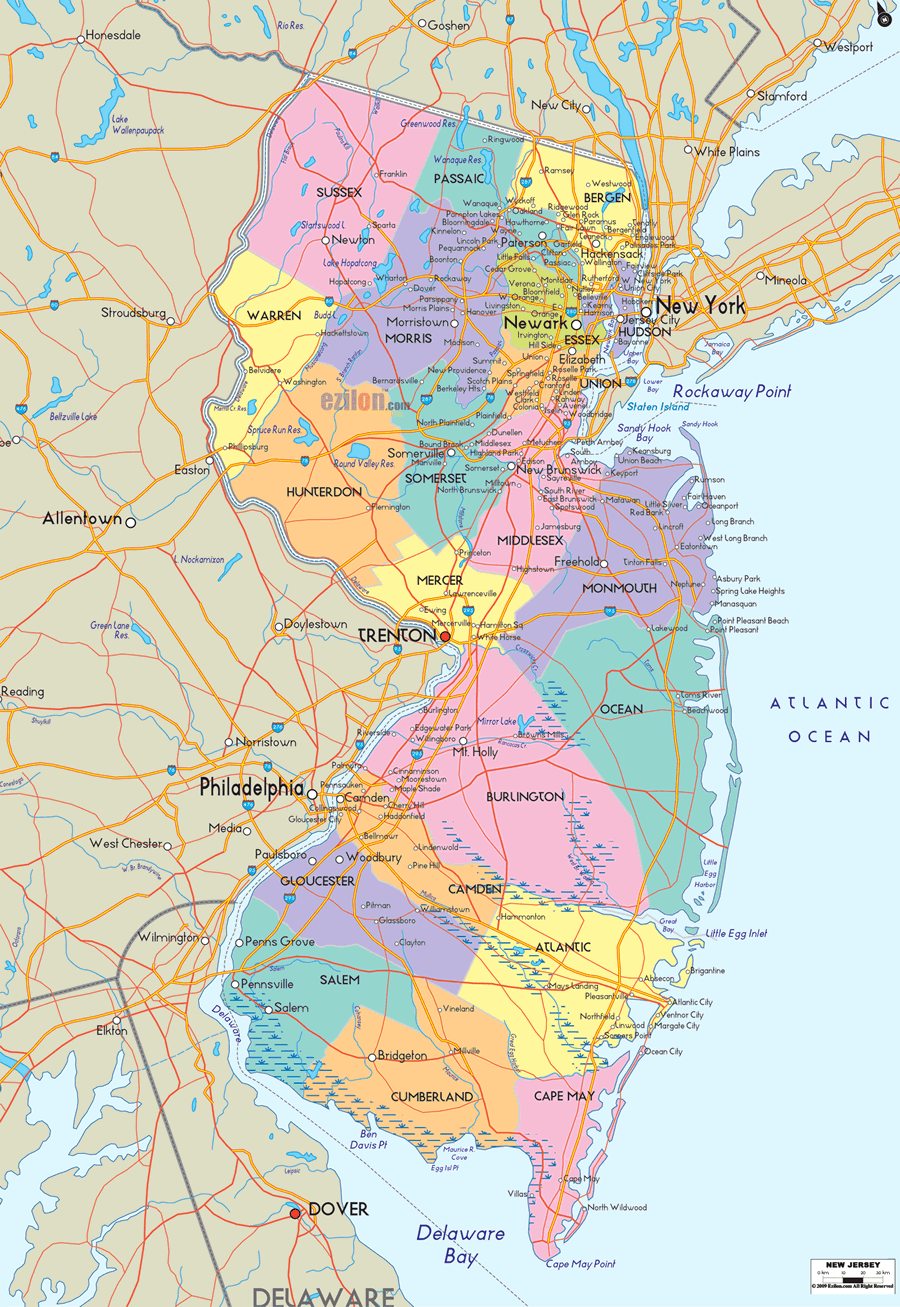
For millions of soccer fans, the 2026 FIFA World Cup represents a once-in-a-lifetime pilgrimage to the heart of North American sports. However, as the tournament draws closer, the excitement of the games is being clouded by a growing controversy over World Cup 2026 transportation costs. In the New York-New Jersey metropolitan area, the journey to one of the tournament’s primary venues is becoming a point of significant financial and political friction.
Fans planning to attend matches at MetLife Stadium in East Rutherford, New Jersey, are facing a steep price hike for public transit. New Jersey Transit has announced that round-trip rail tickets for match days will cost $150, a figure that has sparked outrage among supporters who are already grappling with the high cost of match tickets and lodging. This pricing strategy highlights a broader tension between local government infrastructure needs and the commercial expectations of a global sporting event.
The logistical challenge of moving tens of thousands of spectators into a stadium located in a suburban corridor is immense. With an expected crowd of over 78,000 people per match, the transit agency is implementing a strict, digital-first ticketing system and a comprehensive diversion plan to prevent total gridlock at New York Penn Station. Yet, for the global traveler, the “last mile” of the journey is proving to be the most expensive.
The High Cost of Access: Rail and Bus Fare Breakdowns
The financial burden on fans is not limited to the rail lines. While the $150 round-trip rail fare is the primary point of contention, those opting for bus transportation will not find a significantly cheaper alternative, with bus tickets priced at $80. These fares are specifically designated for match-day travel and are designed to manage the unprecedented surge in demand.
To maintain order and prevent scalping, NJ Transit has introduced several restrictive conditions for these tickets. Starting May 13, tickets will be available exclusively through the NJ Transit mobile app. These tickets are non-transferable and non-refundable, meaning fans must have their match tickets in hand before they can even purchase their transportation. The agency has capped the availability at 40,000 round-trip tickets per match day, leaving a significant portion of the stadium’s capacity to find alternative, potentially more expensive, means of transport.
The decision to bypass station ticket offices and vending machines on match days is a strategic move to reduce congestion at terminals. However, this “app-only” approach may create barriers for international visitors who are unfamiliar with the system or those who encounter technical difficulties during the high-traffic sales windows.
Ticketing and Logistics Summary
| Service Type | Round-Trip Cost | Purchase Method | Availability |
|---|---|---|---|
| Rail (Train) | $150 | Mobile App Only | 40,000 tickets/match |
| Bus | $80 | Mobile App Only | Limited |
| Sales Start Date | May 13, 2026 | ||
The Political Clash: Governor Sherrill vs. FIFA
The pricing controversy is more than just a matter of ticket costs; We see the result of a high-stakes financial dispute between New Jersey leadership and the governing body of world football. New Jersey Governor Mikie Sherrill has been vocal about the strain the tournament places on state resources. According to official reports, NJ Transit is facing nearly $50 million in added costs to accommodate the World Cup crowds, including increased staffing, security and infrastructure adjustments.
Governor Sherrill has argued that FIFA, an organization that generates billions of dollars in revenue from tournament hosting, should shoulder the burden of these operational costs. The governor’s position is that the state should not be forced to subsidize the logistics of a private entity’s profit-making venture. However, FIFA has remained firm, leading to a stalemate that has effectively pushed the cost of transit onto the fans themselves.
This dispute reflects a recurring theme in modern “mega-event” hosting. From the 2014 World Cup in Brazil to the Olympics in various cities, the tension between the host city’s public expenditure and the organizing body’s revenue has often led to public outcry. In this instance, the “World Cup tax” is being paid directly by the spectators in the form of inflated transit fares.
Infrastructure Bottlenecks and Commuter Impact
Beyond the cost, the physical movement of people poses a severe risk to the region’s daily functionality. The rail corridor serving the Meadowlands area is subject to significant capacity constraints. To ensure that special fan trains can reach MetLife Stadium without delay, NJ Transit is implementing a “diversion plan” at Penn Station.
This plan is expected to disrupt the daily routines of thousands of New Jersey commuters who rely on these lines for their work trips into Manhattan. By prioritizing World Cup traffic, the agency risks creating bottlenecks for the local workforce. The “single-track” nature of certain segments of the line means that when a special event train is scheduled, regular service must often be paused or rerouted, turning a standard commute into a logistical nightmare.
For the fans, the experience may be equally stressful. The requirement to use a mobile app for all transactions, coupled with the limited number of tickets, means that thousands of spectators may find themselves without a guaranteed ride to the stadium. This could lead to an increase in ride-share demand, which historically leads to extreme traffic congestion around the East Rutherford area, further complicating the experience for everyone involved.
Who is Affected by the Transit Plan?
- International and Domestic Fans: Facing high costs and the stress of securing limited app-based tickets.
- NJ Transit Commuters: Potential delays and reroutes due to the Penn Station diversion plan.
- Local Residents: Increased traffic congestion and pressure on local road infrastructure in East Rutherford.
- State Taxpayers: Potential funding gaps if the $50 million in added costs is not covered by FIFA.
Frequently Asked Questions (FAQ)
How do I buy tickets for the World Cup trains?
Tickets must be purchased through the official NJ Transit mobile app starting May 13. You must be a match ticket holder to be eligible for purchase.

Can I buy my transit ticket at the station on the day of the game?
No. NJ Transit has confirmed that tickets will not be available at station ticket offices or vending machines on match days to avoid overcrowding.
Are the tickets refundable if I can no longer attend the match?
No, the round-trip World Cup transit tickets are non-refundable and non-transferable.
Why are the prices so much higher than normal fares?
The increased costs are intended to cover the estimated $50 million in additional operational expenses incurred by NJ Transit to manage the unprecedented crowds, following a dispute over funding between the state and FIFA.
Looking Ahead: The Road to the Final
As the May 13 ticket release date approaches, the focus will shift from political disputes to operational execution. The success of the MetLife Stadium transit plan will be a litmus test for the United States’ ability to handle the logistical demands of a global tournament on this scale. Whether the “app-only” strategy and the high-fare model will suffice—or if they will lead to chaos on the platforms—remains to be seen.
The next critical checkpoint will be the official launch of ticket sales on May 13, which will reveal the true demand for these limited-capacity fares and whether fans are willing to pay the premium for guaranteed access to the beautiful game.
Do you think the cost of transportation for the World Cup is fair, or should FIFA cover the infrastructure costs? Share your thoughts in the comments below and share this article with fellow fans planning their trip.