The traditional classroom, with its rows of desks and a single teacher lecturing at the front of the room, is facing an existential challenge. As artificial intelligence continues to reshape the global workforce, a radical new pedagogical experiment is emerging—one that seeks to dismantle the foundational structures of schooling to prepare students for an automated future.
In Austin, Texas, a model known as Alpha School is testing a premise that many educators find jarring: the removal of the traditional teacher in favor of AI-driven, mastery-based learning. By replacing long hours of standardized instruction with intensive, concentrated learning blocks and replacing lecturers with “guides,” the school is attempting to solve a problem that has plagued modern education for decades—the “one-size-fits-all” approach that often leaves both advanced and struggling students behind.
This AI-driven education model represents more than just a technological upgrade; it is a fundamental shift in how we define intelligence, motivation, and the extremely purpose of a school. As the global economy pivots toward skills that machines cannot easily replicate, the debate over whether we should teach children what to know or how to learn has never been more urgent.
The Death of the Lecture: Mastery Over Minutes
For over a century, the “factory model” of education has relied on seat time. Students are moved through grades based on their age and the number of hours they have spent in a classroom, regardless of whether they have actually mastered the material. Alpha School seeks to invert this logic through a system known as mastery-based learning.
Under this model, the core academic instruction is condensed into highly efficient, two-hour blocks. Rather than sitting through a 45-minute lecture on algebra that may be too fast for some and too slow for others, students engage with adaptive learning software. This software acts as a personalized tutor, constantly adjusting the difficulty and pace of the curriculum based on the student’s real-time performance. If a student masters a concept in ten minutes, they move on; if they struggle, the system provides immediate, targeted intervention.
This approach addresses a core inefficiency in traditional schooling: the “knowledge gaps” that accumulate when a student is forced to move to the next topic before fully understanding the current one. By prioritizing competency over calendar dates, the school aims to ensure that every student possesses a rock-solid foundation before advancing.
The role of the adult in the room also undergoes a radical transformation. At Alpha, the traditional “teacher” is largely absent from the instructional process. In their place are “guides”—mentors whose primary responsibility is not to deliver content, but to facilitate the student’s journey, provide emotional support, and help them navigate the complexities of the adaptive software. This distinction is critical; the guide does not act as the source of truth, but as a coach for the student’s self-directed pursuit of knowledge.
Incentivizing Excellence: The Gamified Economy
One of the most controversial aspects of the Alpha School model is its use of direct, often monetary, incentives to drive student engagement. In a world where traditional grading systems—A through F—often fail to motivate students beyond mere compliance, Alpha has turned to the principles of gamification and behavioral economics.
The school reportedly utilizes a system of financial rewards to celebrate academic milestones. While specific figures vary by implementation, reports have highlighted instances where students receive significant cash rewards for achieving perfect scores on mastery tests. This “pay-for-performance” model is designed to mirror the meritocratic realities of the modern professional world, where high-level competency is directly linked to economic value.

Critics argue that such a system risks turning learning into a transactional process, potentially eroding intrinsic motivation—the natural desire to learn for the sake of curiosity. There is a fear that once the rewards are removed, the drive to acquire knowledge will vanish. However, proponents of the model argue that it provides a tangible, immediate feedback loop that traditional grading lacks. In the Alpha model, a “grade” is not a subjective opinion from a teacher; it is a binary proof of mastery that carries real-world consequence.
This integration of “micro-incentives” is part of a broader attempt to align educational success with the psychological triggers used in digital environments. By treating academic progress as a series of “level-ups,” the school seeks to harness the same dopamine-driven engagement that keeps users tethered to video games and social media, redirecting it toward productive, cognitive tasks.
Comparison: Traditional vs. Mastery-Based Models
| Feature | Traditional Schooling | Alpha/Mastery-Based Model |
|---|---|---|
| Primary Instructor | Human Teacher (Lecturer) | AI-Driven Adaptive Software |
| Core Objective | Time-on-task (Seat time) | Demonstrated Competency (Mastery) |
| Role of Adults | Content Delivery & Discipline | Mentorship & Guidance |
| Pacing | Standardized for the group | Personalized for the individual |
| Motivation | Subjective Grades (A-F) | Incentive-based/Gamified Rewards |
Preparing for the AI Era: Soft Skills and Autonomy
The most profound question facing educators today is not how to teach students to compete with AI, but how to teach them to thrive alongside it. If an algorithm can pass the Bar exam or diagnose a medical condition, the value of rote memorization and standardized testing drops toward zero.
The Alpha School model is built on the assumption that the future belongs to those who possess “human-centric” skills: critical thinking, entrepreneurship, creativity, and social intelligence. By offloading the “hard” skills—math, grammar, and basic science—to AI platforms, the school frees up significant portions of the day for students to engage in project-based learning and real-world problem-solving.
This shift represents a move toward “agency-based” education. In a traditional setting, the student is a passive recipient of information. In the AI-driven model, the student must become an active manager of their own learning. They must decide how to approach a problem, how to use the tools available to them, and how to apply their knowledge to complex, non-linear tasks. This autonomy is perhaps the most vital skill for a workforce that will be characterized by constant disruption and the need for lifelong re-skilling.
the model emphasizes the “entrepreneurial mindset.” Rather than preparing students to follow instructions, the curriculum encourages them to identify opportunities, manage resources, and execute ideas. This is a direct response to the shifting economic landscape, where the ability to create value independently is becoming increasingly important as traditional job roles are automated.
The Pedagogical Debate: Connection vs. Efficiency
Despite the promise of increased efficiency and personalized learning, the Alpha model is not without its detractors. The most significant concern raised by child psychologists and veteran educators is the potential loss of the social-emotional connection that occurs between a teacher and a student.
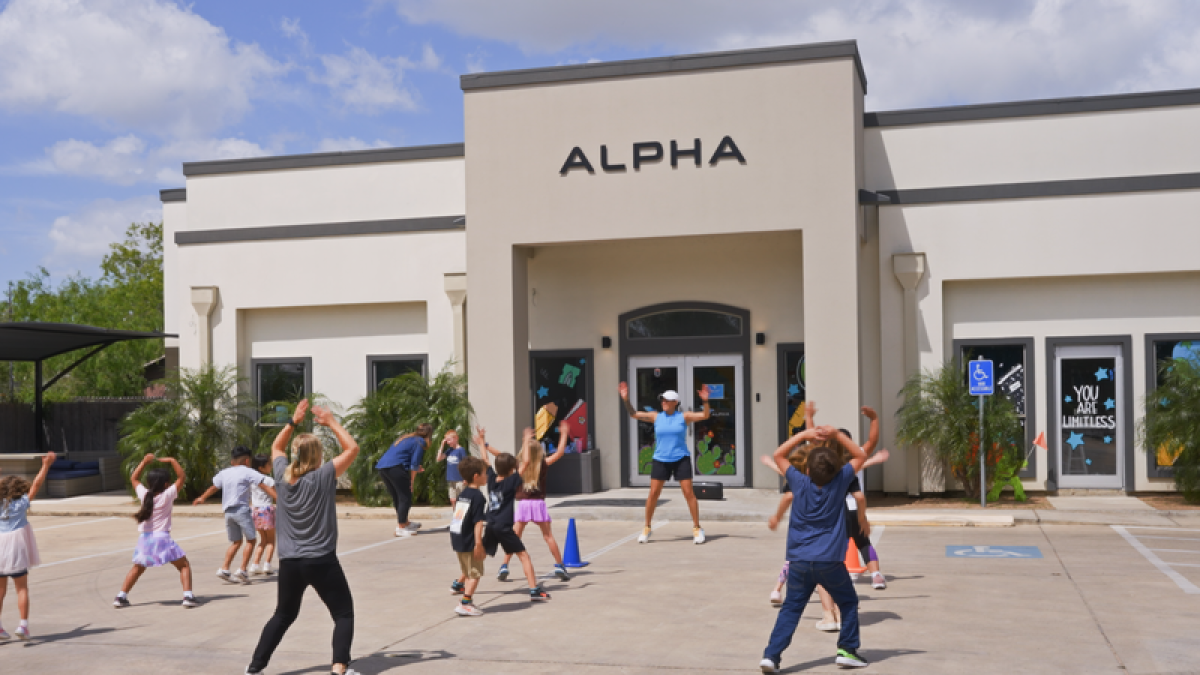
Education is not merely the transfer of data; it is a deeply social process. The mentor-student relationship provides more than just academic guidance; it offers moral scaffolding, emotional validation, and the modeling of human values. Critics worry that by reducing the role of the teacher to that of a “guide” and the primary interaction to that of a student and a screen, we risk creating a generation of learners who are academically proficient but socially and emotionally stunted.
There is also the question of the “digital divide.” While AI-driven models offer incredible potential for personalization, they also require significant technological infrastructure and access. If these highly efficient, mastery-based models become the domain of the affluent, there is a risk of widening the existing educational gap between those who can afford “optimized” learning and those stuck in underfunded, traditional systems.
the reliance on adaptive software raises questions about algorithmic bias. If the software that dictates a child’s learning path contains inherent biases in how it assesses “correctness” or “intelligence,” those biases could be codified into the student’s very foundation of knowledge, creating invisible barriers to success.
The Future of the Classroom
As we look toward the next decade, the Alpha School experiment serves as a bellwether for the broader educational landscape. Whether or not the “no-teacher” model becomes a global standard, the integration of AI into the classroom is inevitable. The real challenge for policymakers and educators will be finding the equilibrium between the efficiency of the machine and the essential, irreplaceable nuance of human connection.
The conversation is moving away from if technology will change education, to how One can use it to enhance human potential rather than diminish it. As the lines between digital and physical learning environments continue to blur, the definition of a “school” may soon be unrecognizable to those of us raised in the traditional era.
Next Steps: Educational researchers and school boards are expected to monitor the long-term academic and social outcomes of mastery-based micro-schools throughout the 2026-2027 academic year. Official reports on the efficacy of AI-integrated curricula are anticipated in upcoming pedagogical summits.
What do you think? Is a school without traditional teachers the future of learning, or a step too far? Share your thoughts in the comments below and share this article with your network.
Related reading