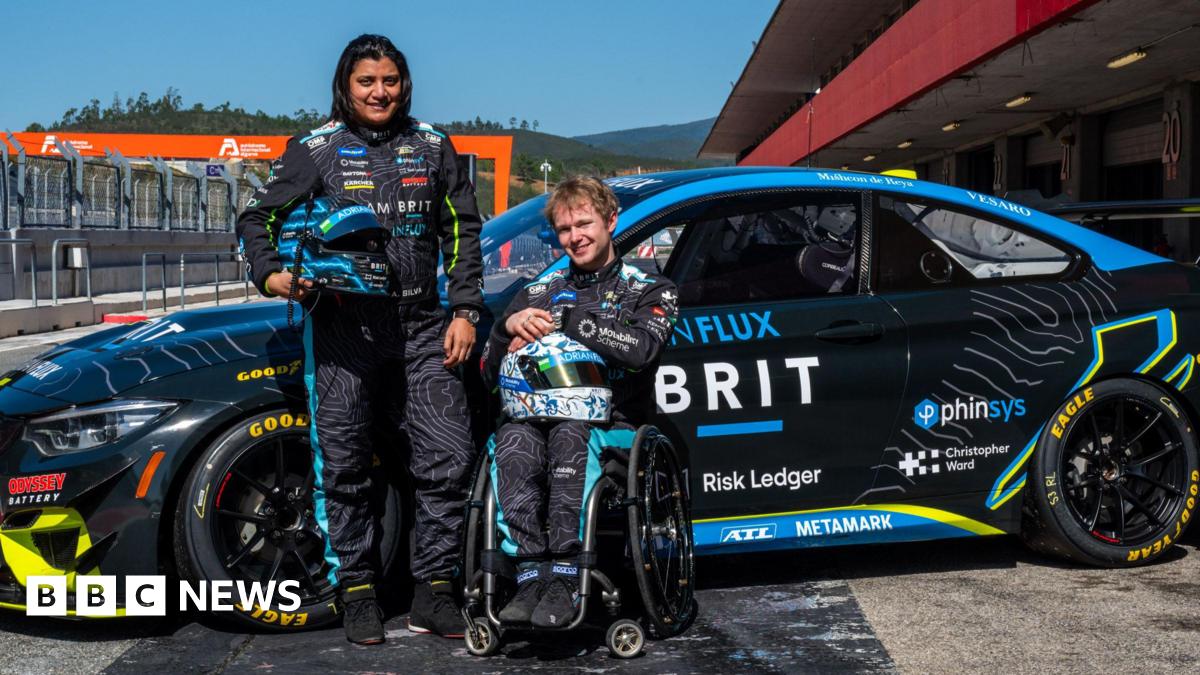
Noah Cosby and Asha Silva are competing as part of the world’s only competitive racing team composed entirely of disabled drivers, according to team documentation and driver profiles. The duo utilizes specialized adaptive technology to compete in high-speed motorsport, aiming to prove that physical impairments do not preclude professional racing performance.
The team focuses on breaking barriers within the motorsport industry by integrating advanced engineering with athlete-specific modifications. By competing in standard racing circuits, Cosby and Silva seek to shift the perception of disabled athletes from participants in “special” categories to legitimate competitors in mainstream racing.
Cosby and Silva represent a movement toward greater inclusivity in a sport traditionally defined by rigid physical requirements. Their presence on the track is designed to challenge the status quo of driver recruitment and vehicle design, demonstrating that adaptive controls can match the precision of traditional pedals and steering setups.
How adaptive technology enables disabled racing drivers
Competitive racing for disabled drivers relies on the conversion of standard foot-operated controls to hand-operated systems. According to technical specifications for adaptive racing, this often involves hand controls for acceleration and braking, allowing drivers with lower-limb impairments to maintain the millisecond precision required for professional lap times.

The engineering required for these vehicles must meet strict safety standards set by governing bodies like the Federation Internationale de l’Automobile (FIA). These regulations ensure that adaptive modifications do not compromise the structural integrity of the chassis or the efficacy of the safety cell during a crash.
For drivers like Cosby and Silva, the integration of these systems allows for a seamless interface between the athlete and the machine. This technical bridge is what enables them to compete on the same tracks and under the same conditions as non-disabled drivers, removing the physical limitation as a variable in race results.
Why a dedicated disabled racing team matters
The establishment of a competitive team consisting solely of disabled drivers serves as a visible proof of concept for the wider industry. While individual disabled drivers have competed in the past, a collective team structure provides shared resources, specialized mechanical support, and a unified platform for sponsorship.
This model addresses a systemic gap in motorsport where disabled athletes often lack the specialized technical crews needed to maintain adaptive equipment. By centralizing this expertise, the team reduces the barrier to entry for other aspiring disabled racers who may have the talent but lack the engineering infrastructure.
The impact extends beyond the podium. By maintaining a consistent presence in the paddock, the team forces a dialogue regarding accessibility in racing facilities, from pit lane layouts to the design of driver extraction procedures during emergencies.
The challenges of competing in mainstream motorsport
Despite the use of adaptive technology, drivers face significant hurdles in securing the same level of funding and sponsorship as their peers. Motorsport is one of the most expensive sports globally, and the additional cost of custom-engineering a cockpit for a disabled driver can increase the initial investment required to enter a series.
Furthermore, the physical toll of racing—including high G-forces and heat exhaustion—affects disabled drivers differently depending on their specific impairments. Managing thermoregulation and muscle fatigue requires tailored physiological monitoring and specific seat ergonomics to prevent injury and maintain focus during long-distance events.

The team’s objective is to normalize these adaptations so that they are viewed as standard equipment rather than “special” accommodations. This shift in framing is central to their mission of achieving true competitive parity.
As the team continues to enter new competitions, the focus remains on lap times and race standings. The goal is for the narrative to shift from the drivers’ disabilities to their performance as athletes, ensuring that their presence on the track is recognized as a legitimate sporting contribution.
Further updates on the team’s race schedule and technical developments are typically released through their official communications channels and sanctioned racing event registries.
Share your thoughts on the evolution of adaptive sports in the comments below.