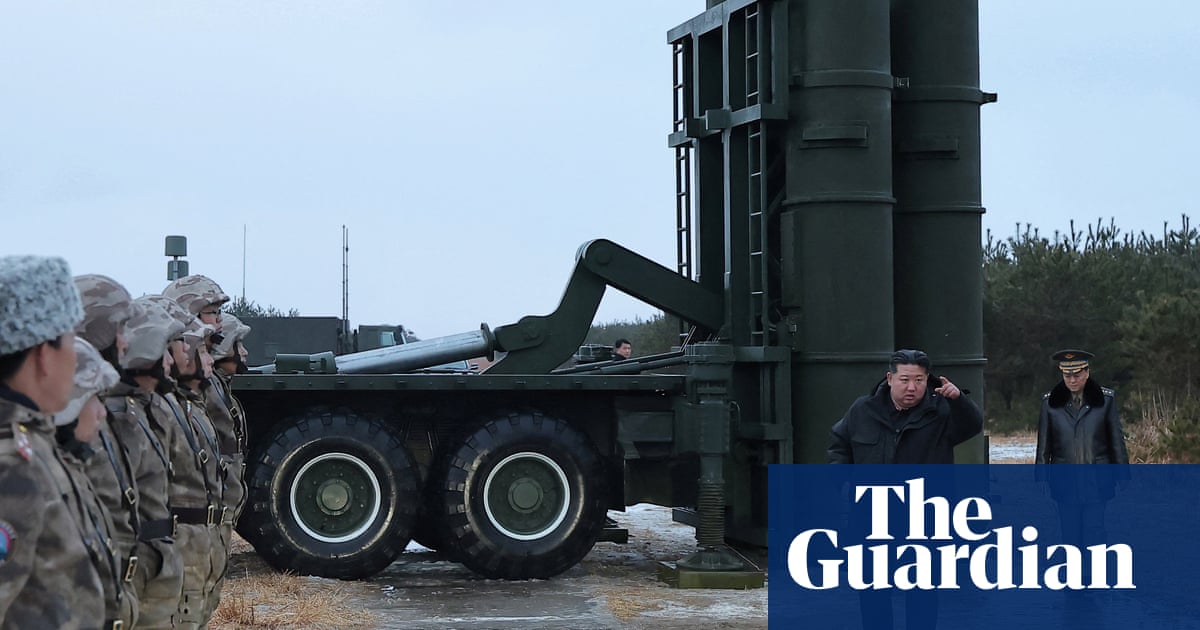
North Korea Launches Ballistic Missiles, Escalating Regional Tensions
North Korea conducted a ballistic missile launch sunday, marking its first such test since November and prompting strong condemnation from Japan. This action underscores the ongoing challenges to regional stability and raises concerns about Pyongyang’s accelerating weapons programs.
Details of the Launch
Japan’s defense ministry reported detecting the launch,noting the missiles reached altitudes of 50 kilometers and traveled distances of 900 and 950 kilometers respectively. These figures suggest a potential range capable of reaching targets within the region.
“North Korea’s nuclear and missile growth threatens the peace and stability of our country and the international society, and is absolutely intolerable,” stated japan’s defense minister, Shinjiro koizumi. This sentiment reflects the growing anxiety surrounding North Korea’s military advancements.
Potential Motivations Behind the Test
Analysts suggest several factors may have contributed to the timing of this launch. One theory links it to recent geopolitical events,specifically a military operation conducted by the United States.
Pyongyang has consistently maintained that its nuclear and missile programs are essential for deterring perceived regime change efforts from Washington. Despite repeated assurances from the U.S.that it has no such intentions, North Korea appears to operate under a different assumption.
Hong Min, an analyst at the Korea Institute for National Unification, explained, “They likely fear that if the United States so chooses, it could launch a precision strike at any moment, threatening the regime’s survival.” this fear likely fuels the continued development and testing of these weapons.
Diplomatic Implications and Regional Response
The missile test occurred just hours before South Korean President Lee Jae Myung was scheduled to travel to Beijing for talks with Chinese President Xi jinping. lee hopes to leverage China’s influence over North Korea to foster improved relations with Pyongyang.
However, this launch complicates those efforts and highlights the delicate balance of regional diplomacy. China remains a key economic partner for North Korea, and its cooperation is crucial for any potential de-escalation.
Preparations for a Major Party Congress
This launch also coincides with preparations for a landmark congress of North Korea’s ruling party – the first in five years. Economic policy, defense strategies, and military planning are expected to dominate the agenda.
Leader Kim Jong-un has already issued directives to considerably expand and modernize the country’s missile production capabilities. He ordered a 250% increase in current production capacity, according to state media.
Kim recently visited a facility involved in the production of tactical guided weapons, signaling a clear commitment to bolstering the nation’s military arsenal. This expansion underscores a strategic shift towards prioritizing military strength.
What This Means for You
This latest missile launch serves as a stark reminder of the ongoing instability in the region. You can expect increased diplomatic activity and perhaps further military posturing in the coming weeks.
Here’s a breakdown of key takeaways:
* Escalating Tensions: The launch heightens tensions and raises concerns about a potential escalation of conflict.
* North Korea’s Resolve: Pyongyang demonstrates a continued commitment to developing its weapons programs.
* Diplomatic Challenges: Efforts to denuclearize North Korea and improve regional relations face meaningful hurdles.
* Regional Impact: The launch impacts the security landscape of Northeast Asia and beyond.
As the situation evolves, staying informed about developments in North Korea is crucial for understanding the broader geopolitical context. Continued monitoring of the region and analysis of North Korea’s actions will be essential for navigating this complex landscape.