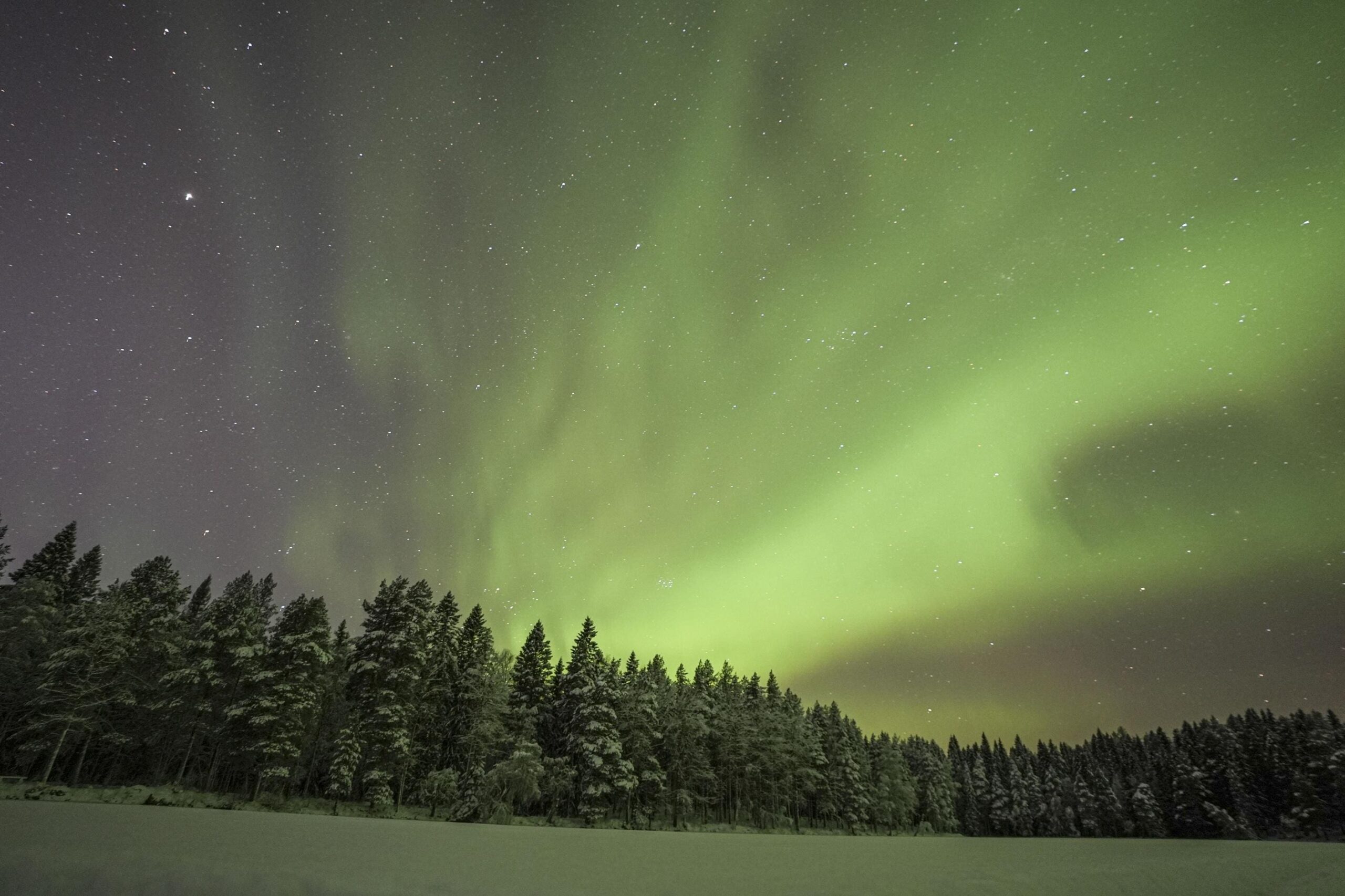
Stargazers in northern regions are turning their eyes upward this weekend following a fresh space weather forecast. The National Oceanic and Atmospheric Administration issued a Kp index of five for Saturday night, indicating that auroral displays can reach a level that is quite pleasing
to observe for those situated in favorable viewing zones according to the forecast.
This weekend’s activity follows a slightly milder outlook from the previous night. Friday night’s forecast tracked a Kp index of four according to the agency’s tracking data, which limited visibility to roughly nine states. Forecasters indicate that activity will shift farther north by Sunday, with the Kp index expected to drop back down to four and offer observers another potential viewing window.
Where the Aurora Borealis Will Be Visible Tonight
Saturday night’s expanded footprint spans up to 10 states across the northern tier of the country. The display is projected to reach areas including northern Washington, the northern tip of Idaho, northern Montana, the northernmost stretch of Wyoming, North Dakota, northern South Dakota, the northern half of Minnesota, the northern tip of Wisconsin, and the Upper Peninsula of Michigan as detailed in the agency’s regional breakdown.
For comparison, Friday night’s visibility touched a slightly smaller geographic band restricted to northeastern Washington, northeastern Montana, and the northernmost stretches of South Dakota alongside the other core northern states as reported in the preliminary outlook. Observers in Alaska maintain the highest and most consistent chance of catching vibrant displays across both nights.
Viewing and Photography Best Practices
Securing a clear view of the northern lights requires minimizing light interference and timing observations correctly. Forecasters recommend seeking out high vantage points away from urban light pollution between the peak hours of 10 p.m. and 2 a.m.
Capturing the display on camera benefits from specific equipment adjustments. Photographers using dedicated cameras should employ low apertures, wide-angle lenses, and sturdy tripods. Smartphone users are advised to turn off their flashes entirely and enable night mode features to properly capture low-light auroral colors.
Understanding Current Solar Activity Levels
The northern lights are generated when charged particles streaming from the Sun collide with Earth’s magnetic field and upper atmosphere. While no major geomagnetic storms have been forecast for the weekend to supercharge the displays, the baseline interaction remains strong enough to push the aurora into lower latitudes.
This weekend’s mild activity occurs against the backdrop of a larger solar cycle. The Sun reached the peak of its 11-year solar cycle in 2024, driving a 500-year high in auroral activity driven by frequent solar flares and storms. As time moves further away from that 2024 peak, overall auroral activity is expected to gradually decrease.
Keep reading