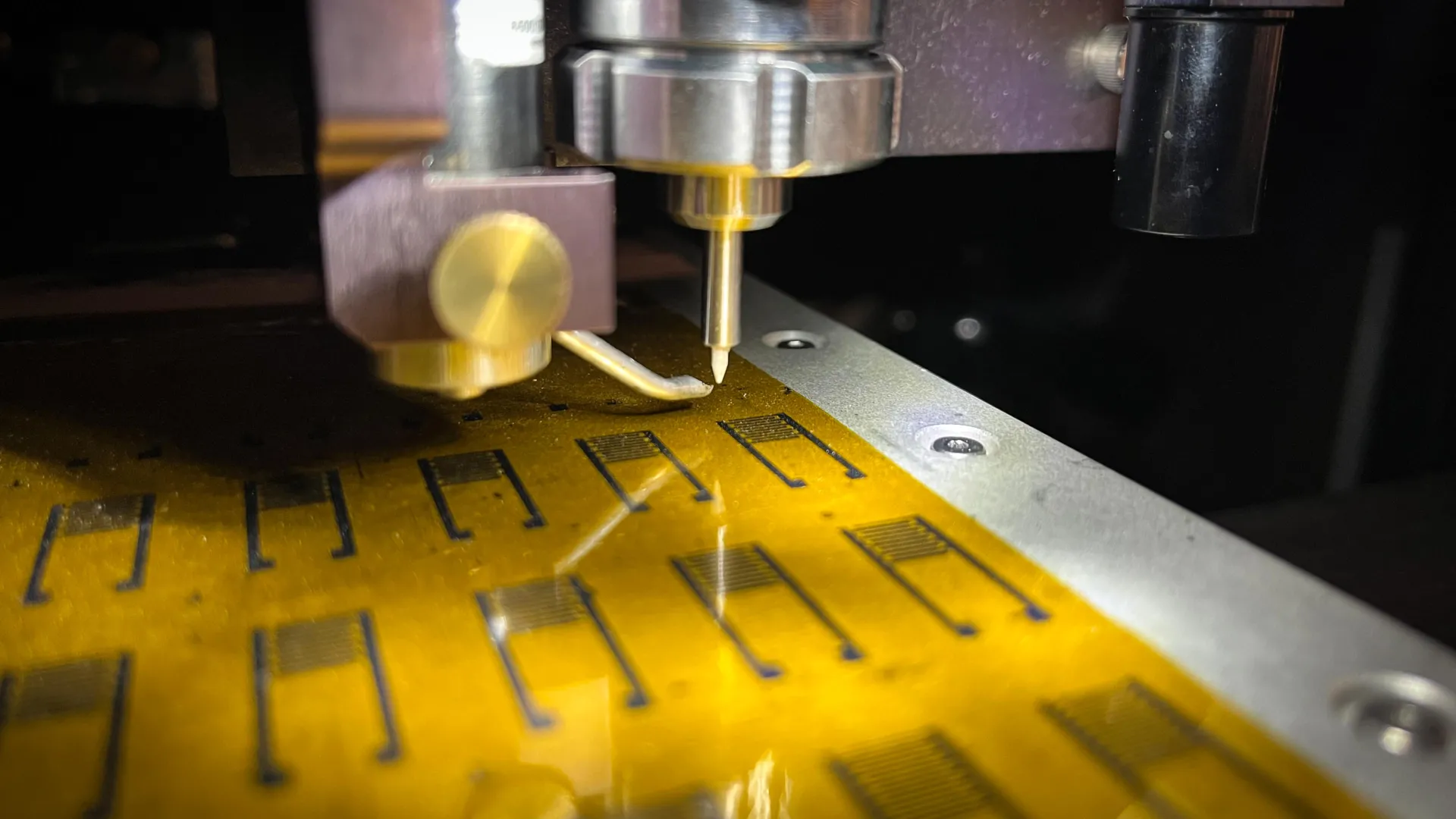
Scientists have taken a significant step toward merging technology with the human brain by developing artificial neurons capable of communicating directly with living brain cells. Researchers at Northwestern University created flexible, low-cost devices that generate electrical signals mimicking those of natural neurons, successfully activating real brain cells in mouse tissue experiments. This advancement represents progress in the field of bioelectronics, where the goal is to build interfaces that can seamlessly interact with neural circuits for potential therapeutic applications.
The development comes amid growing interest in neural interfaces that could one day help treat neurological disorders such as Parkinson’s disease, epilepsy, or paralysis. Although still in early stages, the ability of synthetic components to elicit responses from biological neurons suggests a pathway toward more advanced brain-machine integration. Experts caution that translating such findings to human applications will require extensive further study, particularly regarding long-term compatibility, safety and precision of signal transmission.
The research, led by engineers at Northwestern’s McCormick School of Engineering, focuses on creating soft, biocompatible materials that can conform to the brain’s complex structure. Unlike rigid traditional electrodes, these printed artificial neurons are designed to minimize tissue damage and improve signal fidelity. The devices operate using ionic currents, closely resembling the way real neurons communicate, rather than relying solely on electrical stimulation through metal interfaces.
In laboratory tests, the artificial neurons were able to trigger measurable activity in hippocampal brain slices from mice, a region critical for learning and memory. The signals produced were not only detectable but capable of inducing postsynaptic responses in neighboring biological neurons, indicating functional communication rather than mere electrical interference. This level of biomimicry marks a notable improvement over conventional neural probes, which often stimulate tissue broadly without replicating natural signaling patterns.
“We’re not just trying to record or stimulate the brain — we’re trying to speak its language,” said Jonathan Rivnay, associate professor of biomedical engineering at Northwestern and a lead researcher on the project. “By matching the ionic signaling mechanisms of natural neurons, we hope to achieve a more seamless and sustainable interface.” His team’s function was published in the journal Nature Communications in March 2023, detailing the materials science and electrophysiological validation behind the technology.
The artificial neurons are fabricated using conductive polymers and nano-structured materials that can be printed onto flexible substrates. This approach allows for scalable, low-cost production, which could be crucial if such devices are ever adapted for clinical leverage. The flexibility also enables better conformal contact with curved neural surfaces, reducing mechanical mismatch that can lead to inflammation or scar tissue formation over time.
While the current demonstrations were conducted in vitro — meaning outside a living organism — researchers emphasize that the results provide a strong foundation for future in vivo studies. The next phase will likely involve testing the devices in live animal models to assess stability, biocompatibility, and functional integration over extended periods. No human trials have been announced, and experts stress that any clinical translation remains years away.
The work contributes to a broader scientific effort to develop neuroprosthetics that can restore or enhance neural function. Similar research includes efforts by companies like Neuralink and academic labs exploring optogenetics, graphene-based electrodes, and silk-derived interfaces. However, the Northwestern team’s focus on replicating the brain’s own electrochemical language distinguishes their approach from many existing technologies that rely on external electrical pulses.
Experts in neural engineering note that while the breakthrough is promising, significant challenges remain. These include ensuring long-term stability of the materials in the brain’s wet, salty environment, achieving precise targeting of specific neural circuits, and avoiding immune responses that could degrade performance. Scaling from small tissue samples to the complex architecture of the human brain will require innovations in surgical delivery and device design.
Funding for the research came from multiple sources, including the National Science Foundation and the U.S. Department of Energy, supporting fundamental studies in biohybrid systems. Northwestern University has not disclosed plans for commercialization, and the technology remains in the preclinical research phase. The university’s Intellectual Property Office manages any potential innovations arising from the lab, though no public licensing agreements have been announced related to this specific work.
As the field advances, ethical considerations surrounding cognitive enhancement, privacy, and equitable access to neurotechnology are expected to grow in prominence. Organizations such as the World Health Organization and the OECD have begun examining the societal implications of brain-machine interfaces, calling for inclusive governance frameworks. For now, the focus remains on establishing safety and efficacy for medical applications rather than speculative uses.
The ability of artificial neurons to communicate with living cells opens latest possibilities for understanding neural circuits and developing next-generation therapies. While the journey from lab to clinic is long and complex, each incremental advance brings researchers closer to technologies that could one day help individuals affected by devastating neurological conditions. Continued interdisciplinary collaboration between materials scientists, neuroscientists, and clinicians will be essential to navigate the challenges ahead.
Looking forward, the Northwestern team plans to refine the materials for greater durability and explore ways to integrate the artificial neurons with existing neural recording systems. Future studies may also investigate whether these devices can not only stimulate but also adaptively respond to neural activity in real time — a key feature of true bidirectional communication. Such capabilities would be essential for applications like closed-loop neuroprosthetics, which adjust their output based on real-time brain feedback.
For those interested in following developments in neural interface technology, reputable sources include peer-reviewed journals such as Nature Neuroscience, Science Translational Medicine, and Journal of Neural Engineering. Major conferences like the Society for Neuroscience annual meeting and the International Conference on Biomedical Electronics and Biotechnology often feature early presentations of related research.
As scientific understanding deepens and engineering precision improves, the vision of machines that can truly converse with the brain moves incrementally closer to reality. While today’s breakthrough is confined to a petri dish, it represents a meaningful step in a long-term endeavor to heal, restore, and perhaps one day augment the human nervous system through intelligent, biocompatible design.
Stay informed about advances in neurotechnology and brain health by following updates from trusted medical research institutions and peer-reviewed publications. Share your thoughts on the future of brain-machine interfaces in the comments below, and help spread awareness by sharing this article with others interested in science and innovation.