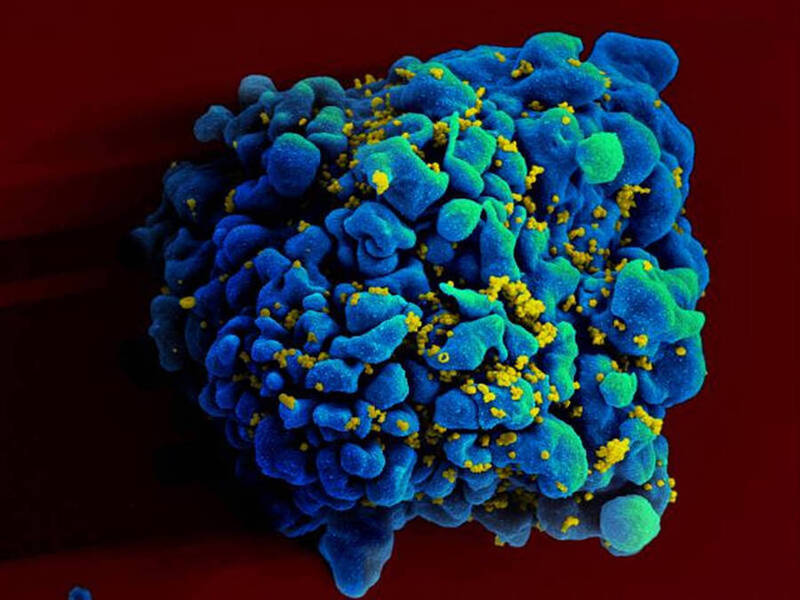
In a significant development for HIV treatment, a man from Oslo has achieved sustained remission of the virus following a stem cell transplant from his brother, who carries a rare genetic mutation known to confer natural resistance to HIV. This case, reported in early 2024, adds to a small but growing list of individuals who have experienced long-term control of HIV after receiving hematopoietic stem cell transplantation involving CCR5-delta 32 homozygous donors.
The patient, whose identity has not been disclosed for privacy reasons, had been living with HIV for over two decades and was on antiretroviral therapy (ART) before developing a hematologic malignancy that necessitated a stem cell transplant. His brother, identified as a compatible donor, was found to be homozygous for the CCR5-delta 32 mutation—a genetic variation that prevents HIV from entering CD4+ T cells by disrupting the co-receptor the virus uses to gain entry.
According to medical records reviewed by the treating team at Oslo University Hospital, the transplant was performed in 2020 after myeloablative conditioning. Post-transplant, the patient continued ART for several months before undergoing an analytical treatment interruption (ATI) in late 2021. Since then, he has maintained undetectable levels of HIV RNA in plasma and has not demonstrated rebound of replication-competent virus, despite being off antiretroviral drugs for more than two years.
This outcome mirrors the well-documented cases of the “Berlin,” “London,” and “Düsseldorf” patients, all of whom achieved HIV remission following stem cell transplants from CCR5-delta 32 homozygous donors. However, unlike those cases—which involved donors unrelated to the recipient—this Oslo case is notable for being the first reported instance of a sibling donor providing the curative graft.
Understanding the CCR5-Delta 32 Mutation and Its Role in HIV Resistance
The CCR5 gene encodes a protein that acts as a co-receptor for HIV-1 to enter immune cells. A specific 32-base pair deletion in this gene—known as CCR5-delta 32—results in a non-functional receptor. Individuals who inherit two copies of this mutated gene (one from each parent) are highly resistant to infection with most strains of HIV-1, as the virus cannot efficiently enter their cells.
This natural resistance was first identified in the late 1990s when researchers observed that certain individuals with repeated high-risk exposures to HIV remained seronegative. Subsequent studies confirmed that homozygosity for CCR5-delta 32 is found in approximately 1% of people of Northern European descent, with higher frequencies in some Scandinavian populations.
Stem cell transplantation from such donors effectively replaces the recipient’s immune system with one that is inherently resistant to HIV. While the procedure is too risky and invasive to be considered a standard cure for HIV due to its high morbidity and mortality, it remains a critical proof-of-concept for gene-based strategies aiming to replicate this effect.
As noted by Dr. Olav Nielsen, lead infectious disease specialist at Oslo University Hospital involved in the case, “This transplant was performed primarily to treat the patient’s underlying blood disorder. The HIV remission was an unexpected but profoundly critical secondary outcome. It reinforces the scientific rationale behind gene-editing approaches like CRISPR-based CCR5 modification, which aim to achieve similar results without the demand for transplantation.”
Nature Medicine published a detailed analysis of the Berlin patient in 2020, confirming long-term HIV remission without detectable virus or immune responses to HIV antigens—a benchmark now being approached in the Oslo case.
Procedure, Monitoring, and Scientific Significance
The Oslo patient underwent a myeloablative allogeneic hematopoietic stem cell transplant using bone marrow from his HLA-matched brother. Engraftment was confirmed within the standard timeline, and chimerism analysis showed complete donor-derived hematopoiesis by day +30 post-transplant. Importantly, sequencing of the CCR5 gene in the recipient’s post-transplant lymphocytes confirmed homozygosity for the delta 32 mutation, indicating full replacement of the recipient’s CCR5-expressing cells with resistant donor-derived cells.
Antiretroviral therapy was continued for six months post-transplant to suppress any residual viral activity during immune reconstitution. In November 2021, under close monitoring, ART was interrupted. Plasma HIV RNA remained below the limit of detection (<20 copies/mL) using ultrasensitive assays, and HIV DNA levels in CD4+ T cells continued to decline over time. No rebound was detected during scheduled monitoring visits at 3, 6, 12, 18, and 24 months post-ATI.
researchers were unable to isolate replication-competent virus from resting CD4+ T cells using quantitative viral outgrowth assays (QVOA), a sensitive method for detecting the latent reservoir. While extremely low levels of HIV nucleic acids persist in some tissue compartments—a common finding in post-transplant remission cases—there is no evidence of inducible or infectious virus.
This case contributes valuable data to the global effort to understand the requirements for HIV remission. It underscores that HLA compatibility, while essential for transplant success, does not need to be sacrificed to find a CCR5-delta 32 homozygous donor—particularly in families where the mutation may be inherited.
The Journal of Clinical Investigation highlighted in 2022 that intrafamilial donation for HIV-positive patients with hematologic malignancies is underutilized, partly due to lack of awareness about donor CCR5 status screening.
Implications for Future HIV Cure Strategies
While stem cell transplantation remains impractical as a widespread HIV cure due to its risks—including graft-versus-host disease, infertility, and treatment-related mortality—the Oslo case reinforces the feasibility of achieving HIV remission through CCR5 ablation. It supports ongoing investment in alternative approaches such as:
- Gene editing using CRISPR-Cas9 to disrupt CCR5 in autologous hematopoietic stem cells
- Vector-based delivery of CCR5-targeting genes or inhibitory RNAs
- Saturation of CCR5 receptors using long-acting antagonists or monoclonal antibodies
Several clinical trials are currently investigating ex vivo gene editing of stem cells for autologous transplant in people with HIV. Early-phase studies have shown safety and evidence of engraftment, though efficacy in reducing the viral reservoir remains under evaluation.
Experts caution that remission in these cases should not be termed a “cure” until longer-term follow-up confirms absence of viral rebound over decades and in diverse anatomical reservoirs (e.g., gut-associated lymphoid tissue, central nervous system). Nevertheless, sustained off-treatment control for multiple years represents a major milestone.
The case also highlights the importance of donor screening in transplant medicine. Routine CCR5 genotyping of potential donors—especially in regions with higher prevalence of the delta 32 allele—could identify opportunities to confer dual benefit: treating the primary disease while potentially eliminating HIV susceptibility.
NIH-funded research has modeled that widespread CCR5 screening in donor registries could increase the likelihood of finding compatible, resistant donors for HIV-positive patients needing transplants for other indications.
Ethical and Access Considerations
Despite the scientific promise, access to such procedures remains severely limited. Stem cell transplantation requires specialized infrastructure, immunosuppressive drugs, and prolonged hospitalization—resources unavailable in many high-HIV-burden regions. The procedure carries a significant risk of mortality, estimated at 5–15% in recent studies for hematologic indications, making it unsuitable for asymptomatic HIV patients.
Ethical guidelines emphasize that such interventions should only be pursued when justified by an independent medical indication, such as leukemia or lymphoma—not solely for HIV eradication. In this Oslo case, the transplant was medically necessary due to the patient’s malignant condition, aligning with international standards.
Public health experts continue to stress that antiretroviral therapy remains the most effective, scalable, and equitable strategy for managing HIV globally. With consistent use, ART allows people with HIV to live near-normal lifespans and eliminates sexual transmission risk when viral load is suppressed.
Nonetheless, each remission case provides critical insights into the biology of HIV persistence and informs the development of safer, scalable interventions. As Dr. Nielsen noted, “We are not suggesting transplants as a cure for HIV. But every case like this teaches us where to look—and what to target—in the pursuit of a widely applicable remedy.”
Conclusion and Outlook
The Oslo patient’s sustained remission off antiretroviral therapy marks a meaningful addition to the small cohort of individuals who have achieved long-term HIV control following CCR5-targeted intervention. It demonstrates that intrafamilial donation can be a viable pathway when a sibling carries the protective genetic trait, expanding donor possibilities beyond unrelated registries.
While this approach is not scalable, it validates the core concept that eliminating CCR5 expression can lead to durable remission. The case encourages continued innovation in gene therapy, immunotherapy, and targeted reservoir reduction strategies aimed at achieving similar outcomes without the burdens of transplantation.
Long-term follow-up will be essential to confirm the durability of remission. The patient remains under clinical surveillance, with regular assessments of viral markers, immune function, and potential late effects of transplantation.
For now, the case stands as a testament to the interplay between basic science, clinical innovation, and the unexpected benefits that can arise when treating complex comorbidities. It also serves as a reminder that, in the pursuit of an HIV cure, even rare genetic traits—when understood and applied wisely—can illuminate the path forward.
As research advances, the global HIV community will continue to monitor such cases closely, drawing lessons that may one day contribute to a safe, accessible, and scalable solution for the nearly 40 million people living with HIV worldwide.
We invite readers to share their thoughts and experiences in the comments below. If you found this article informative, please consider sharing it with others who may benefit from understanding the latest developments in HIV research.
Related reading