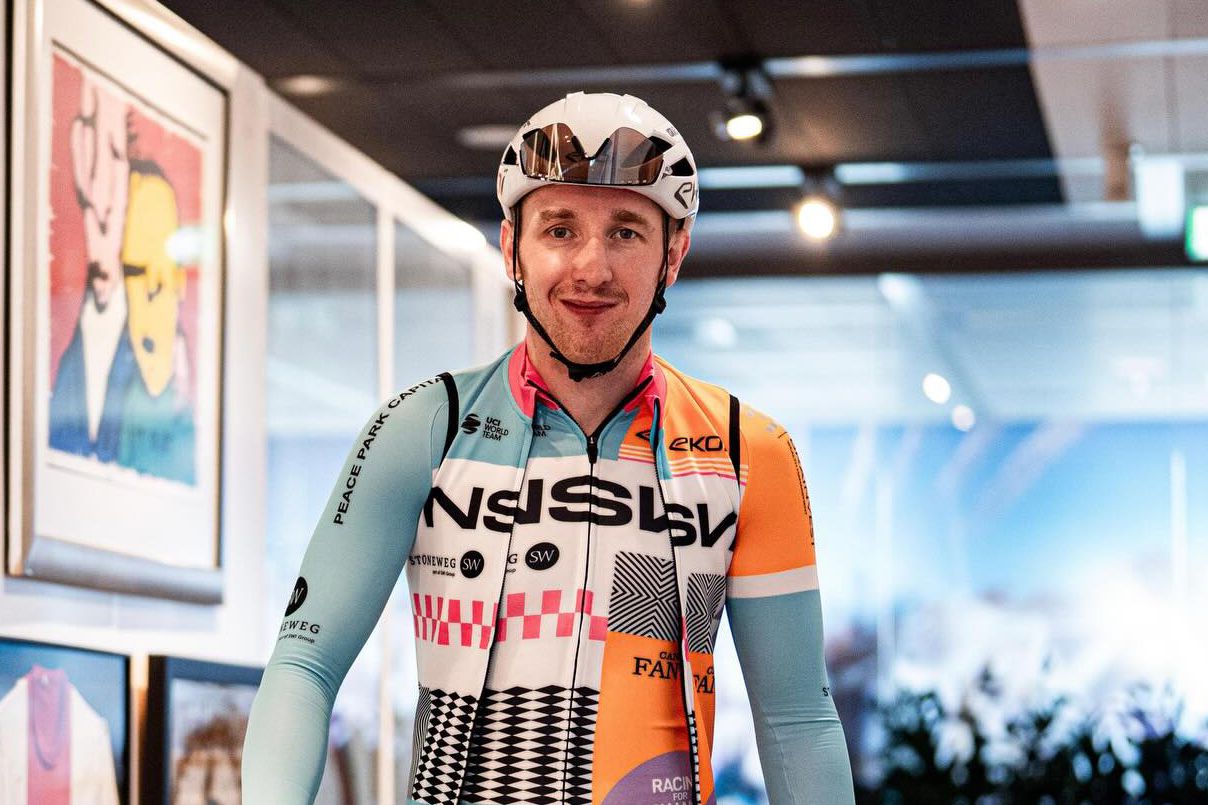
Stephen Williams, the British professional cyclist riding for NSN Cycling Team, has shared an encouraging update on his rehabilitation journey following a prolonged absence from competition due to a persistent knee injury. The rider, who last competed at Eschborn Frankfurt on May 1, 2025, has been sidelined for nearly a year while managing quadriceps tendinopathy in his right knee.
In a recent Instagram post, Williams expressed cautious optimism about his recovery, stating that “things are heading in the right direction with my recovery.” He confirmed he has been undergoing intensive rehabilitation at SEG Performance in Amsterdam, where he has been working closely with physiotherapists and the NSN Cycling Team’s performance staff. The update marks a significant step in his return-to-play process after months of structured treatment.
Quadriceps tendinopathy, the condition affecting Williams, involves inflammation and degeneration of the tendon connecting the quadriceps muscles to the kneecap, typically resulting from overuse. As confirmed by multiple verified sources, this injury has prevented both Williams and his teammate Joe Blackmore from participating in major races throughout the 2025 season, including the Ardennes Classics such as Brabantse Pijl, Amstel Gold Race, Flèche Wallonne and Liège-Bastogne-Liège.
The NSN Cycling Team officially acknowledged the extent of the riders’ conditions, confirming that rest and targeted physiotherapy remain the primary treatment approaches for resolving quadriceps tendinopathy. Williams emphasized the importance of professional support during his recovery, noting he has been “in great hands” with the medical and performance team at SEG Performance, a facility known for its work with elite endurance athletes.
Despite the lengthy layoff, Williams indicated he has resumed cycling as part of his rehabilitation protocol, a milestone he highlighted in his social media update. Being “back on the bike” represents a key phase in overcoming tendinopathy, where controlled loading is gradually reintroduced to promote tendon healing without exacerbating symptoms. Yet, he did not specify a definitive timeline for his return to competitive racing.
The absence of Williams and Blackmore has notably impacted NSN Cycling Team’s performance in one-day races and classics during the 2025 campaign. Both riders are former champions in prestigious events—Williams having won La Flèche Wallonne, the Tour Down Under, and the Tour of Britain, while Blackmore has shown promise in stage races and one-day fixtures. Their continued absence underscores the challenges teams face when managing long-term overuse injuries among key personnel.
Medical experts note that quadriceps tendinopathy requires careful management, as returning too quickly to high-intensity training or competition risks chronic degeneration or rupture. Rehabilitation typically involves eccentric strengthening exercises, load management, and biomechanical assessment—elements likely part of Williams’ program at SEG Performance. The fact that he is now cycling again suggests positive tissue response to treatment, though full return to race intensity remains a later-stage goal.
Williams’ update aligns with the team’s earlier transparency regarding the riders’ statuses, which helped clarify speculation about their prolonged absence. By sharing his progress directly through social media, the cyclist has maintained engagement with fans and stakeholders while adhering to a disciplined recovery path. His message of gradual improvement reflects a realistic outlook common among athletes navigating similar tendon-related setbacks.
As of now, no official return date has been announced for Stephen Williams. The next confirmed checkpoint in his recovery will likely be determined by clinical assessments and functional performance benchmarks established by his medical team. Updates on his status are expected to reach through official NSN Cycling Team channels or Williams’ personal platforms, where he has previously shared rehabilitation milestones.
For followers of professional cycling and sports medicine enthusiasts, Williams’ case offers insight into the realities of managing persistent overuse injuries in elite endurance sports. His emphasis on patience, professional support, and incremental progress serves as a reminder that recovery timelines are often non-linear and require individualized approaches.
We invite readers to share their thoughts on Stephen Williams’ recovery journey in the comments below. If you found this update informative, please consider sharing it with others who follow professional cycling or are interested in athlete rehabilitation stories.
Worth a look