
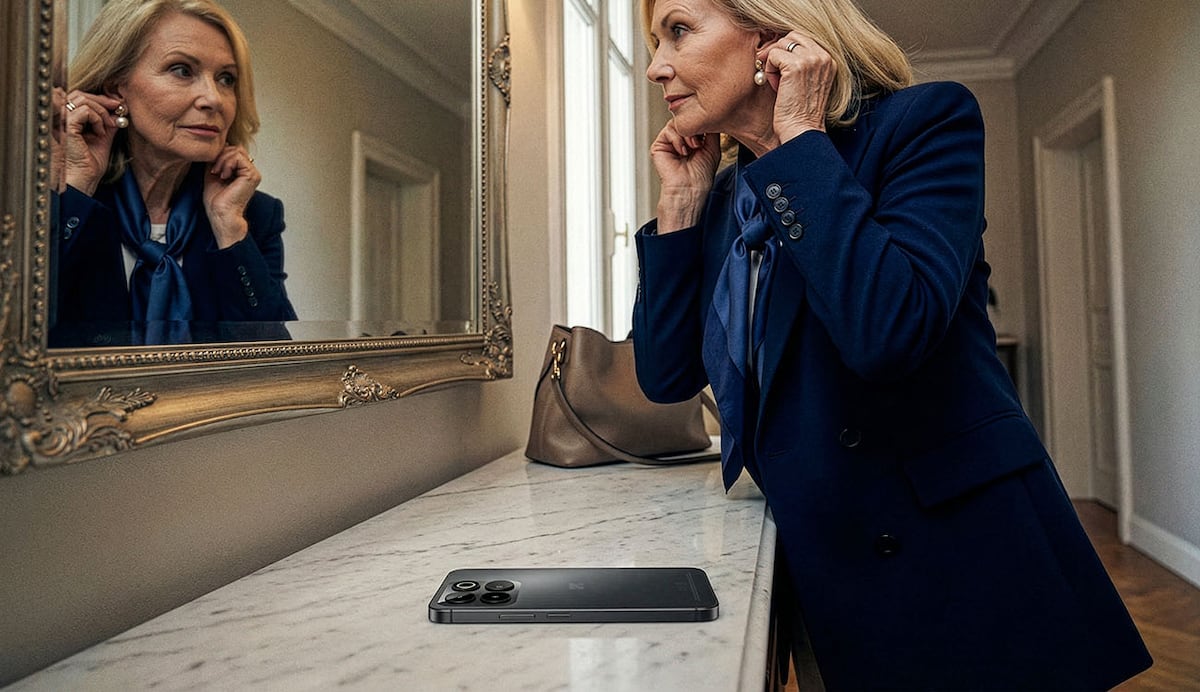
For years, the “senior phone” market has been defined by a specific, often stigmatizing aesthetic: oversized physical buttons, chunky plastic casings, and stripped-down software that often felt more like a limitation than a feature. However, the launch of the SPC ZEUS 2 ELITE marks a significant pivot in how the industry approaches digital inclusion for older adults.
The SPC ZEUS 2 ELITE senior smartphone is not just an incremental update; it is a deliberate attempt to bridge the gap between high-end consumer electronics and accessibility. By blending a premium, modern design with specialized assistance tools, SPC is challenging the notion that accessibility must come at the cost of style or performance.
As technology becomes increasingly central to daily survival—from banking to healthcare—the “digital barrier” for seniors has become a pressing social issue. The ZEUS 2 ELITE addresses this by offering a device that looks and feels like any other flagship smartphone, ensuring that users can maintain their independence without feeling singled out by their hardware.
This shift in philosophy is evident in the device’s hardware. Rather than relying on the physical navigation keys found in previous generations, the ZEUS 2 ELITE adopts a full-screen approach, signaling a move toward a more intuitive, gesture-based interaction model that aligns with modern smartphone standards while remaining accessible to those who did not grow up with the technology.
A Modern Aesthetic Meets Inclusive Design
One of the most striking changes in the ZEUS 2 ELITE is the complete removal of the physical buttons that characterized the original Zeus and Zeus 2 models. This design choice is intended to make the device feel more natural and less like a “specialized” tool. By adopting a contemporary form factor, SPC aims to provide a device that accompanies the user in their daily life without “labels or barriers,” avoiding the perception that the user is dependent on a simplified device.

The centerpiece of this design is a 6.7-inch display. To ensure a smooth visual experience—which is particularly important for users who may struggle with stuttering animations or low-contrast screens—the display features a 120 Hz refresh rate. This high refresh rate improves fluidity when scrolling through news feeds, watching videos, or navigating the interface, reducing visual friction for the user.
This commitment to a “premium” feel extends to the build quality and the visual presentation, moving the senior-focused category away from the utilitarian “medical device” look and toward a lifestyle product. The goal is to empower users to engage with apps like WhatsApp, conduct video calls, and browse the web with the same confidence as any other smartphone user.
High-End Hardware for Every Generation
While the accessibility features are the headline, the underlying hardware of the SPC ZEUS 2 ELITE is surprisingly robust, mirroring the specs of mid-to-high-range contemporary devices. This ensures that the phone does not become obsolete quickly and can handle the resource-heavy nature of modern applications.
At its core, the device is powered by an octa-core processor, providing the necessary computing power for multitasking. To support this, the phone comes equipped with 8 GB of physical RAM. In a move to further enhance performance, SPC has implemented virtual RAM technology, allowing users to expand the available memory by an additional 8 GB, totaling up to 16 GB of virtual memory. This is critical for ensuring that the device does not lag when multiple apps are open simultaneously.

Storage is another area where the ZEUS 2 ELITE does not compromise, offering 128 GB of internal space. This capacity is essential for seniors who frequently store high-resolution photos of family, long videos, and various communication apps without worrying about constant storage warnings.
The imaging capabilities are similarly impressive. The device features a triple main camera system with a 50 MP primary sensor, designed to capture sharp, clear images. For the increasingly important world of video calling, the phone includes a 32 MP front-facing camera, ensuring that family connections are maintained with high definition and clarity.
Connectivity, Power, and Security
To support a global and mobile lifestyle, the SPC ZEUS 2 ELITE incorporates several modern connectivity standards that are often omitted from senior-specific devices. The inclusion of NFC (Near Field Communication) allows users to make contactless mobile payments, reducing the need to carry physical wallets and simplifying the checkout process.
The device also supports eSIM technology, providing flexibility in how users manage their cellular plans and making it easier to switch carriers or add a secondary line for travel. Security is handled via a biometric unlocking system, which offers a more accessible alternative to remembering complex passwords or patterns, which can be a significant pain point for some elderly users.
Power management is handled by a substantial 5,000 mAh battery, designed to provide a full day of autonomy on a single charge. To minimize downtime, the phone supports 33-watt swift charging. According to technical specifications, this allows the battery to reach a 50 percent charge in approximately 30 minutes, ensuring the device is ready for use even if the user forgets to charge it overnight.
Bridging the Digital Divide: Modo Fácil and SPC Care
Hardware alone cannot solve the problem of digital accessibility; the software must be equally thoughtful. The SPC ZEUS 2 ELITE introduces “Modo Fácil” (Easy Mode), a specialized interface that transforms the standard Android environment into something more intuitive.
Modo Fácil replaces the complex grid of small icons with a highly visual interface featuring enlarged icons and expanded text. This reduces the cognitive load required to navigate the phone and minimizes the risk of accidental touches. One of the most practical aspects of this mode is the integration of direct shortcuts for up to 12 favorite contacts, allowing users to reach their most important connections with a single tap.

Beyond the on-device interface, SPC has integrated “SPC Care,” a remote assistance service. This feature is designed to maintain user independence while providing a safety net. It allows authorized family members or caregivers to provide remote help, guiding the user through the device’s functions or helping them resolve technical issues without needing to be physically present.
This combination of a simplified interface and a remote support system addresses the primary fear many seniors have when adopting new technology: the fear of “breaking” the device or becoming stuck in a menu they cannot exit. By providing a way back through SPC Care, the ZEUS 2 ELITE encourages exploration and digital literacy.
Key Specifications at a Glance
- Display: 6.7-inch screen with 120 Hz refresh rate
- Processor: Octa-core CPU
- Memory: 8 GB RAM (expandable by 8 GB via virtual RAM)
- Storage: 128 GB
- Cameras: 50 MP triple rear camera; 32 MP front camera
- Battery: 5,000 mAh with 33W fast charging (50% in 30 mins)
- Special Features: Modo Fácil, SPC Care remote assistance, NFC, eSIM, and biometric unlock
The SPC ZEUS 2 ELITE represents a shift toward “invisible accessibility.” By integrating high-performance hardware with a sophisticated support ecosystem, it removes the stigma of the senior phone and replaces it with a tool for empowerment. It acknowledges that seniors are not a monolithic group with limited needs, but users who deserve the same quality of technology as anyone else, supplemented by the specific tools they need to succeed.
As the industry continues to evolve, the success of the ZEUS 2 ELITE may serve as a blueprint for other manufacturers, proving that the best way to help the elderly navigate the digital world is not to give them a “simpler” phone, but to give them a powerful one that is designed with empathy.
For more information on the availability and regional pricing of the SPC ZEUS 2 ELITE, users are encouraged to visit the official SPC product announcements or contact local authorized distributors.
We want to hear from you: Do you think the removal of physical buttons makes senior phones more or less accessible? Share your thoughts in the comments below or share this article with someone looking for a more inclusive tech solution.