Nvidia‘s Alpamayo: Ushering in a New Era of ’Reasoning’ for Self-Driving Cars – A Deep Dive
(Published January 6, 2026)
The future of autonomous driving took a significant leap forward at CES 2026, as Nvidia unveiled Alpamayo, a groundbreaking new technology platform designed to imbue self-driving cars with something beyond simple automation: reasoning. This isn’t just about navigating roads; it’s about enabling vehicles to understand, predict, and explain their actions – a critical step towards widespread public trust and adoption of fully autonomous systems.
Nvidia, already a dominant force powering the AI revolution through it’s chips and software, is strategically expanding its reach into physical AI applications. Alpamayo represents a pivotal shift, moving the company beyond component supplier to a comprehensive platform provider for the burgeoning physical AI ecosystem. This move is not merely technological; it’s a calculated response to the evolving market, where hardware integrated with sophisticated AI is becoming the new battleground for innovation.
Beyond Automation: The Power of ‘Reasoning’
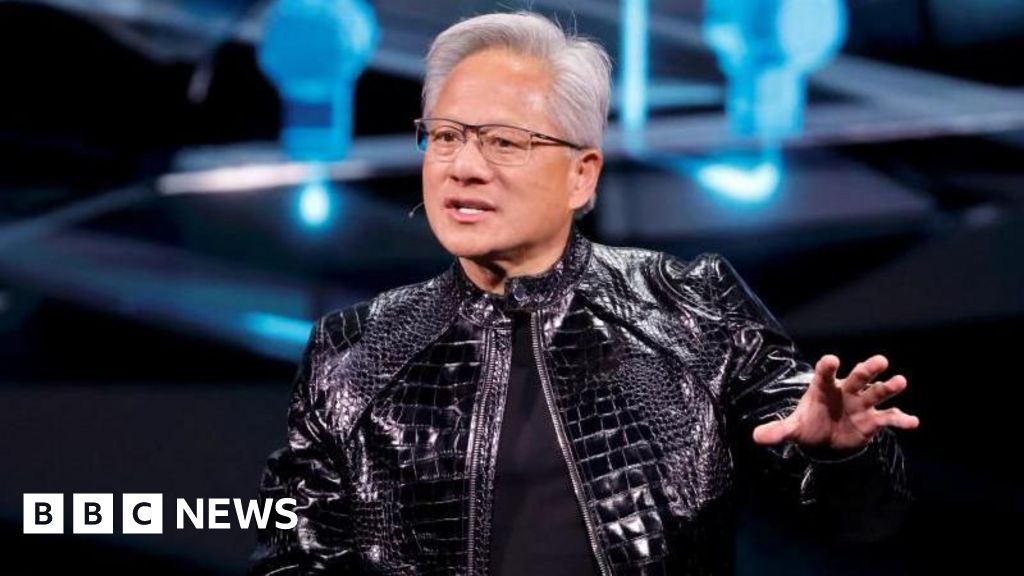
During his keynote address at CES, Nvidia CEO Jensen Huang articulated the core promise of Alpamayo: to allow autonomous vehicles to “think through rare scenarios, drive safely in complex environments, and explain their driving decisions.” This is a departure from current systems that often rely on pre-programmed responses to known situations. Alpamayo aims to replicate the cognitive processes of a human driver,anticipating potential hazards and making informed decisions even in unpredictable circumstances.
The demonstration showcased at CES was particularly compelling. A Mercedes-Benz vehicle,powered by Alpamayo,navigated the challenging streets of San Francisco with a passenger comfortably observing,hands-free. Huang emphasized that the vehicle doesn’t just react; it communicates its intentions, outlining its reasoning process before executing maneuvers. This clarity is crucial for building passenger confidence and addressing safety concerns.
Mercedes-Benz Partnership: A Real-World Testbed
Nvidia isn’t simply developing Alpamayo in a vacuum. A key partnership with Mercedes-Benz will see the technology integrated into a driverless car slated for release in the US in the coming months, with subsequent rollouts planned for Europe and Asia. This collaboration provides a vital real-world testbed for Alpamayo, accelerating its growth and refinement through practical submission.The choice of Mercedes-Benz, a brand synonymous with luxury and engineering excellence, further underscores Nvidia’s commitment to delivering a premium autonomous driving experience.
The Open-Source Advantage & The ‘ChatGPT Moment’ for Robotics
A significant aspect of Nvidia’s strategy is the open-source nature of Alpamayo’s underlying AI model. The code is now freely available on Hugging Face, a leading machine learning platform, allowing researchers and developers worldwide to access, analyse, and contribute to its improvement. This collaborative approach fosters innovation and accelerates the development of autonomous vehicle technology.
Huang boldly predicted that “The ChatGPT moment for physical AI is almost here,” suggesting that Alpamayo could trigger a similar explosion of innovation and application as the release of openai’s groundbreaking language model. this vision reflects Nvidia’s belief that AI is poised to transform not just the digital world, but the physical one as well.
Industry Reaction & Competitive Landscape
Analysts are already recognizing the significance of Alpamayo.paolo Pescatore,analyst at PP Foresight,stated from Las Vegas that “NVIDIA’s pivot toward AI at scale and AI systems as differentiators will help keep it way ahead of rivals.” He further emphasized that Alpamayo represents “a profound shift for NVIDIA, moving