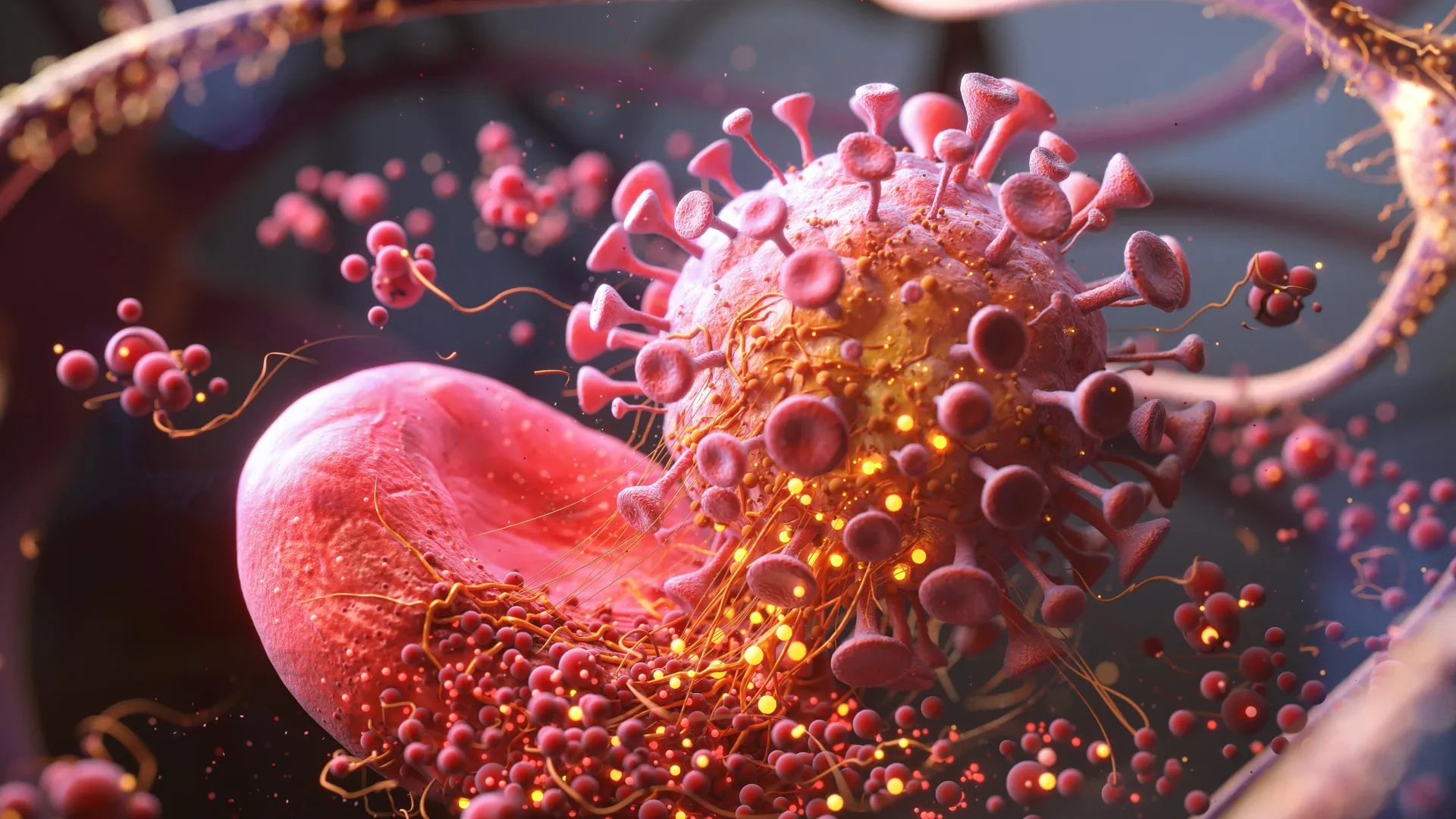
The Migrion: A Newly Discovered Highway for Viral Spread and Severe Disease
How do viruses navigate the complex landscape of the body to cause infection? For decades, the understanding of viral transmission has centered on direct cell-to-cell contact and the release of viral particles into surrounding tissues. However, groundbreaking research published in Science Bulletin reveals a previously unknown mechanism – the “Migrion” – that dramatically accelerates viral spread and increases disease severity. This discovery, spearheaded by scientists at Peking University Health Science Center and the Harbin Veterinary Research institute, fundamentally alters our understanding of viral pathogenesis and opens new avenues for therapeutic intervention.
Beyond Extracellular Vesicles: Introducing the Migrion
Viruses are masters of adaptation, constantly evolving to exploit host cellular machinery for their own propagation. This latest research demonstrates a notably ingenious strategy. The team focused on vesicular stomatitis virus (VSV), a pathogen known for causing flu-like symptoms, but the implications extend far beyond this single virus. They discovered that during VSV infection, viral genetic material and proteins aren’t simply released haphazardly. Instead, they are actively packaged into migrasomes – dynamic cellular structures that form specifically when cells are in motion.
This isn’t merely a coincidental association. The researchers observed that certain migrasomes contained VSV nucleic acids and displayed the VSV surface protein, VSV-G, on their outer membrane.These unique, large virus-like structures were aptly named “Migrions.” Crucially, Migrions represent a distinct mode of viral transport, a hybrid entity constructed from both viral and cellular components, unlike customary viral spread via extracellular vesicles (EVs). EVs operate thru a different mechanism, making Migrions a novel and possibly more efficient transmission pathway.
Accelerated Replication: The Power of Parallel Infection
The implications of Migrion-mediated viral spread are significant. When viruses travel within Migrions, they replicate far more rapidly within newly infected cells. This accelerated growth isn’t simply a matter of increased viral load; itS a consequence of how the virus enters the cell. Migrions deliver multiple copies of the viral genome simultaneously, initiating replication promptly and in parallel. Imagine a single delivery truck versus a convoy – the latter delivers a far greater payload, much faster. This parallel replication bypasses the typical lag phase of infection, giving the virus a critical head start.
Moreover, the study revealed a surprising level of versatility. Migrions aren’t limited to carrying a single type of virus.They can co-transmit different viruses simultaneously, a capability not observed in traditional EV-mediated spread. This raises the alarming possibility of Migrions facilitating the emergence of novel viral strains through recombination events within the host.
A Trojan Horse Mechanism: Entering Cells with Ease
The Migrion’s efficiency extends to its method of cellular entry. unlike free-floating virus particles that rely on specific receptors on the cell surface, Migrions utilize endocytosis – a process where the cell membrane engulfs the Migrion. this receptor-independent entry allows the migrion to infect a wider range of cells, bypassing typical cellular defenses.
Once inside,the acidic surroundings within the endosome activates the VSV-G protein on the Migrion’s surface,triggering fusion with the endosomal membrane.This fusion releases the viral contents directly into the cell, providing an unobstructed path to replication. It’s a remarkably efficient and stealthy mechanism, effectively turning the cell’s own machinery against itself.
Severe Disease in Animal Models: A Warning Sign
The increased infectiousness of Migrions isn’t merely a theoretical concern. Experiments conducted in mice demonstrated a stark difference in disease severity. Animals exposed to Migrion-mediated infection developed substantially more severe illness, including debilitating lung and brain infections. These infections were characterized by encephalitis and,tragically,frequently resulted in death. This data underscores the heightened pathogenic potential of this newly discovered transmission route.
Rethinking Viral Dissemination and Future Implications
The discovery of the Migrion represents a paradigm shift in our understanding of viral transmission. Researchers now propose that this “chimeric structure” – a fusion of virus and migrasome – represents an entirely new model for how viruses move between cells. By directly linking viral spread to cell movement, this mechanism challenges long-held assumptions about infection propagation.
Instead of relying solely on passive diffusion,viruses can actively exploit the body’s own migratory machinery to move efficiently and systemically. This migration-dependent strategy offers a compelling explanation for how certain infections escalate so rapidly and spread to distant organs.
This research opens exciting, yet challenging, avenues for future investigation. Understanding the precise mechanisms regulating Migrion formation and trafficking could lead to the development of novel antiviral therapies designed to disrupt this pathway, potentially mitigating disease severity and preventing widespread infection. The Migrion isn’t just a new discovery;
Worth a look