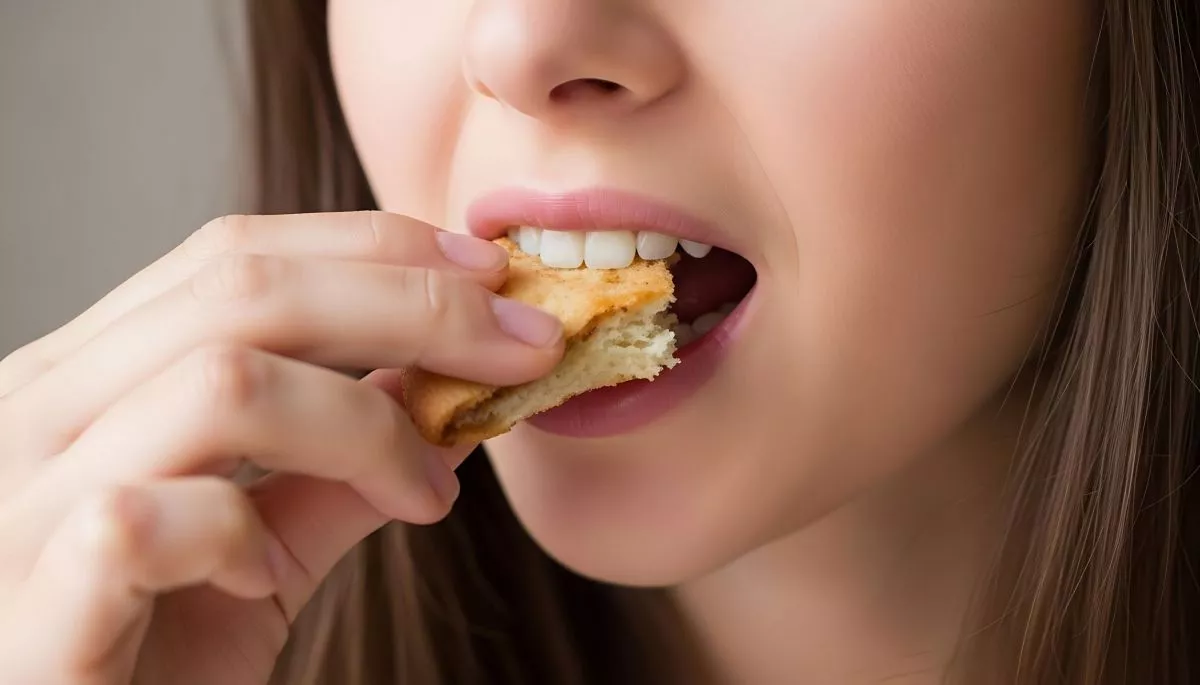
Chewing food predominantly on one side of the mouth—a common habit known clinically as unilateral mastication—leads to significant structural alterations, muscular fatigue, and joint strain over time, according to dental health specialists. While many individuals unconsciously favor a preferred chewing side due to missing teeth, dental pain, or malocclusion, persistent asymmetrical chewing forces the jaw, facial muscles, and temporomandibular joints to function under unequal mechanical stress.
According to dental practitioners who study jaw mechanics, this imbalance triggers compensatory changes across the entire masticatory system. The muscles on the working side experience constant overload and fatigue, while the muscles on the neglected side often lose tone and efficiency through disuse. Over extended periods, this asymmetrical pattern can contribute to uneven dental wear, shifting of the dental midline, and potential dysfunctions within the temporomandibular joint (TMJ).
Muscular Imbalance and Joint Strain
When an individual chews exclusively on a single side, the masseter and temporalis muscles on that working side perform the vast majority of the workload. Dental professionals note that this localized overexertion leads to muscle hypertrophy on the favored side and localized fatigue, tightness, or pain in the jaw. Conversely, the non-working side lacks adequate stimulation, altering normal neuromuscular coordination.
This muscular discrepancy directly impacts the temporomandibular joints, which connect the lower jaw to the skull’s temporal bones. Unilateral loading places eccentric forces on the joint discs, increasing the risk of inflammation, clicking sounds, locking, and chronic facial discomfort. Clinical observations indicate that patients with severe unilateral chewing habits frequently present with asymmetric facial muscle development and localized tenderness around the affected joint.
Dental Wear and Structural Consequences
Beyond muscular and joint complications, chewing on only one side accelerates localized tooth wear. Enamel on the favored side degrades more rapidly due to the constant friction and heavy bite force concentrated in a smaller area. At the same time, teeth on the neglected side may accumulate more plaque and calculus because natural food friction—which helps clean tooth surfaces during chewing—is absent.
Furthermore, prolonged unilateral mastication can influence jaw alignment and facial symmetry, particularly if the habit develops during childhood or adolescence while the craniofacial structures are still maturing. Dentists routinely evaluate chewing patterns during routine examinations to catch these mechanical imbalances before they cause permanent structural damage to the teeth or jawbone.
Correcting the Habit and Seeking Professional Guidance
Addressing a unilateral chewing habit requires identifying the underlying cause, which often involves restoring missing posterior teeth, treating localized dental pain, or correcting misaligned bites. Dental professionals recommend conscious retraining of the jaw muscles, deliberately practicing bilateral chewing, and consulting a qualified dentist for a comprehensive evaluation of jaw function and bite stability.
Patients experiencing jaw clicking, facial pain, or noticeable uneven tooth wear should schedule a professional dental examination to determine the appropriate course of treatment. Share your thoughts or experiences with jaw health in the comments below.