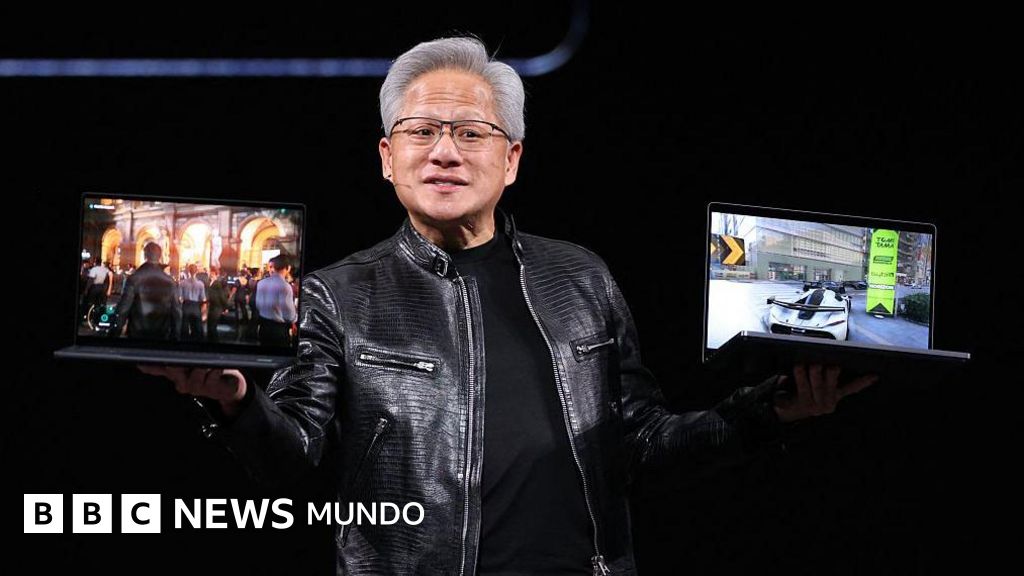
The fundamental architecture of the personal computer is undergoing its most significant transformation since the transition from command-line interfaces to graphical user interfaces. For decades, the industry has been defined by the tug-of-war between x86 dominance, led by Intel and AMD, and the efficiency-first approach of ARM-based silicon, pioneered by Apple’s M-series chips. Now, a third titan is moving to rewrite the rules of engagement: NVIDIA.
While NVIDIA has long been the undisputed king of the data center and the high-end gaming GPU, the company is making a decisive strategic pivot toward the “AI PC.” This isn’t merely about adding a better graphics card to a laptop. We see a move to integrate specialized AI acceleration—specifically through Neural Processing Units (NPUs) and highly optimized Tensor cores—directly into the core computing experience. By positioning itself at the intersection of software-driven intelligence and high-performance silicon, NVIDIA is preparing to challenge the exceptionally foundations of how we interact with our desktop and mobile devices.
The stakes could not be higher. As Microsoft pushes its “Copilot+ PC” initiative, the demand for local, on-device AI processing has skyrocketed. The industry is no longer just measuring performance in gigahertz or core counts, but in TOPS (Trillions of Operations Per Second). This shift is forcing a confrontation between NVIDIA’s established software moat and the hardware-centric strategies of Apple, Intel, and the rising ARM-based challengers like Qualcomm.
The Rise of the AI PC: Beyond the Traditional CPU
To understand why NVIDIA’s entry into the broader PC silicon conversation is so disruptive, one must first understand the technical shift occurring within the hardware itself. For years, the Central Processing Unit (CPU) was the “brain” of the computer, handling general-purpose tasks. The Graphics Processing Unit (GPU) was the “muscle,” handling visual rendering. However, the explosion of Generative AI has revealed a third necessity: the NPU.

An AI PC is defined by its ability to handle complex machine learning workloads—such as real-time language translation, sophisticated image generation, and local LLM (Large Language Model) execution—without constantly offloading tasks to the cloud. This requires a synergistic relationship between the CPU, GPU, and NPU. While Intel and AMD have integrated NPUs into their latest architectures, such as the Intel Core Ultra series, NVIDIA possesses a unique advantage: a decade of dominance in AI training and software optimization.
NVIDIA’s ecosystem is built on CUDA, a parallel computing platform and programming model that has become the industry standard for AI development. This software “moat” means that when developers build AI tools, they are inherently optimized for NVIDIA hardware. As these tools migrate from massive data centers to the consumer’s desk, NVIDIA is uniquely positioned to ensure that their performance is seamless, potentially rendering traditional CPU-centric computing models obsolete for the modern professional.
The Battle for Silicon Sovereignty: Apple, Qualcomm, and the ARM Factor
NVIDIA’s ambitions do not exist in a vacuum. They are entering a battlefield that is already being contested by two different philosophies of computing: the high-efficiency ARM architecture and the high-performance x86 architecture.
The Apple Model: Since the introduction of the M1 chip, Apple has demonstrated that tightly integrated, ARM-based System-on-a-Chip (SoC) designs can deliver industry-leading performance-per-watt. By controlling both the silicon and the operating system (macOS), Apple has created a seamless experience where the NPU, GPU, and unified memory work in perfect concert. For NVIDIA to compete, they cannot just offer a chip; they must offer an ecosystem that matches this level of integration.
The Qualcomm/Windows ARM Challenge: For the Windows ecosystem, Qualcomm has emerged as the primary challenger to Intel’s long-standing hegemony. The Snapdragon X Elite platform has brought ARM-based efficiency to Windows laptops, promising long battery life and significant NPU capabilities for Microsoft’s Copilot+ PC requirements. This has put Intel and AMD on the defensive, forcing them to accelerate their own AI-centric roadmaps.
NVIDIA’s Potential Move: Market speculation and industry trends suggest that NVIDIA may look to converge these worlds. By potentially developing its own consumer-grade ARM-based SoCs, NVIDIA could offer the efficiency of an ARM chip with the unparalleled AI processing power of its RTX architecture. If NVIDIA manages to bridge the gap—providing a chip that is as efficient as a Snapdragon but as powerful as an RTX-equipped workstation—the competitive landscape of the PC market will be irrevocably altered.
Comparison of the Modern PC Silicon Landscape
| Manufacturer | Primary Architecture | Core Strength | AI Strategy |
|---|---|---|---|
| Apple | ARM (Custom) | Power Efficiency & Integration | Unified Memory & M-Series NPUs |
| Intel / AMD | x86 | Legacy Compatibility & Raw Power | Integrated NPUs in Core Ultra/Ryzen AI |
| Qualcomm | ARM | Mobile Efficiency in Windows | Copilot+ PC optimized NPUs |
| NVIDIA | Hybrid / Potential ARM | AI Throughput & Software (CUDA) | RTX AI PC & Tensor Core Integration |
Impact on Consumers: Gamers vs. Professionals
The implications of NVIDIA’s pivot vary significantly depending on the user’s profile. For the creative professional—video editors, 3D modelers, and data scientists—NVIDIA’s move is a welcome evolution. The ability to run local AI models for generative fill, noise reduction, or complex simulations without the latency of the cloud is a massive productivity multiplier.
For gamers, however, the reaction is more nuanced. While NVIDIA’s DLSS (Deep Learning Super Sampling) technology has already revolutionized gaming by using AI to upscale resolutions and improve frame rates, some enthusiasts worry that the focus on “AI-first” hardware might come at the expense of traditional raw compute power. There is a delicate balance to be struck between a chip that is “smart” and a chip that is “speedy.” As NVIDIA pushes into the integrated SoC space, they will need to ensure that their AI-centric designs do not sacrifice the high-bandwidth memory and thermal headroom that hard-core gamers demand.
the software layer remains the ultimate arbiter of success. An AI chip is only as excellent as the applications that can utilize it. NVIDIA’s success in the PC market will depend heavily on its ability to convince software developers to optimize for their specific NPU and Tensor architectures, much as they have done for the GPU over the last two decades.
The Strategic Roadmap: What Happens Next?
As we move into the next hardware refresh cycle, all eyes will be on the major announcements at upcoming industry events like CES (Consumer Electronics Show). We expect to see more concrete details regarding:
- The integration of NVIDIA AI capabilities into Windows-based laptops beyond just discrete GPUs.
- Further developments in the ARM-based Windows ecosystem and whether NVIDIA will enter the SoC race directly.
- The evolution of “AI PC” standards as Microsoft and other OS providers refine their requirements for local AI processing.
NVIDIA’s journey from a niche gaming company to a global AI powerhouse is nearing its most consumer-facing chapter. Whether they can successfully translate their data center dominance into the highly competitive, power-constrained world of personal computing remains to be seen, but one thing is certain: the era of the “general purpose” computer is ending, and the era of the “intelligent” computer has begun.
What do you think? Will NVIDIA’s AI expertise be enough to unseat Apple and Intel in the laptop market, or is the x86/ARM divide too deeply entrenched? Let us know in the comments below and share this article with your tech network.
The next major milestone to watch will be the official hardware roadmaps expected during the early 2025 industry keynote season.
Keep reading