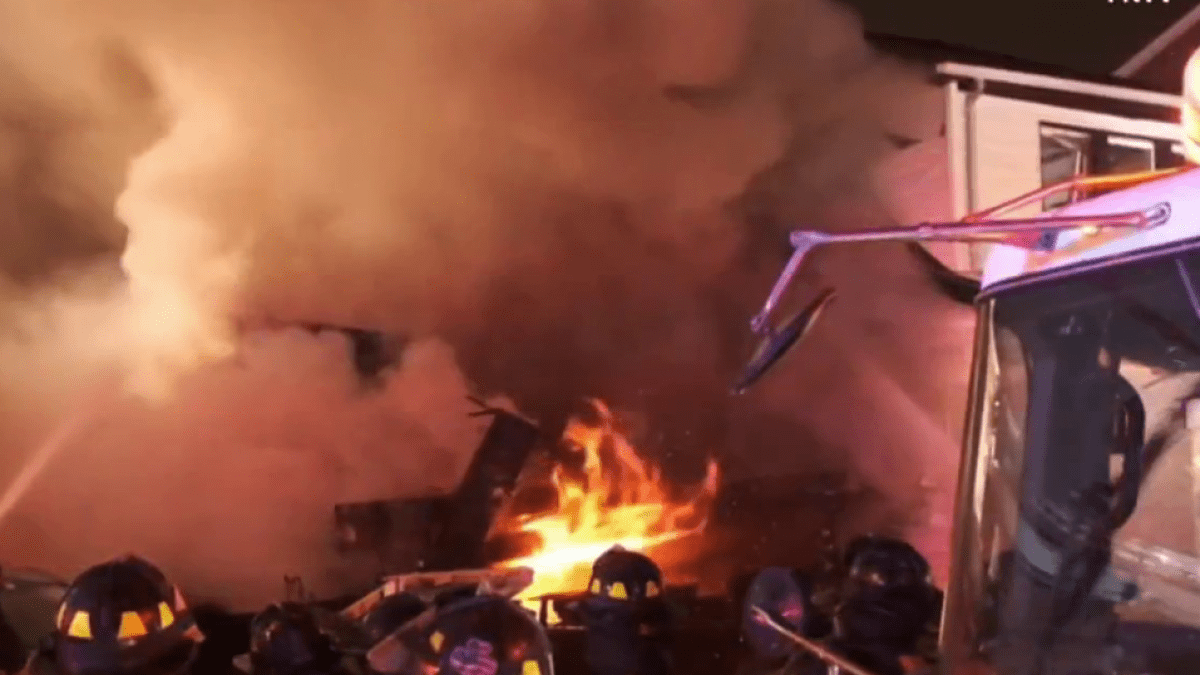
A sudden and massive explosion ripped through a residential home in South Ozone Park, Queens, just as New York City police officers were approaching the scene, leaving one person dead and several officers injured. The blast was so powerful that it caused the immediate collapse of the structure, turning a domestic response call into a complex recovery operation.
The incident began when the New York Police Department (NYPD) responded to reports of a domestic dispute involving a man armed with a knife. As officers closed in on the residence, a violent explosion occurred, sending debris flying and knocking first responders off their feet. The scale of the blast was captured on video, showing the moment the home was decimated as officers attempted to secure the perimeter.
Emergency crews worked through the resulting rubble to locate the occupant of the home. Officials later confirmed that one body was recovered from the debris, believed to be the suspect involved in the initial dispute. The sudden transition from a tactical police encounter to a structural disaster highlighted the extreme volatility of the environment.
NYPD Response and Officer Injuries
The blast occurred during a high-tension encounter. Officers had been dispatched to the South Ozone Park neighborhood to handle a report of a knife-wielding individual inside a home. The timing of the explosion was critical, occurring precisely as officers were moving toward the building, which maximized the risk to those on the front lines.

The force of the detonation resulted in eight NYPD officers sustaining injuries. Several of the officers were described as being knocked off their feet by the shockwave. While the injuries varied in severity, the incident underscored the unpredictable dangers police face during domestic disturbance calls, where hidden hazards can escalate a situation in seconds.
Witnesses and video footage from the scene depicted a cloud of smoke and dust enveloping the street, with the residential building reduced to a pile of bricks and charred timber. The immediate priority for the NYPD and the Fire Department of New York (FDNY) shifted from apprehension to search-and-rescue and fire suppression to prevent the blaze from spreading to adjacent properties.
Investigation Into the Cause of the Blast
Following the initial chaos, investigators focused on how a domestic dispute could lead to a structural explosion. Preliminary findings indicate that the event was not caused by a conventional explosive device, but rather by a gas-fed fire. Evidence suggests that a dispute within the home sparked a fire that compromised the gas lines, leading to a buildup of combustible gas that eventually ignited.

This “gas-fed” mechanism explains the intensity of the blast and the subsequent total collapse of the home. According to reports from the scene, a family dispute sparked the fire, which then interacted with the home’s utility infrastructure. Once the gas reached a critical concentration within the enclosed space, the resulting ignition created a pressure wave sufficient to level the building.
The recovery of the body from the rubble provided a grim conclusion to the search. Investigators believe the individual found deceased was the same person who had been wielding the knife during the initial confrontation. This sequence of events—a violent domestic clash leading to an accidental or intentional fire, and finally a catastrophic explosion—points to a rapid escalation of volatility within the residence.
Understanding the Risks of Residential Gas Explosions
Residential gas explosions are among the most dangerous events for first responders given that they often occur without warning and can cause total structural failure. When a fire damages a gas pipe, the leaking fuel can fill rooms or basements, creating a “fuel-air” mixture. A single spark—from a light switch, a pilot light, or even the friction of collapsing debris—can trigger a detonation.
For the NYPD officers in South Ozone Park, the explosion happened in a “blind spot” where they were approaching the structure but had not yet entered. This distance likely prevented a higher casualty count, although the shockwave still caused significant injuries. The incident serves as a stark reminder of the necessity for first responders to maintain situational awareness regarding utility risks during residential emergencies.
Community Impact and Safety Implications
The blast sent shockwaves through the quiet South Ozone Park community, with residents reporting that the sound was audible from several blocks away. The total destruction of the home left a void in the neighborhood and required a massive coordinated effort from the city’s emergency services to ensure the surrounding area remained safe from secondary leaks or structural instabilities in neighboring buildings.
The event likewise raises questions about the safety of older residential infrastructures in New York City. While this specific blast was triggered by a fire resulting from a dispute, the speed with which the home collapsed highlights how quickly gas-related incidents can turn fatal. Local authorities typically advise residents to be vigilant about the smell of sulfur or “rotten eggs,” which indicates a gas leak, and to evacuate immediately rather than attempting to identify the source.
| Detail | Verified Information |
|---|---|
| Location | South Ozone Park, Queens, NYC |
| Casualties | 1 deceased (body found in rubble) |
| Police Injuries | 8 NYPD officers injured |
| Primary Cause | Gas-fed fire sparked by family dispute |
| Initial Call | Domestic dispute / knife-wielding suspect |
As the investigation concludes, the focus remains on the recovery of evidence from the debris. The NYPD and FDNY continue to analyze the timeline of the explosion to determine if any early warning signs were present and to evaluate the response protocols used during the encounter.
The next official step will be the release of the formal fire marshal’s report, which will definitively categorize the cause of the fire and the nature of the gas leak. This report will be essential in determining whether the event was purely accidental or if there was an intentional act that led to the ignition.
World Today Journal encourages readers to share their thoughts on the safety of first responders in high-volatility domestic calls in the comments below.