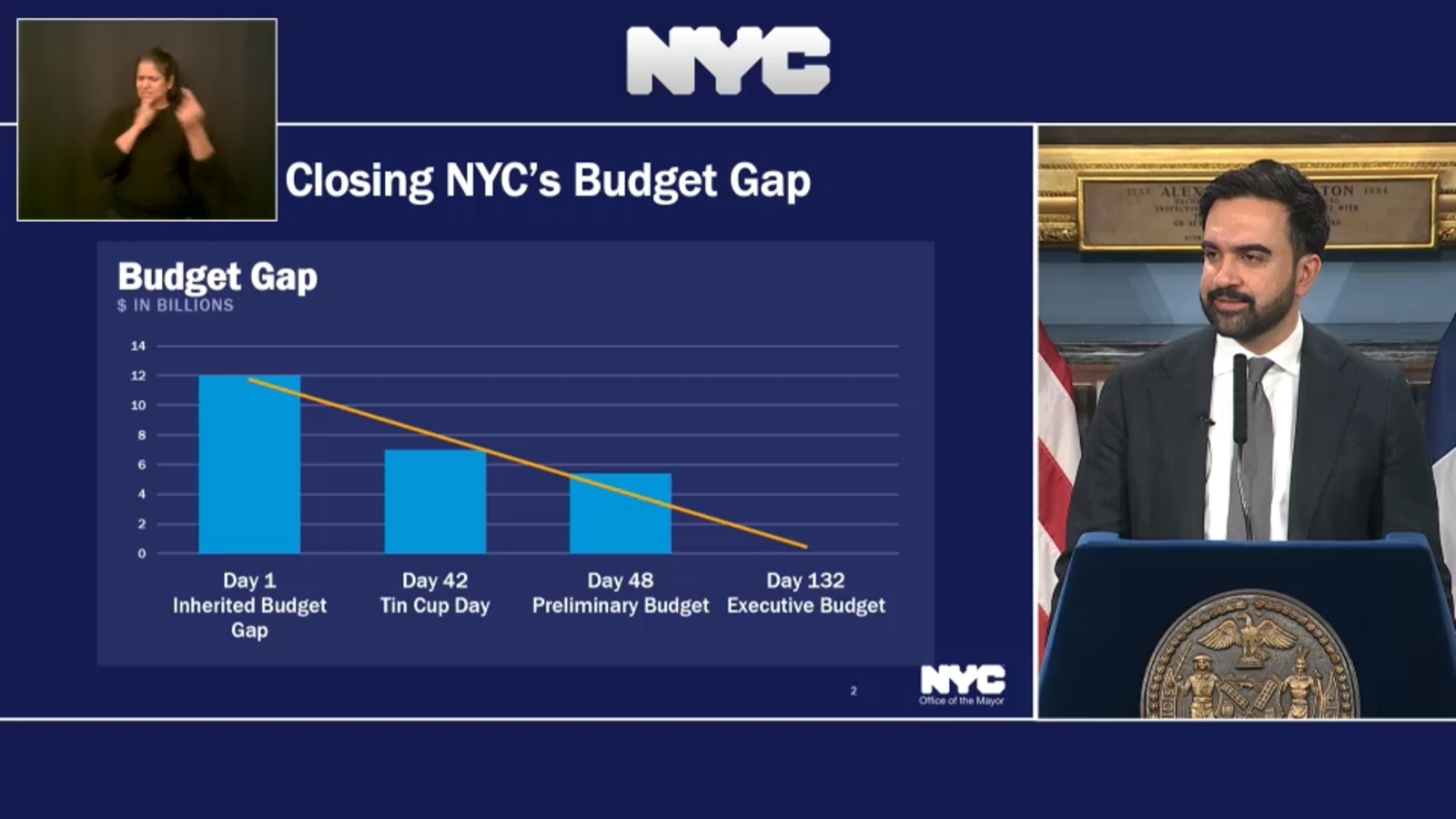
New York City—Mayor Zohran Mamdani has announced the city’s $124.7 billion budget for fiscal year 2027 has been fully balanced, avoiding a controversial 9% property tax hike that had threatened to strain working-class households. The achievement comes after months of intense negotiations with state officials, including Governor Kathy Hochul, who delivered an additional $4 billion in state aid to plug a $12 billion budget gap Mamdani described as “historic.”
In a victory lap for his administration, Mamdani framed the budget as a triumph of fiscal discipline, touting $1.77 billion in savings—primarily from government efficiencies and unfilled positions—while shielding middle-class homeowners from higher taxes. Critics, however, warn the budget’s $1 billion in education cuts and housing-related savings could reshape city services in ways that disproportionately affect low-income residents. The question now is whether the balance sheet fix will hold—or if deeper structural reforms are needed to sustain New York’s financial stability.
This article examines how Mamdani navigated the crisis, the political maneuvering behind the state aid, and the long-term implications for New York’s economy, education system, and housing policies.
Mayor Mamdani unveils the balanced budget in a live address to New Yorkers. Credit: CBS News
From $12 Billion Deficit to Surplus: How NYC Avoided a Property Tax Crisis
When Mamdani took office in January 2025, he inherited a city teetering on the edge of fiscal collapse. A preliminary budget proposal released in February had already proposed a 9% property tax increase—a politically toxic move that risked alienating homeowners and small businesses. But by May 2026, the mayor’s team had slashed the deficit to $5.4 billion, then to $0, through a combination of state aid, spending cuts, and aggressive cost-saving measures.
Key to the turnaround was Hochul’s decision to approve $4 billion in emergency state aid, part of a broader $10 billion state budget signed in April. Mamdani had previously threatened to tap the city’s “rainy day fund” if Albany failed to act, but he opted to preserve those reserves—a move that could provide a financial cushion for future downturns.

“We pulled New York City back from an existential fiscal brink,” Mamdani declared in a press conference. “This budget reflects our commitment to working New Yorkers, not the wealthy elite.” The mayor’s office emphasized that no new taxes were imposed on middle-class families, though critics argue the $1 billion in education cuts—including reduced classroom staff and program eliminations—will disproportionately hurt public school students in high-poverty districts.
Governor Hochul and Mayor Mamdani announce the $4 billion state aid package. Credit: NBC New York
The Fiscal Math: $4B from Albany, $1.77B in Savings, and a Gamble on Efficiency
The budget’s balance hinges on three pillars:

- $4 billion in state aid: Secured after Mamdani threatened to raise property taxes, forcing Albany to act. Hochul’s office framed the aid as an investment in NYC’s economic stability.
- $1.77 billion in savings: Achieved by freezing hiring, eliminating 1,200 vacant positions, and renegotiating contracts with vendors. The city also deferred $300 million in capital projects to later fiscal years.
- $1 billion in education and housing cuts: Including reduced after-school programs, consolidation of adult education centers, and delays in affordable housing subsidies.
Yet the savings come with risks. The Department of Education warned that teacher layoffs could begin as early as fall 2026 if state aid does not materialize. Meanwhile, housing advocates criticize the budget’s $200 million reduction in rental assistance programs, which could push thousands of low-income families into homelessness.
“This budget is a short-term fix, not a long-term solution,” said Maria Torres, executive director of the New York Housing Conference. “We’re kicking the can down the road on housing affordability.”
Political Tensions: Mamdani vs. Albany—and the Looming Property Tax Threat
Mamdani’s relationship with Hochul has been fraught. The mayor initially framed the $12 billion gap as an “inherited crisis”, blaming his predecessor’s spending habits. But state lawmakers accused Mamdani of overstating the deficit to pressure Albany into coughing up more funds.
“The mayor’s office played hardball, and it worked,” said State Senator James Rivera, a Democrat who negotiated the aid package. “But the real test is whether these cuts will hurt the very people Mamdani claims to protect.”
One unresolved question: Will Mamdani’s success prevent future tax hikes, or has he merely delayed the inevitable? The city’s pension liabilities—now exceeding $200 billion—remain a ticking time bomb. Without structural reforms, analysts warn, property taxes could still rise in FY 2028.
What’s Next? Key Deadlines and Unanswered Questions
While the budget is now balanced, several critical deadlines loom:
- June 30, 2026: Final approval of the $124.7 billion budget by the New York City Council. Opposition leaders have already signaled they may push for amendments to restore some education and housing funds.
- September 1, 2026: School year begins. The Department of Education must finalize hiring plans, which could include layoffs if state aid is delayed.
- October 2026: Release of the Comptroller’s report on pension fund sustainability, which may force Mamdani to revisit tax policies.
For now, Mamdani is celebrating. But with unemployment rising in Brooklyn and Queens and tourism revenues down 8% from 2025, the fiscal reprieve may be temporary. “This budget buys us time,” said Economist Dr. Elena Rodriguez of NYU’s Wagner School. “But New York can’t keep living on borrowed time.”
Key Takeaways: What So for New Yorkers
- No property tax hike: Middle-class homeowners avoid a 9% increase, but wealthier residents face higher income taxes.
- $1 billion in education cuts: Schools may see larger class sizes and fewer extracurricular programs.
- Housing aid reductions: 20,000+ low-income families could lose rental assistance.
- State aid is temporary: Without pension reforms, future budgets may still require tax hikes.
- Political fallout: Mamdani’s hardline tactics with Albany could strain future negotiations.
FAQ: Your Questions About NYC’s Budget Balanced
Q: Will my property taxes go up?
A: No. Mayor Mamdani explicitly ruled out a property tax hike, though income taxes on high earners were increased.
Q: Are teachers being laid off?
A: Not yet, but the Department of Education has frozen hiring and may implement layoffs if state aid is delayed.
Q: How was the $4 billion state aid decided?
A: After Mamdani threatened to raise property taxes, Governor Hochul’s office negotiated a $4 billion package as part of the state budget deal.
Q: What happens if the budget isn’t sustainable?
A: Analysts warn that without pension reforms, New York could face another crisis in 2028, possibly leading to service cuts or tax hikes.
What’s Next? Follow the Story
New York’s fiscal health will be a defining issue in the 2027 mayoral election. For updates on:
- City Council votes on the budget (June 30 deadline)
- Education funding adjustments
- Pension reform negotiations
Bookmark this page or subscribe to World Today Journal’s New York Briefing for real-time analysis. And share your thoughts: Will this budget last, or is another crisis looming? Comment below or share on X/Twitter.
Worth a look