
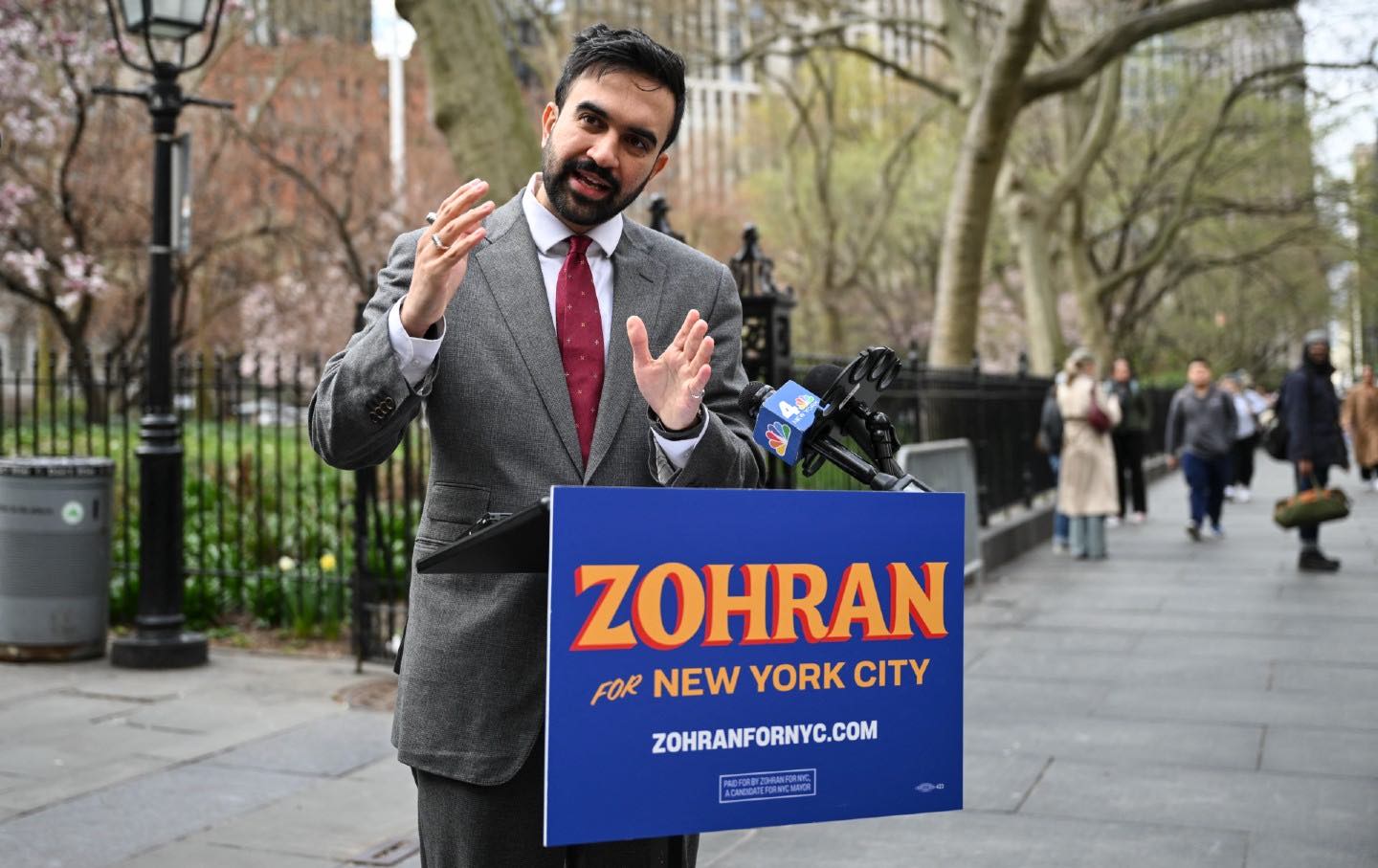
Zohran Mamdani, a Democratic member of the New York State Assembly representing Astoria, Queens, has launched a campaign for Mayor of New York City, positioning himself as a democratic socialist challenger to incumbent Mayor Eric Adams. Mamdani’s platform focuses on expanding public services, implementing rent freezes, and shifting the city’s budgetary priorities toward working-class residents.
The bid for the mayoralty represents a strategic attempt to move the city’s executive leadership toward the left wing of the Democratic Party. Mamdani, who serves in the New York State Assembly, argues that the current administration has failed to address the escalating cost of living and housing crises facing New Yorkers. He has explicitly stated that political victory requires a willingness to engage in confrontational struggle, asserting that without a fight, progress is unattainable.
Mamdani’s entry into the race follows a period of increasing tension between the Mayor’s office and the city’s progressive wing. While Mayor Eric Adams has focused on public safety and managing the arrival of asylum seekers, Mamdani advocates for a fundamental restructuring of how the city manages its resources, specifically targeting the influence of real estate developers and wealthy donors in city politics.
The Democratic Socialist Platform for New York City
Zohran Mamdani’s campaign centers on the belief that the city’s economic challenges are a result of policy choices rather than a lack of funds. According to his campaign materials and public statements, his primary goal is to implement a “social housing” model to combat the city’s rental crisis. This approach seeks to decouple housing from profit by creating government-funded, resident-managed developments.
A cornerstone of his proposal is the implementation of city-wide rent freezes. Mamdani argues that the current rent stabilization laws are insufficient to prevent displacement in gentrifying neighborhoods. By freezing rents, he aims to provide immediate relief to low-income tenants who are currently priced out of their homes in boroughs like Queens and Brooklyn.
Beyond housing, Mamdani is advocating for the expansion of the city’s public transit system, specifically focusing on making the bus system more efficient and accessible. He has frequently criticized the city’s reliance on private contractors for essential services, suggesting that bringing these services back under public control would lower costs and improve quality of life for the average New Yorker.
Challenge to the Adams Administration
The contrast between Mamdani and Mayor Eric Adams is stark, both in ideology and governance style. Mayor Adams, a former NYPD captain, has emphasized a “law and order” approach to city management. In contrast, Mamdani’s approach is rooted in grassroots organizing and socialist principles. He has criticized the Adams administration for its handling of the city’s budget, particularly the cuts to libraries and parks.
Mamdani’s critique of the current administration often centers on the “donor class.” He asserts that the Mayor’s policies are overly influenced by the city’s wealthiest residents and corporate interests. By running as a democratic socialist, Mamdani intends to prove that a candidate can be viable without the backing of traditional power brokers in the real estate industry.
The political stakes are high, as the 2025 mayoral race is expected to be a referendum on the direction of the Democratic Party in one of the world’s most influential cities. Mamdani’s candidacy is not just a bid for office, but an attempt to shift the “Overton Window” of what is considered a permissible policy platform for a New York City mayor.
Political Ideology and the ‘Willingness to Fight’
The phrase “If You Aren’t Willing to Fight, You Will Never Win” serves as the guiding philosophy for Mamdani’s political trajectory. This sentiment reflects a broader trend within the American left, where candidates are moving away from incrementalism—the practice of making small, gradual changes—and toward more disruptive, systemic demands.
Mamdani’s history in the New York State Assembly has been marked by this confrontational style. He has frequently aligned himself with the Democratic Socialists of America (DSA), pushing for legislation that challenges the status quo on energy, housing, and labor rights. This alignment provides him with a built-in organizational network of activists and volunteers essential for a grassroots campaign.
Analysts of New York City politics note that Mamdani’s challenge will be bridging the gap between the activist base of the DSA and the broader, more moderate electorate of the five boroughs. To win, he must convince a majority of New Yorkers that socialist policies are not only feasible but necessary for the city’s survival in an era of extreme wealth inequality.
Impact on the 2025 Mayoral Race
The entry of Zohran Mamdani into the race complicates the political landscape for other potential candidates. His presence ensures that the issues of housing and class struggle will remain central to the debate, forcing other Democrats to clarify their positions on rent control and public spending.
Voters will likely see a competition between three distinct visions for New York: the centrist, security-focused approach of the current administration; a moderate Democratic alternative; and the socialist vision proposed by Mamdani. The outcome will depend heavily on voter turnout among young people and working-class residents who feel neglected by the current city hall.
As the campaign progresses, the focus will shift toward specific policy white papers and the ability of the Mamdani campaign to raise funds without relying on the corporate donors he critiques. His success will be measured by his ability to translate his legislative record in Albany into a compelling executive vision for the city.
The next major milestone for the campaign will be the official filing period and the subsequent primary debates, where Mamdani will face direct questioning on the fiscal viability of his proposed social programs. Residents can track official candidate filings and election dates through the New York City Board of Elections.
Share your thoughts on the future of New York City’s leadership in the comments below and share this report with others following the 2025 mayoral race.
Worth a look