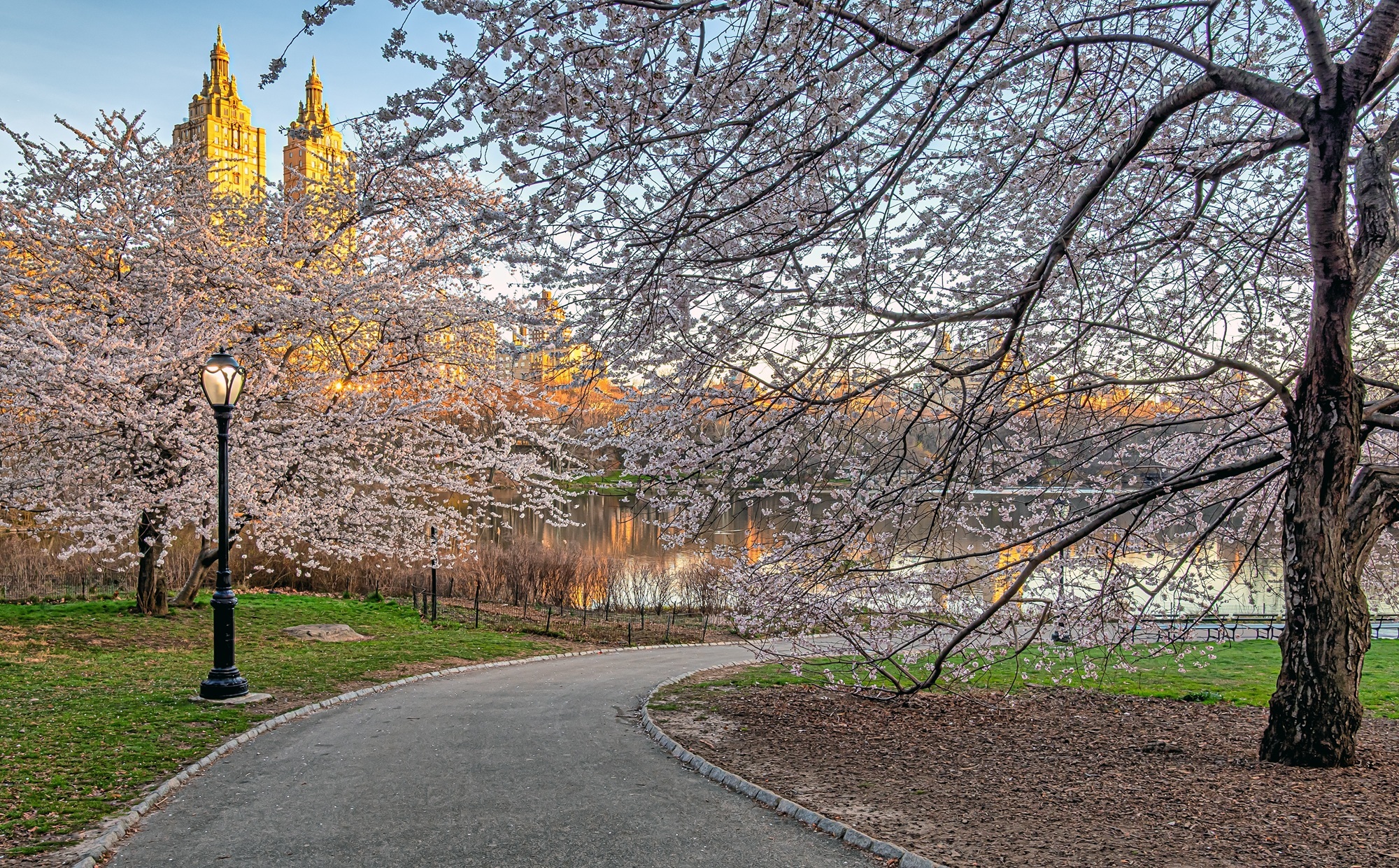
After a winter that felt stubbornly prolonged, residents of the Northeast and particularly New York City, may be looking forward to a welcome change. Long-range forecasts suggest that spring 2026 is poised to arrive with warmer-than-usual temperatures and a potential decrease in the typical April showers. This outlook, initially highlighted by the Farmers’ Almanac, is now being supported by broader meteorological assessments, offering a glimmer of optimism as the region transitions from the colder months.
The anticipation of a milder spring comes after a winter marked by fluctuating conditions, a pattern that the Farmers’ Almanac accurately predicted in 2025. This track record lends some credibility to their current projections, though it’s crucial to remember that long-range forecasts are inherently less precise than short-term weather predictions. The coming months could bring significant changes to outdoor activities, gardening schedules, and even the overall mood of a city often defined by its seasonal shifts. Understanding the nuances of these forecasts, and the factors influencing them, is key to preparing for the season ahead.
The Farmers’ Almanac’s latest outlook indicates that the “Atlantic Corridor,” encompassing New York City, is likely to experience above-normal temperatures throughout the spring season. April is specifically expected to be warmer and drier than average, potentially reducing disruptions to outdoor events and providing more opportunities for enjoying the city’s parks and public spaces. While May may see a return to more typical spring rainfall, temperatures are still projected to remain roughly three degrees Fahrenheit above normal, hinting at an early start to summer-like conditions. This broader trend of warmer temperatures and reduced precipitation extends across much of the Northeast, according to the Almanac’s assessment.
Understanding the Forecasts and Their Limitations
It’s important to approach long-range weather forecasts with a degree of caution. These predictions are not based on the same detailed, day-by-day modeling used for short-term forecasts. Instead, they rely on historical patterns, climate trends, and complex statistical analyses. The Farmers’ Almanac, for example, utilizes a proprietary formula that considers factors like sunspot activity and planetary positions, alongside traditional meteorological data. While the Almanac has a long history and a dedicated following, its methods are not universally accepted within the scientific community.
The National Weather Service (NWS) also provides seasonal outlooks, but their approach differs significantly. The NWS focuses on probabilistic forecasts, assessing the likelihood of temperatures and precipitation being above, near, or below average. According to the NWS’s seasonal outlook for February, March, and April of 2026, New York has equal chances of experiencing normal spring temperatures. However, the eastern part of the state, including New York City and Long Island, is more likely to receive above-average precipitation. This contrasts with the Farmers’ Almanac’s prediction of drier conditions, highlighting the inherent uncertainty in long-range forecasting. The differing forecasts underscore the complexities of predicting seasonal weather patterns.
The Old Farmer’s Almanac, a separate publication from the Farmers’ Almanac, also released its spring outlook in late January 2026. Their forecast aligns more closely with the Farmers’ Almanac, predicting warmer than average temperatures and below-normal rainfall for New York. However, the Old Farmer’s Almanac also suggests that cooler temperatures may linger from late March through mid-April, particularly across the North Central States and New England. This nuanced prediction acknowledges the potential for continued variability even within a generally warmer spring season.
Impact on Daily Life in New York City
A warmer and drier spring could have a noticeable impact on daily life in New York City. Residents might experience an earlier start to outdoor activities, with parks and public spaces becoming more inviting sooner than usual. Fewer slushy commutes and a faster transition to rooftop season are also likely outcomes. Gardeners could see plants waking up earlier, potentially extending the growing season. The reduced rainfall could also benefit outdoor events and construction projects, minimizing delays and disruptions.
The hospitality industry is also likely to benefit from a milder spring. Outdoor dining, which has grow increasingly popular in recent years, could start earlier and last longer. Parks and recreational areas are expected to see increased visitation, boosting tourism and local businesses. The overall improvement in weather conditions could contribute to a more positive and vibrant atmosphere throughout the city.
However, it’s important to note that a warmer and drier spring could also present challenges. Reduced rainfall could lead to water conservation concerns, particularly if the dry conditions persist throughout the summer. An earlier start to the growing season could also increase the risk of frost damage if late-season cold snaps occur. Warmer temperatures could exacerbate air quality issues, particularly in urban areas.
Broader Regional and National Trends
The forecast for a warmer spring in the Northeast is part of a broader national trend. The Farmers’ Almanac’s national outlook leans warm almost everywhere, with many regions expected to experience above-average temperatures through April and May. This trend is consistent with long-term climate change projections, which predict that average temperatures will continue to rise in the coming decades. The Almanac’s 12-month report indicates that winter temperatures will be above normal, while snowfall will be below normal.
The potential for warmer and drier conditions across the country raises concerns about drought, wildfires, and other climate-related hazards. It also highlights the importance of adapting to a changing climate and implementing strategies to mitigate its impacts. These strategies include investing in water conservation infrastructure, promoting sustainable land management practices, and reducing greenhouse gas emissions.
Looking Ahead: Summer and Beyond
The Farmers’ Almanac’s long-range forecast extends beyond spring, predicting a hotter and drier than normal summer for much of the United States. They also warn of the potential for tropical storms in late June and mid-August. September and October are expected to be cooler and wetter than average. These projections suggest that the coming months could bring a range of weather challenges, requiring careful planning and preparedness.
While these long-range forecasts should be viewed with caution, they provide valuable insights into potential future weather patterns. By staying informed and taking appropriate precautions, individuals and communities can better prepare for the challenges and opportunities that lie ahead. The coming spring in New York City, if the forecasts hold true, promises a welcome respite from the harsh winter months, but it also serves as a reminder of the changing climate and the need for proactive adaptation.
The next significant update regarding seasonal weather patterns will come from the National Weather Service in early March, providing a more refined outlook for the spring season. Residents are encouraged to stay informed through official channels and to prepare for a range of possible weather conditions.
What are your thoughts on the spring forecast? Share your predictions and preparations in the comments below, and don’t forget to share this article with your friends and family.
Worth a look