
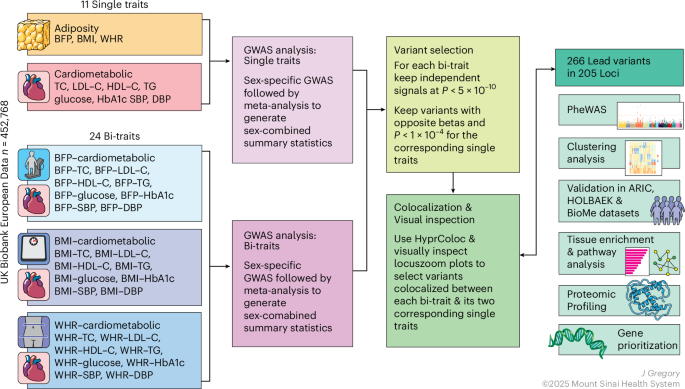
Decoding the Genetic Landscape of Adipose Tissue: Leveraging Multi-Omics Data
Understanding the genetic factors influencing adipose tissue – both visceral (VAT) and subcutaneous – is crucial for tackling metabolic diseases. Our research delves into the complex interplay between genetic variants and gene expression, utilizing a powerful combination of data sources to pinpoint key regulatory mechanisms. This article details the methodologies employed to identify and prioritize genetic loci impacting adipose tissue function.
Integrating Diverse data Sources for Robust Analysis
We built our analysis on a foundation of comprehensive datasets, allowing for a nuanced understanding of gene regulation. These included:
* eQTL Data from GTEx (v.8): This resource provided critical details on genetic variants (SNPs) that influence gene expression levels in both VAT and subcutaneous adipose tissue.
* Enhancer Capture HiC Data (‘GSE140782_ECHiC.txt.gz’): This data mapped the physical interactions between enhancers and promoter regions, revealing long-range regulatory connections.
* DNase-seq Data (‘GSE113253_DNase_processed_data.tar.gz’): This identified regions of open chromatin,indicating areas accessible for gene regulation. we also analyzed changes in accessibility during adipocyte differentiation.
* Gene Expression Data (‘GSE113253_GeneExpr_BM.txt.gz’): This provided a baseline and tracked changes in gene expression during the differentiation of human bone marrow-derived mesenchymal stem cells (hBM-MSCs) into adipocytes in vitro.
Prioritizing Genetic Variants and Candidate Genes
Identifying which SNPs are most likely to influence adipose tissue traits required a rigorous filtering process. we focused on lead SNPs or their proxies – variants strongly correlated (R2 > 0.8, determined using the LDlinkR package) – and applied the following criteria:
- eQTL Overlap: The SNP overlapped with a known eQTL in either VAT or subcutaneous adipose tissue.
- Enhancer-Promoter Linkage: The SNP resided within a genomic region identified by enhancer capture HiC data as interacting with a promoter region.
- Chromatin Accessibility: The SNP overlapped with a DNase1 hypersensitive site, indicating an open chromatin region.
- Proximity to Genes: If only chromatin accessibility was observed, we identified the closest transcription start site as the candidate gene.
This multi-layered approach ensured we focused on variants with the highest potential for functional impact.
Scoring system for Enhanced Prioritization
For each unique SNP-gene pair, we developed a scoring system to rank potential regulatory relationships. This score incorporated:
* Overlap of proxy SNPs with eQTLs.
* Overlap of proxy SNPs with DNase1 hypersensitive sites and changes in accessibility during adipocyte differentiation.
* overlap of proxy SNPs with enhancer regions contacting the candidate gene’s promoter.
* Expression levels of the candidate gene and its changes during adipocyte differentiation.
This integrated score allowed us to prioritize the most promising genetic regulators.
Uncovering Biological Pathways Through Enrichment Analysis
To understand the broader biological implications of our findings,we performed tissue and gene set enrichment analysis using DEPICT. This tool leverages summary statistics from our analysis of body fat percentage (BFP) to identify pathways substantially enriched for associated genes.
We focused on:
* Gene Ontology (GO) terms.
* KEGG pathways.
* REACTOME pathways.
Analyses were conducted on both all identified genetic loci and those specific to defined clusters. We included gene sets with at least ten genes and reported all P values generated by DEPICT, regardless of false discovery rate (FDR). This comprehensive approach revealed key biological processes influenced by the identified genetic variants.
Commitment to Research Transparency
Further details regarding our research design and methodology are available in the Nature Portfolio Reporting Summary, accessible here. we believe in transparency and reproducibility, ensuring our findings can be rigorously evaluated and built upon by the scientific





![Remembering [Activist’s Name]: A Hungarian Hero’s Legacy
or
[Activist’s Name]: Honoring a Champion of Hungarian Freedom
or
Hungarian Activist [Activist’s Name] – Life, Work & Remembrance](https://i0.wp.com/www.hrw.org/sites/default/files/styles/opengraph/public/media_2025/12/202512eca_hungary_Gyula%20Balog.jpg?resize=150%2C100&ssl=1 "Remembering [Activist’s Name]: A Hungarian Hero’s Legacy
or
[Activist’s Name]: Honoring a Champion of Hungarian Freedom
or
Hungarian Activist [Activist’s Name] – Life, Work & Remembrance")


