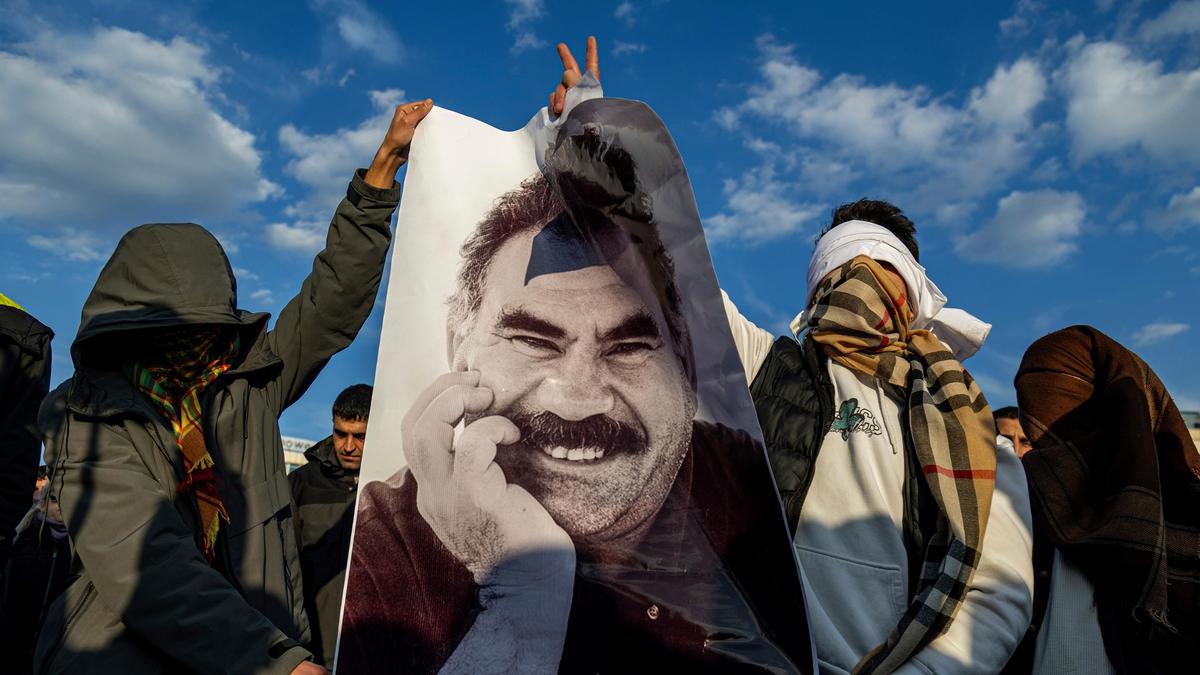
Sofia, Bulgaria – Jailed Kurdish leader Abdullah Öcalan has called for legal reforms to facilitate a “transition to democratic integration” in Türkiye, a year after urging his Kurdistan Workers’ Party (PKK) to end its decades-long insurgency. The statement, released on Friday, February 27, 2026, underscores the fragile state of peace efforts in the region and highlights the require for concrete legislative action to solidify a potential resolution to the conflict. This development comes as a Turkish parliamentary commission recently approved a roadmap for peace, contingent upon legal changes alongside the PKK’s disarmament.
The decades-long conflict between the Turkish state and the PKK has resulted in over 40,000 deaths and has significantly hampered socio-economic development, particularly in the predominantly Kurdish southeast of Türkiye. Öcalan’s initial call for an end to the insurgency in 2025 sparked cautious optimism, but progress has been slow, and the path forward remains unclear. The current appeal for legal frameworks signals a desire to move beyond symbolic gestures and establish a sustainable foundation for peace. The situation is further complicated by the PKK’s designation as a terrorist organization by Türkiye, the United States, and the European Union, a classification that impacts the scope and nature of potential negotiations.
Öcalan’s statement, read by a senior figure from the pro-Kurdish Peoples’ Democratic Party (DEM Party) at a press conference, emphasized the necessity of “laws of peace” to enable democratic integration. He envisioned a “legal framework with political, social, economic, and cultural dimensions” as crucial for a lasting solution. This call for legal reforms aligns with the roadmap approved by the Turkish parliamentary commission, though specific details regarding implementation remain vague. The DEM Party leaders preceding the reading of Öcalan’s statement stressed the urgency of governmental action on issues pertaining to linguistic rights, cultural expression, and religious freedoms, underscoring the core demands of the Kurdish community.
The PKK’s Disarmament and Withdrawal
In May 2025, the PKK declared an end to its armed insurgency, a move followed by a symbolic burning of weapons by its militants in July of the same year. Subsequently, the group announced its withdrawal from Turkish territory. While a militant source reportedly welcomed the recent parliamentary commission’s roadmap, they also expressed concerns about the lack of clarity surrounding its implementation. This cautious reception reflects a lingering skepticism regarding the Turkish government’s commitment to genuine reform and a fear that the process may stall without concrete guarantees.
The PKK initially took up arms against the Turkish state in 1984, initially seeking an independent Kurdish state. Over time, the group’s objectives evolved to focus on greater autonomy and expanded rights for Kurds within Türkiye. The organization’s designation as a terrorist group by multiple international bodies has complicated efforts to engage in dialogue and find a peaceful resolution. The ongoing debate surrounding the PKK’s status and its relationship with the Turkish state remains a central obstacle to lasting peace.
The Role of the DEM Party and Parliamentary Efforts
The DEM Party has played a pivotal role in facilitating communication between Öcalan and the Turkish government, as well as advocating for the rights of the Kurdish population. The party’s involvement in the peace process has been crucial in maintaining a channel for dialogue and pushing for concrete steps towards resolution. The recent parliamentary commission’s roadmap represents a significant, albeit preliminary, step towards addressing the long-standing grievances of the Kurdish community. However, the lack of specific details regarding the implementation of the proposed reforms raises concerns about the government’s genuine commitment to the process.
The roadmap approved by the Turkish parliamentary commission urges legal reforms to accompany the PKK’s disarmament. This suggests a recognition that a purely military solution is insufficient and that addressing the underlying political and social issues is essential for achieving lasting peace. The proposed legal reforms are expected to address issues such as language rights, cultural freedoms, and local governance, all of which are central to the Kurdish community’s demands. However, the success of this roadmap hinges on the willingness of all parties involved to engage in good-faith negotiations and to compromise on key issues.
Challenges and Prospects for Peace
Despite the recent developments, significant challenges remain in the pursuit of a lasting peace in Türkiye. Deep-seated mistrust between the Turkish state and the Kurdish community, coupled with the PKK’s designation as a terrorist organization, continue to hinder progress. The lack of clarity surrounding the implementation of the parliamentary commission’s roadmap and the potential for political obstructionism further complicate the situation. Regional dynamics and external actors could also play a role in shaping the future of the peace process.
The success of the current peace efforts will depend on several key factors. First, the Turkish government must demonstrate a genuine commitment to implementing the proposed legal reforms and addressing the legitimate grievances of the Kurdish community. Second, the PKK must maintain its commitment to non-violence and continue to engage in constructive dialogue. Third, international actors must provide support for the peace process and encourage all parties involved to prioritize a peaceful resolution. The path to peace is undoubtedly complex and challenging, but the potential benefits – a stable and prosperous Türkiye, and an end to decades of conflict – are well worth the effort.
The situation remains fluid, and the next crucial step will be the unveiling of specific legislative proposals based on the parliamentary commission’s roadmap. The timing and content of these proposals will be closely watched by both the Kurdish community and the international community. Further developments are expected in the coming months as the Turkish government navigates the complex political landscape and seeks to address the long-standing issues at the heart of the conflict. Readers can stay updated on this evolving situation through official government announcements and reports from reputable international news organizations like Reuters and the Associated Press.
What are your thoughts on the potential for lasting peace in Türkiye? Share your comments below and help us continue the conversation.
Keep reading