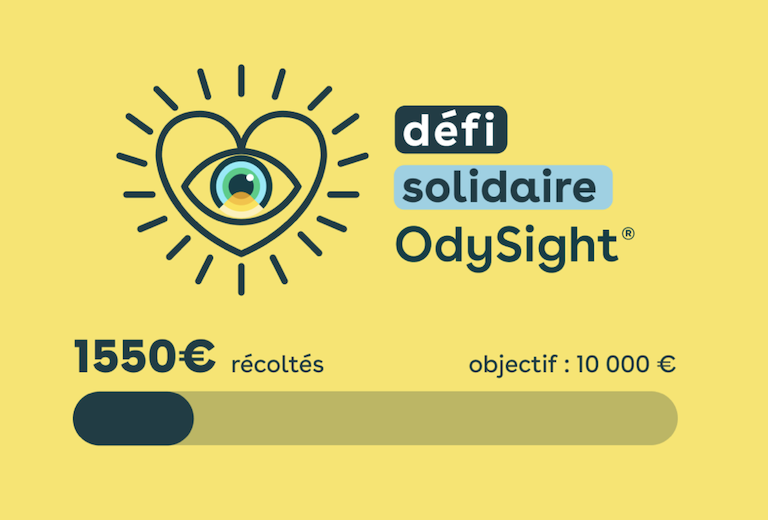
The intersection of technology and healthcare continues to yield innovative solutions for managing chronic conditions. A recent initiative from the OdySight application exemplifies this trend, launching a solidarity challenge to raise funds for the Association DMLA (Dégénérescence Maculaire Liée à l’Âge), a French organization dedicated to supporting individuals affected by age-related macular degeneration (AMD). This initiative highlights a growing movement toward patient-driven data collection and collaborative fundraising within the healthcare space.
Age-related macular degeneration is a leading cause of vision loss in people over 60, impacting central vision and making everyday tasks like reading and driving difficult. The Association DMLA, founded in 2003, plays a crucial role in providing support to patients and their families, funding research, and advocating for improved care. With over 1,500 members and 18 branches across France, the organization offers a vital network for those navigating the challenges of this progressive eye disease. The OdySight app, launched in 2020, provides a platform for individuals with chronic ophthalmic conditions to self-monitor their vision, and this fresh challenge leverages that functionality for a good cause.
OdySight’s Solidarity Challenge: Combining Prevention and Philanthropy
The fundraising campaign, which began recently, aims to collect €10,000 for the Association DMLA. As of a week into the challenge, over €1,500 had already been raised, demonstrating strong participation from app users. The mechanics are straightforward: until April 10th, each weekly vision test completed through the OdySight application contributes to a collective fundraising pot. For every test performed – one for each eye, or two for a single eye if prescribed – OdySight donates points equivalent to a monetary contribution. Participants can accumulate up to 100 points over five weeks, directly translating into increased funding for the Association DMLA.
Importantly, the challenge is entirely free for patients. OdySight is covering the costs of the donations. This accessibility is key to maximizing participation and ensuring that individuals can contribute without financial burden. The initiative is specifically designed for existing OdySight users who are already utilizing the app as part of their medical care plan, as prescribed by a healthcare professional.
The weekly self-monitoring frequency aligns with recommendations from the French Haute Autorité de Santé (HAS), the national health authority, which advocates for regular vision checks for individuals with chronic ophthalmic conditions. This integration with established medical guidelines underscores the value of OdySight as a tool for proactive health management.
Understanding Age-Related Macular Degeneration
Age-related macular degeneration (AMD) is not a single disease, but rather a group of conditions that affect the macula, the central part of the retina responsible for sharp, central vision. There are two main types: dry AMD and wet AMD. Dry AMD is more common and progresses slowly, while wet AMD is less common but can lead to rapid vision loss. The National Eye Institute (NEI) provides comprehensive information on AMD, including risk factors, symptoms, and treatment options.
While there is no cure for AMD, early detection and treatment can help slow its progression and preserve vision. Regular eye exams are crucial, particularly for individuals over the age of 50, those with a family history of AMD, and those who smoke. Lifestyle modifications, such as maintaining a healthy diet rich in antioxidants and avoiding smoking, can also play a role in reducing the risk of developing AMD or slowing its progression.
The Role of Inflammation in AMD
Research increasingly points to the role of inflammation in the pathogenesis of AMD. A study published in *Survey of Ophthalmology* in 2006 highlighted the complex interplay between inflammation and the development of AMD, noting that identifying the specific genes involved in diseases like Huntington’s disease, and by extension understanding inflammatory processes, can take years of research. The study emphasizes the need for continued investigation into the underlying mechanisms of AMD to develop more effective treatments.
The Digital Media Licensing Association (DMLA) and the Broader Context of AI in Healthcare
While seemingly unrelated to the OdySight challenge, the Digital Media Licensing Association (DMLA) recently submitted a response to a National Science Foundation (NSF) request for information regarding an Artificial Intelligence (AI) Action Plan. The DMLA’s response, dated March 17, 2025, underscores the importance of ethical AI development, particularly concerning the use of visual content. Founded in 1951, the DMLA represents content creators and digital media professionals, advocating for copyright protection and fair licensing practices.
This connection is relevant because AI is increasingly being used in medical imaging and diagnostics, including ophthalmology. AI algorithms can analyze retinal scans to detect early signs of AMD and other eye diseases. However, the DMLA’s concerns about ethical AI development highlight the need for careful consideration of data privacy, algorithmic bias, and the responsible use of AI in healthcare. The OdySight app, by empowering patients to actively participate in their own health monitoring, represents a step toward a more patient-centered and transparent approach to healthcare, which aligns with the principles of ethical AI development.
High-Throughput Detection of Antibiotic Resistance and the Future of Diagnostics
The advancements in diagnostic technologies, including those leveraging AI, are also seen in other areas of healthcare. A study published in the *Journal of Microbiological Methods* on April 14, 2025, details a high-throughput multiplex detection method for antibiotic-resistant genes, demonstrating 100% sensitivity and >99.9% specificity. This research showcases the potential for rapid and accurate diagnostics, which could have significant implications for managing infectious diseases and reducing the spread of antibiotic resistance.
Looking Ahead: The Future of Vision Care and Digital Health
The OdySight and Association DMLA partnership exemplifies a growing trend toward proactive, patient-centered healthcare. By combining technology with a commitment to social responsibility, this initiative demonstrates the potential for digital health solutions to not only improve patient outcomes but also foster a sense of community and support. The success of this fundraising challenge will depend on continued participation from OdySight users and the generosity of donors.
The next update on the fundraising progress is expected after April 10th, when the challenge concludes. Individuals interested in learning more about the Association DMLA and supporting their function can visit their website at https://www.dmla.fr/. The OdySight app is available for download through app stores, but requires a prescription from a healthcare professional. We encourage readers to share this article and contribute to the conversation about the future of vision care and digital health.
Worth a look