
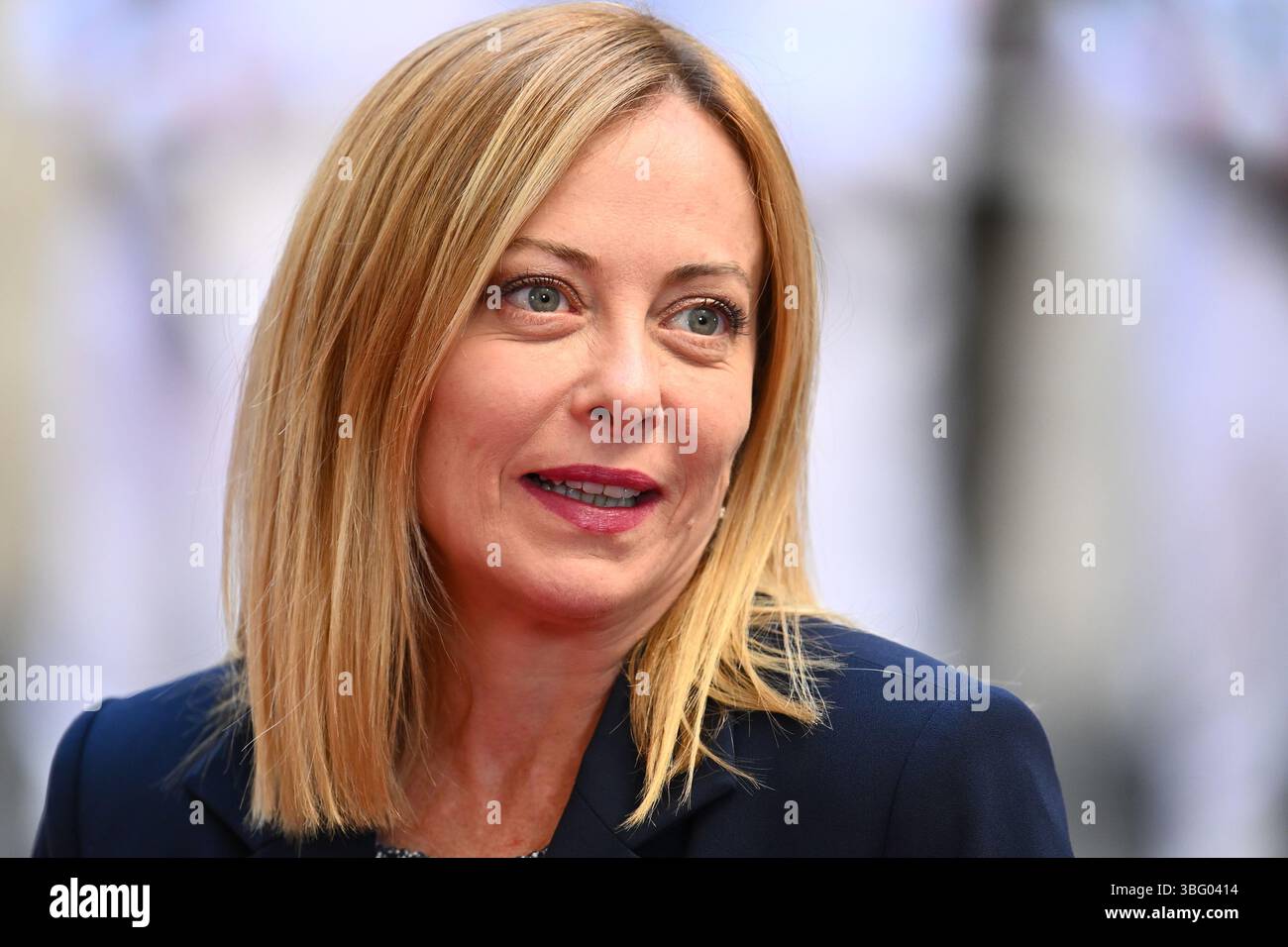
Italian Prime Minister Giorgia Meloni has publicly disputed claims made by U.S. President-elect Donald Trump regarding a private interaction, categorically denying that she “begged” for a photograph during a past encounter. The disagreement emerged following comments attributed to Trump in recent media reports, which suggested the Italian leader had sought his attention during a previous summit. This exchange has prompted a swift rebuttal from the Italian government, highlighting the complexities of diplomatic optics between Rome and the incoming administration in Washington.
The controversy centers on a narrative involving a photograph that allegedly occurred at a high-level international gathering. According to reports cited by Euronews, Trump claimed that Meloni had persistently asked for a picture, stating he had granted the request out of pity. In response, the Italian Prime Minister’s office issued a statement clarifying the events, with Meloni herself addressing the remarks during a press interaction, asserting that the account was an invention. The incident underscores the potential for friction in international relations when personal anecdotes from political figures enter the public sphere.
Origins of the Diplomatic Friction
The tension began after statements attributed to the President-elect circulated, alleging that the Italian leader had been insistent on securing a photo opportunity. Such claims, when made by a head of state or a leader of a major global power, often carry significant diplomatic weight. In international politics, the perception of power dynamics—who seeks whom—can influence domestic political standing and bilateral cooperation. According to documentation from Valor Econômico, Meloni explicitly characterized the claim as a complete fabrication, dismissing the notion that she had ever pleaded for such a gesture.
This is not the first time that interactions between Trump and European leaders have faced public scrutiny. However, the direct nature of this denial from Rome is notable. Meloni, who leads the Brothers of Italy party and has positioned herself as a key conservative voice in Europe, maintains a focus on pragmatic cooperation with the United States. Her administration has emphasized that the relationship between the two nations remains based on shared strategic interests rather than the personal narratives currently circulating in the media.
The Response from Rome
Prime Minister Meloni’s rebuttal was swift and pointed. Beyond denying the specific allegation, she suggested that the focus on such trivial matters was misplaced, particularly when compared to the challenges facing the transatlantic alliance. As reported by Gazeta do Povo, Meloni remarked that the President-elect’s energy might be better directed toward his political opponents rather than focusing on disagreements with allies. This response serves as a strategic maneuver, signaling that while Italy values its alliance with the U.S., it will not accept characterizations that it perceives as undermining the Prime Minister’s dignity.
The Italian government has historically sought to cultivate a strong relationship with the U.S. executive branch, regardless of the party in power. By addressing the comment directly, Meloni appears to be managing the potential for a negative narrative to take root in the Italian press. Analysts note that for a leader of a G7 nation, maintaining a balance between personal stature and institutional stability is critical. The incident highlights the precarious nature of diplomatic communication in an era where social media and public statements by leaders can instantly alter the tone of international discourse.
Broader Implications for U.S.-Italy Relations
The current dispute, while rooted in a personal anecdote, occurs at a time when the incoming U.S. administration is preparing its foreign policy agenda. Italy, a founding member of the European Union and NATO, plays a vital role in Mediterranean security and European economic stability. According to the U.S. Department of State, the bilateral relationship is built on deep cultural ties and extensive cooperation in defense, trade, and regional security. Policy experts argue that the structural foundations of this alliance are likely too robust to be permanently damaged by a singular disagreement over a photo opportunity.
However, the incident serves as a reminder of the importance of disciplined communication in high-level diplomacy. As the transition of power in Washington progresses, both sides are expected to refocus on substantive policy issues, including trade tariffs, defense spending, and the ongoing conflict in Ukraine. The next scheduled high-level meetings, which typically occur during international summits such as the G7 or G20, will be closely watched by observers to see if this incident leaves a lasting mark on the personal rapport between the two leaders.
Looking Ahead: Maintaining Diplomatic Channels
The immediate fallout from the dispute appears to be contained to the media cycle, with no official change in diplomatic status between Washington and Rome. The Italian government continues to operate under its existing mandate, focusing on its G7 presidency priorities and domestic reforms. For the U.S. administration, the focus remains on the transition and the confirmation of key cabinet positions. The next opportunity for a formal assessment of the bilateral relationship will likely come during the inauguration ceremonies or subsequent diplomatic visits in early 2025.
Observers suggest that the most effective way to resolve such friction is to prioritize the institutional nature of the relationship over individual exchanges. As both nations continue to navigate complex geopolitical landscapes, the ability to move past public disagreements will be a test of the durability of the U.S.-Italy partnership. The public is encouraged to follow official government briefings from the Italian Prime Minister’s Office and the U.S. White House for accurate, verified information regarding future diplomatic engagements.
We welcome your perspective on these developments. Share your thoughts in the comments section below and join the conversation on how global leaders are managing modern diplomatic communications.