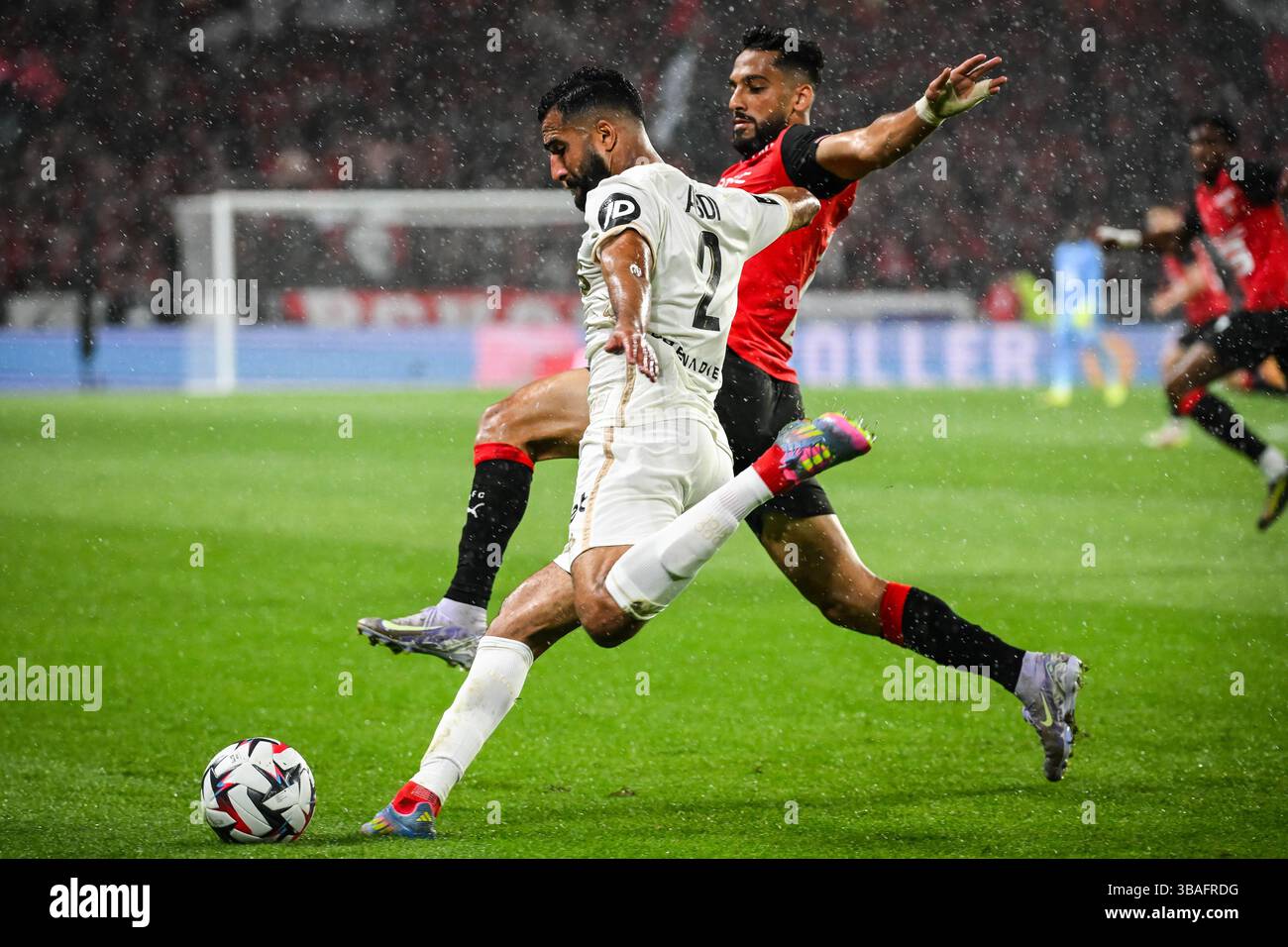
The landscape of professional football is often defined by precise contracts, transfer windows, and clear administrative oversight. However, occasionally, the machinery of the sport encounters a friction point that leaves observers and fans alike questioning the process. Recently, OGC Nice found itself at the heart of such an administrative imbroglio concerning Tunisian international defender Ali Abdi, a situation that has prompted discussions regarding the complexities of player registration and international transfer protocols.
For the uninitiated, Ali Abdi has been a consistent figure in French football, having spent significant time with Stade Malherbe Caen before his high-profile move to the Côte d’Azur. The administrative hurdles faced by Nice, particularly regarding the integration of international talent into their tactical setup, highlight the delicate balance clubs must maintain between on-field ambition and bureaucratic compliance. As the footballing world monitors these developments, the case of Abdi serves as a reminder that the “beautiful game” is as much about paperwork as it is about performance.
Understanding the Administrative Hurdle
At the center of this situation is the intricate web of regulations governing the movement of players, particularly those holding non-EU status or navigating specific transfer window deadlines. OGC Nice, a club with clear European aspirations, relies heavily on the stability of its defensive line. Ali Abdi, known for his versatility as a left-back and his ability to contribute in the attacking third, was brought in to bolster these ranks. According to official league records, the Ligue de Football Professionnel (LFP) maintains strict oversight on squad registration, ensuring that every player is vetted against international transfer certification (ITC) requirements.
The “imbroglio” mentioned in recent reports refers to the timing and verification of administrative documents that permit a player to take the pitch. For a club like Nice, which operates within the stringent financial and legal framework of French football, any delay in processing can have immediate consequences on team selection. It is a situation that requires a deep understanding of the FIFA Regulations on the Status and Transfer of Players, which dictate the mandatory procedures for clubs to secure international clearance.
The Impact on OGC Nice and Ali Abdi
For Ali Abdi, the frustration of being sidelined due to administrative technicalities is palpable. A player of his caliber, who has represented the Tunisian national team with distinction, thrives on consistent minutes. When a club encounters these hurdles, it is not just the player’s momentum that suffers; the coaching staff must also pivot their tactical approach on short notice. The integration of a new signing is a delicate process, often involving weeks of training ground synchronization. When that process is interrupted by off-field delays, the ripple effects are felt throughout the locker room.
OGC Nice, under the direction of their management, has consistently sought to clarify these positions with the relevant governing bodies. In the world of elite sports, transparency is essential. Fans often look to the club for updates, and while administrative matters are frequently kept private until resolved, the impact on the match-day squad remains visible. The club’s commitment to maintaining a competitive roster is evident, but the reality of international football logistics remains a formidable opponent.
Navigating the Future of Transfer Regulations
This incident invites a broader conversation about how clubs in Ligue 1 and beyond handle the administrative burden of modern transfers. As global football becomes increasingly interconnected, the volume of documentation required to move a player from one jurisdiction to another has grown exponentially. The case of Ali Abdi is not isolated; it is symptomatic of a system that is constantly being tested by the speed of the transfer market versus the deliberate pace of regulatory compliance.
Looking forward, the focus for Nice will remain on ensuring that all future registrations are expedited through proactive communication with the LFP, and FIFA. The goal is simple: to ensure that the talent brought to the Allianz Riviera can focus entirely on the game. As we approach the next phase of the season, the stability of the squad will be paramount. Supporters should keep an eye on the official club communications for updates regarding player availability, as these remain the only verified source of information in an environment where speculation often outpaces fact.
Key Takeaways on Administrative Compliance
- Regulatory Oversight: All transfers involving international players must adhere to FIFA’s International Transfer of Players regulations to ensure eligibility.
- LFP Role: The Ligue de Football Professionnel acts as the final arbiter for player registration within the French league system.
- Player Impact: Administrative delays directly affect match-day squad selection, requiring tactical flexibility from coaching staff.
- Official Channels: Fans are encouraged to rely on official club statements and the LFP website for accurate information regarding player status.
As the season progresses, the resolution of these administrative complexities will be essential for Nice to reach its objectives. We will continue to follow this story closely as more information becomes available through official channels. In the meantime, the focus shifts back to the pitch, where the true test of this squad will take place. What are your thoughts on how clubs should handle these bureaucratic challenges? Share your perspective in the comments below, and stay tuned to our sports desk for further updates on this developing situation.