
Oil Prices Plunge Below $100 as U.S.-Iran Peace Talks Spark Market Reassurance
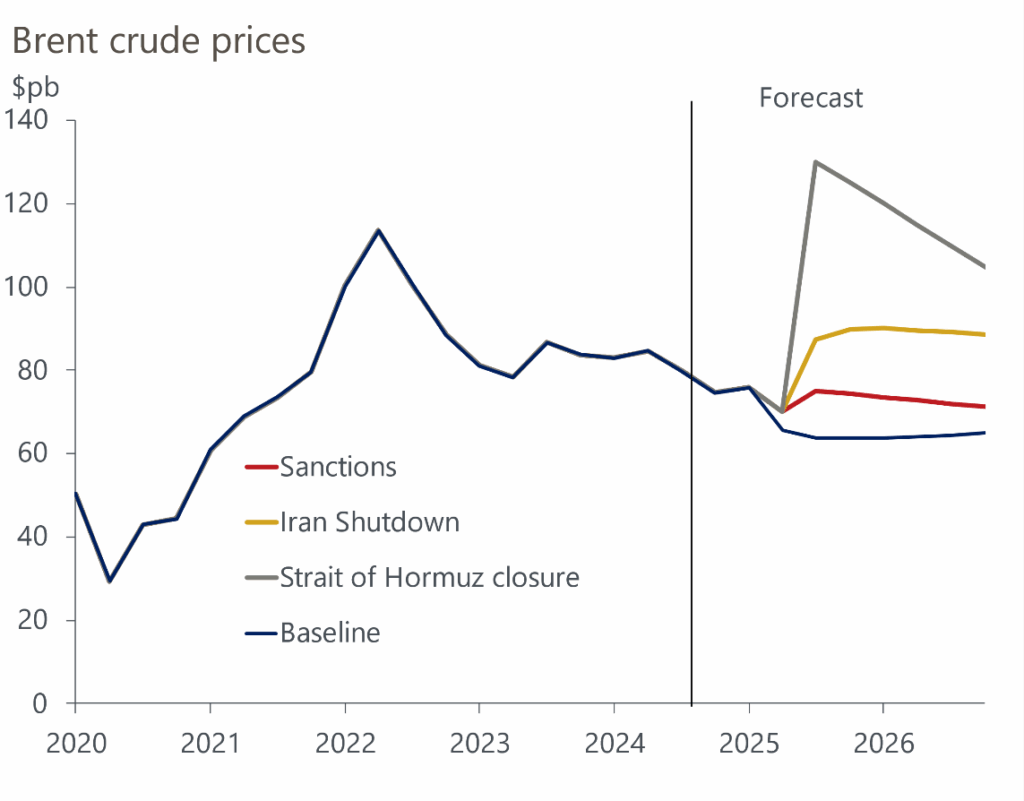
Global oil markets experienced their steepest decline in weeks on Tuesday as diplomatic signals between the United States and Iran raised hopes for a potential easing of tensions in the Strait of Hormuz. Benchmark Brent crude futures fell below $100 per barrel for the first time since early April, while West Texas Intermediate (WTI) also dropped sharply, reflecting investor optimism that a long-stalled peace agreement could stabilize one of the world’s most critical chokepoints for oil shipments.
The market reaction underscores how closely oil prices remain tied to geopolitical developments in the Middle East, where the Strait of Hormuz—through which roughly 20% of the world’s seaborne oil passes—has been a flashpoint for nearly a decade. Analysts warn that while the current price drop reflects short-term relief, the underlying structural factors—including OPEC+ production cuts and persistent demand concerns—will continue to influence markets in the coming months.
As of Tuesday afternoon, Brent crude was trading at $98.45 per barrel (down 6.8% on the day), while WTI stood at $94.12 per barrel (down 7.2%), according to data from the International Energy Agency (IEA) and Intercontinental Exchange (ICE). The sharp decline came after reports emerged that U.S. And Iranian negotiators had reached a preliminary understanding on confidence-building measures, including potential reductions in maritime patrols near the Strait of Hormuz and a temporary freeze on new sanctions.
Why the Market Reacted So Sharply
The price plunge can be attributed to three key factors:
- Geopolitical Risk Premium Dissipates: The Strait of Hormuz has been a persistent source of premium pricing for oil, with traders factoring in potential disruptions from Iranian-backed militia activity or retaliatory strikes. A de-escalation would remove this uncertainty, allowing prices to revert to fundamentals.
- Sanctions Relief Speculation: While no formal agreement has been signed, market participants are pricing in the possibility of reduced U.S. Sanctions on Iranian oil exports, which could increase supply. Iran has the capacity to add 1.5–2 million barrels per day to global markets if sanctions are lifted, according to the IEA May 2026 Oil Market Report.
- Inventory Concerns Ease: The U.S. Energy Information Administration (EIA) reported last week that crude inventories had risen unexpectedly, reducing fears of a supply crunch. With demand growth slowing in China and Europe, traders are now more focused on potential supply additions than shortages.
However, not all analysts are convinced the rally will last. “This is a classic case of ‘hope premium’—markets are pricing in the best-case scenario before any concrete deal is signed,” said Dr. Elena Vasquez, senior energy economist at the Oxford Institute for Energy Studies. “The reality is that even if an agreement is reached, it will likely be incremental, and the market will need to see actual reductions in tensions before sustaining lower prices.”
The Strait of Hormuz: A Flashpoint for Global Oil
The Strait of Hormuz, a narrow waterway connecting the Persian Gulf to the Gulf of Oman, is the world’s most strategically important maritime chokepoint. According to the U.S. Energy Department, approximately 21 million barrels per day of oil—nearly a fifth of global consumption—pass through the strait annually. This includes:
- Saudi Arabia: 7 million bpd
- Iran: 1.8 million bpd (pre-sanctions)
- Iraq: 1.5 million bpd
- United Arab Emirates: 1.2 million bpd
Historically, tensions in the region have led to sharp spikes in oil prices. In 2019, for example, attacks on Saudi Aramco facilities caused Brent crude to surge to $71 per barrel in a single day. More recently, the 2022 escalation between Israel and Hezbollah led to a 10% price jump over two weeks as traders feared spillover into the broader Middle East.
This time, however, the market appears to be reacting to de-escalation rather than escalation. “The difference now is that we’re seeing diplomatic signals rather than military ones,” said Rajiv Bhatia, head of geopolitical analysis at the Eurasia Group. “Markets are betting that if the U.S. And Iran can agree to reduce tensions, the risk of a broader conflict diminishes.”
Who Benefits—and Who Loses?
The oil price decline is a mixed bag for different stakeholders:
| Stakeholder | Impact of Price Drop | Potential Risks |
|---|---|---|
| Oil-Exporting Nations (Saudi Arabia, Russia, Iraq) | Lower revenue per barrel, but potential for increased volume if demand holds | Budget deficits if prices remain suppressed |
| Consumers (U.S., EU, Asia) | Lower fuel costs, reduced inflationary pressures | Dependence on Middle East supply could re-emerge as a geopolitical vulnerability |
| Iran | Potential sanctions relief could boost exports, but prices may not rise enough to offset lost market share | Domestic political backlash if economic benefits are slow to materialize |
| Renewable Energy Firms | Weaker oil prices could delay investment in alternatives, but long-term trends remain supportive | Market volatility may deter capital allocation |
| Hedgers (Airlines, Shipping) | Lower fuel costs improve margins | Price volatility could disrupt hedging strategies |
For the U.S., the situation is particularly nuanced. While lower oil prices benefit consumers and reduce inflationary pressures, they also weaken the leverage Washington holds over Iran. “The U.S. Has been using oil sanctions as a tool for decades to pressure Tehran,” said Dr. Sarah Levesque, a sanctions expert at the Atlantic Council. “If prices stay low, the incentive for Iran to negotiate seriously diminishes.”
What Happens Next? The Road Ahead for Oil Markets
The next critical milestones will determine whether the current price drop is sustainable:

- June 5–7: Reported follow-up talks in Oman, where negotiators aim to finalize confidence-building measures. A breakdown could send prices surging.
- June 10: OPEC+ meeting in Vienna, where members are expected to discuss extending production cuts. Any signal of reduced cuts could further pressure prices.
- July 4: U.S. Mid-year economic review, which may include updates on inflation and energy policy. The Federal Reserve’s stance on interest rates could also influence oil demand.
In the meantime, traders are watching three key indicators:
- Strait of Hormuz Traffic: Satellite data from Kpler will track whether Iranian naval activity near the strait decreases.
- Sanctions Monitoring: The U.S. Treasury’s Office of Foreign Assets Control (OFAC) will be scrutinized for any signals on potential sanctions relief.
- Iranian Oil Loadings: Data from VesselTracker will show whether Iranian tankers are beginning to move toward export markets.
Key Takeaways
- The oil price drop below $100 reflects short-term optimism about U.S.-Iran detente, but structural factors (OPEC+ cuts, demand growth) remain in play.
- A formal agreement is still weeks away, and markets could reverse sharply if talks stall.
- The Strait of Hormuz remains a critical flashpoint—any escalation would trigger rapid price spikes.
- Consumers benefit from lower prices, but exporters face revenue pressures, particularly in budget-dependent economies.
- Geopolitical risks are not the only driver: U.S. Economic data and OPEC+ decisions will also shape the next phase of the market.
What to Watch Next:
- Follow IEA reports for weekly oil market updates.
- Monitor EIA inventory data for signs of supply tightness.
- Track U.S. Sanctions updates for potential policy shifts.
Have insights on how this could impact your industry? Share your thoughts in the comments below—or tag us on Twitter with your analysis.
Worth a look