
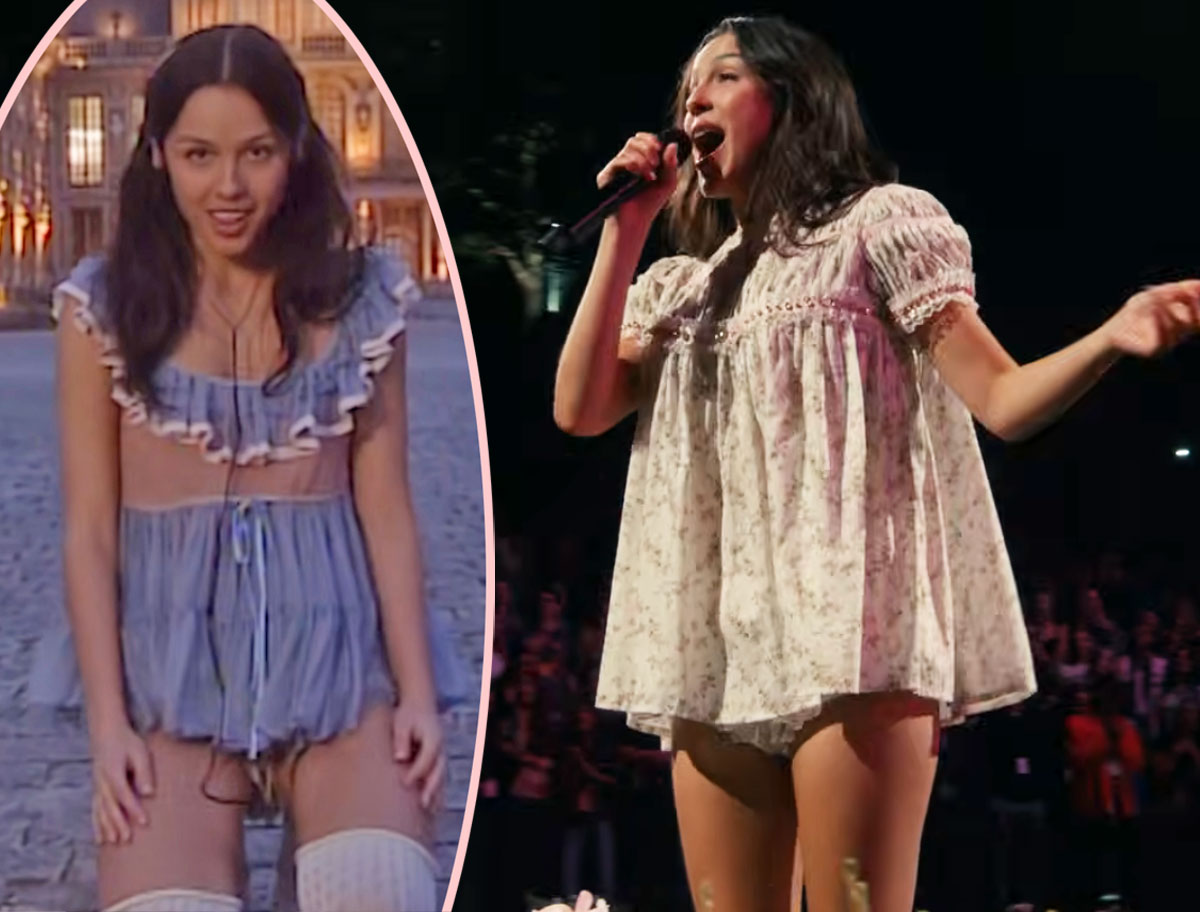
Pop superstar Olivia Rodrigo has addressed the intense online scrutiny surrounding her recent fashion choices, specifically the “babydoll” dresses worn during her latest era of performances. In a candid conversation on The New York Times’ Popcast, the 21-year-old artist—who recently concluded her global Guts World Tour—spoke out against the persistent and often aggressive commentary that has followed her stylistic evolution. The discourse, which frequently leans into the “sexy baby” trope, has sparked a broader conversation about how public figures, particularly young women, are scrutinized for their clothing choices in the modern media landscape.
The Grammy-winning singer, known for her chart-topping hits like “Drivers License,” expressed frustration at the double standard she perceives in how her outfits are interpreted. While she has frequently worn more revealing stage attire, such as sparkly bras and shorts, she noted that the recent shift to more modest, vintage-inspired silhouettes has triggered a wave of unwarranted, and often disturbing, criticism. For many fans and industry observers, this highlights a recurring issue in celebrity culture where the agency of young women is frequently challenged by external projections.
According to the New York Times podcast transcript, Rodrigo directly challenged the rhetoric surrounding her wardrobe, stating, “What’s really disturbing is, I feel like I actually wear—I have worn outfits that are revealing on stage. I’ve been on stage in a sparkly bra and little shorts, which is my right. That’s fun and I felt cool and comfortable in that.” She furthered this sentiment by pointing out the irony that her more covered-up looks are being labeled as “inappropriate” by critics, while her more revealing outfits were accepted as standard stage wear.
View this post on Instagram
Challenging the Double Standard
The conversation highlights a significant tension in how female artists navigate their public personas. Rodrigo argued that the criticism is indicative of a deeper, systemic issue where society is quick to sexualize young women, regardless of their intent. By labeling her stylistic choices—which she noted were inspired by her personal musical heroes like Kathleen Hanna and Courtney Love—as “childlike” or “pedophilic,” she believes critics are engaging in a harmful rhetoric that places the burden of sexualization back onto the woman.
“I just think it shows how we really normalize pedophilia in our culture,” Rodrigo said during the interview. “Also, it’s just this rhetoric that we’re fed as girls since we were so little, which is, ‘Don’t wear that because then a man is gonna sexualize your body, and it’s your fault.’”

This perspective resonates with many fans who have taken to social media to support her, arguing that the fixation on her clothing is a distraction from her musical contributions. Supporters point out that the aesthetic of her recent work, which has included references to historical themes and vintage fashion, is a creative expression rather than an invitation for scrutiny. The reaction highlights a growing divide between those who view celebrity fashion through a lens of moral policing and those who advocate for the autonomy of female performers.
The Impact of Online Discourse
The controversy surrounding Rodrigo’s wardrobe is not an isolated incident but rather part of a broader, ongoing debate regarding the treatment of young female celebrities in the digital age. As stars like Rodrigo grow up in the public eye, the expectations placed upon them often shift, creating a volatile environment where every sartorial choice is analyzed for hidden meanings. Rodrigo’s decision to directly address these comments serves as a boundary-setting moment, emphasizing that she does not intend to be responsible for the interpretations of others.
“You shouldn’t be responsible for some guy sexualizing you in a way that was never your intention,” she added. This statement underscores a central theme of her response: the rejection of the idea that women must modify their behavior or appearance to avoid unwanted attention or mischaracterization by the public. By speaking out, she joins a long line of female artists who have used their platforms to challenge industry norms and societal expectations.
What Happens Next
As of now, there are no further official statements from Olivia Rodrigo regarding this specific topic, as she continues to focus on her music and creative projects. The conversation, however, remains a focal point for fans and critics alike, reflecting the evolving relationship between stars and the public in an era of constant online engagement. For those following her career, the next milestones will likely be linked to her upcoming musical releases and public appearances, where the focus will likely pivot back to her artistry. Readers are encouraged to keep an eye on official channels for updates on her future projects and to engage in respectful, constructive dialogue regarding these complex cultural conversations.
What are your thoughts on the discourse surrounding celebrity fashion and the scrutiny applied to young artists? Share your perspectives in the comments section below.