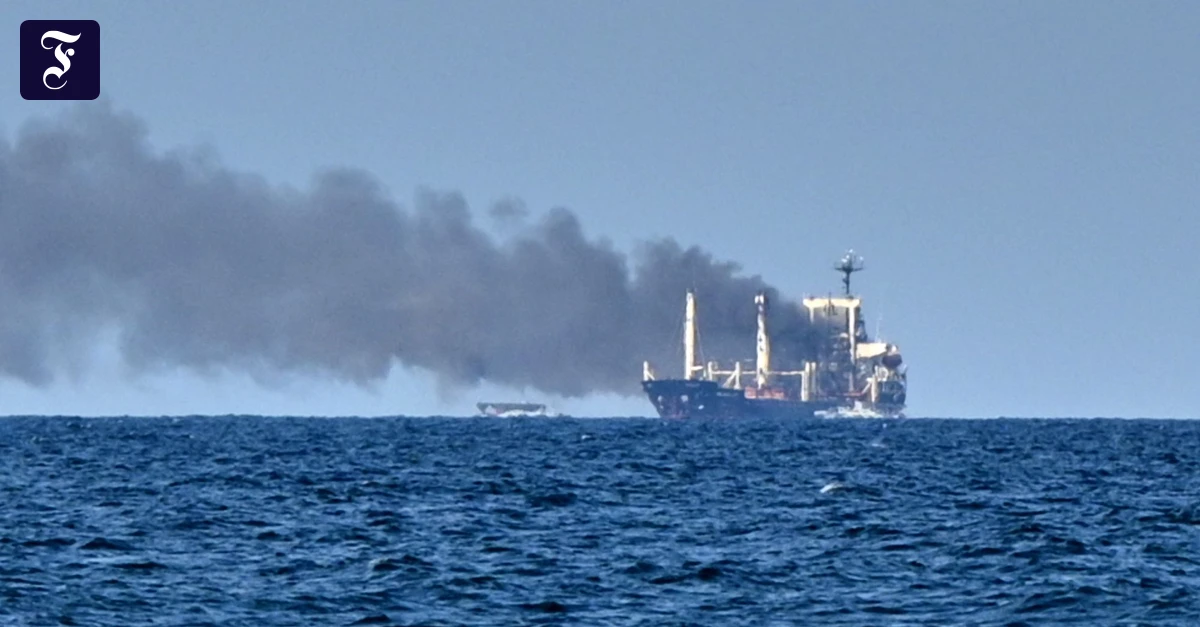
Reports indicate that a Russian missile strike targeted a Turkish-flagged vessel in the Black Sea, resulting in at least one death and 16 injuries. The incident, reported by Ukrainian monitoring channels and news aggregators, underscores the escalating risks for commercial shipping in the region as Russia continues its aerial campaign against maritime infrastructure and logistics.
The strike occurred amid a broader pattern of Russian attacks on port cities and shipping lanes, which Ukraine asserts are critical for the export of grain and other essential goods. While the specific coordinates and the name of the vessel have not been officially released by the Turkish Ministry of Foreign Affairs or the Ukrainian Navy, initial reports from the NEXTA monitoring channel indicate significant casualties and damage to the ship.
This incident follows a series of precision strikes targeting the Odesa and Mykolaiv regions, where Russia has consistently attempted to blockade Ukrainian ports. The involvement of a Turkish-flagged vessel introduces a complex diplomatic dimension, as Turkey maintains a critical role as a mediator in the conflict and is a signatory to the Montreux Convention, which regulates the passage of warships through the Bosphorus and Dardanelles straits.
Impact of the Missile Strike on Maritime Personnel
According to reports circulated by NEXTA on X, the missile strike caused immediate casualties on board the vessel. The current toll stands at one person killed and 16 others wounded. Emergency response teams in the affected area have been working to stabilize the survivors, though the exact nature of the injuries has not been detailed by medical officials.
The targeting of non-combatant commercial vessels is a recurring point of contention in the conflict. Ukraine has frequently accused Russia of violating international maritime law by targeting civilian ships. The United Nations Security Council has previously discussed the safety of navigation in the Black Sea, particularly following the collapse of the Black Sea Grain Initiative in July 2023.
Diplomatic Implications for Turkey and Russia
Turkey’s position in the conflict is characterized by a delicate balance of supporting Ukrainian sovereignty while maintaining economic and diplomatic ties with Moscow. A direct strike on a Turkish-flagged vessel could pressure Ankara to harden its stance regarding the security of the Black Sea.
Under the Turkish Ministry of Foreign Affairs protocols, the government typically launches an immediate investigation into attacks on its flagged vessels to determine the origin of the strike and the legality of the target. If the strike is confirmed as a Russian act of aggression against a neutral commercial vessel, it may lead to formal diplomatic protests or an increase in Turkish naval monitoring in the region.
The Strategic Context of Black Sea Shipping
Russia has sought to neutralize Ukraine’s maritime capabilities to prevent the shipment of weapons and the export of agricultural products. By targeting vessels in the Black Sea, Russia aims to create a “danger zone” that discourages international shipping companies from docking at Ukrainian ports.
Ukraine, conversely, has developed a “humanitarian corridor” to allow ships to navigate along the coastlines of Romania and Bulgaria. However, Russian missile capabilities—including the use of Kalibr cruise missiles and Shahed drones—allow them to strike targets far from the immediate coastline, making these corridors precarious. According to data from the Reuters news agency, the volatility of the Black Sea has led to a sharp increase in insurance premiums for commercial ships operating in the area.
The targeting of a Turkish vessel is particularly significant because Turkey manages the strategic gateways to the Black Sea. Any escalation that threatens Turkish interests could result in stricter interpretations of the Montreux Convention, potentially further restricting Russian naval movements.
Officials from the Ukrainian government have not yet issued a formal statement regarding the specific identity of the vessel or the cargo it was carrying. Further updates are expected as the Turkish government completes its preliminary assessment of the damage and casualty reports.
The next confirmed checkpoint for this development will be the official response from the Turkish Ministry of Foreign Affairs and any subsequent filings with the International Maritime Organization (IMO).
We invite readers to share their perspectives on the security of international shipping lanes in the comments below.