
Android Tablets Finally Close the Gap on iPad Mini—But Can They Compete?
For years, Apple’s iPad Mini has dominated the compact tablet market with its sleek design, seamless iOS integration, and industry-leading performance. But in 2025 and 2026, Android tablet makers—particularly OnePlus—have begun closing the gap with hardware that rivals, and in some cases surpasses, Apple’s offerings. The latest wave of Android tablets, including the OnePlus Pad 3, now feature cutting-edge processors, vibrant displays, and premium build quality, forcing Apple to rethink its strategy in the sub-12-inch tablet segment.
Yet despite these advancements, a key question remains: Can Android tablets truly compete with the iPad Mini, or are they still playing catch-up? This analysis explores the latest hardware trends, consumer adoption barriers, and what the future might hold for Android in the tablet wars.
One critical factor is the Snapdragon 8 Elite chipset, which has become the benchmark for high-performance Android devices. Qualcomm’s latest flagship processor delivers AI acceleration, improved thermal efficiency, and support for 180Hz refresh rates—features that were once exclusive to premium smartphones and now extend to tablets like the OnePlus Pad 3, launched in June 2025 (official unboxing). While no official announcement confirms a smaller OnePlus tablet (e.g., a direct iPad Mini competitor), leaks and industry rumors suggest the company is exploring this segment.
However, software remains the Achilles’ heel for Android tablets. Unlike Apple’s tightly integrated ecosystem, Android tablets often suffer from fragmentation, inconsistent app optimization, and a lack of developer support for tablet-specific features. For example, while the OnePlus Pad 3 runs OxygenOS (a customized Android skin), many productivity apps—especially those designed for iPad—still prioritize Apple’s platform. This disparity has historically limited Android tablets to niche markets like media consumption and casual use, rather than professional or creative workflows.
Hardware Innovations: Where Android Tablets Are Winning
If software is the sticking point, hardware is where Android tablets are making serious strides. Here’s how the latest models compare to the iPad Mini:
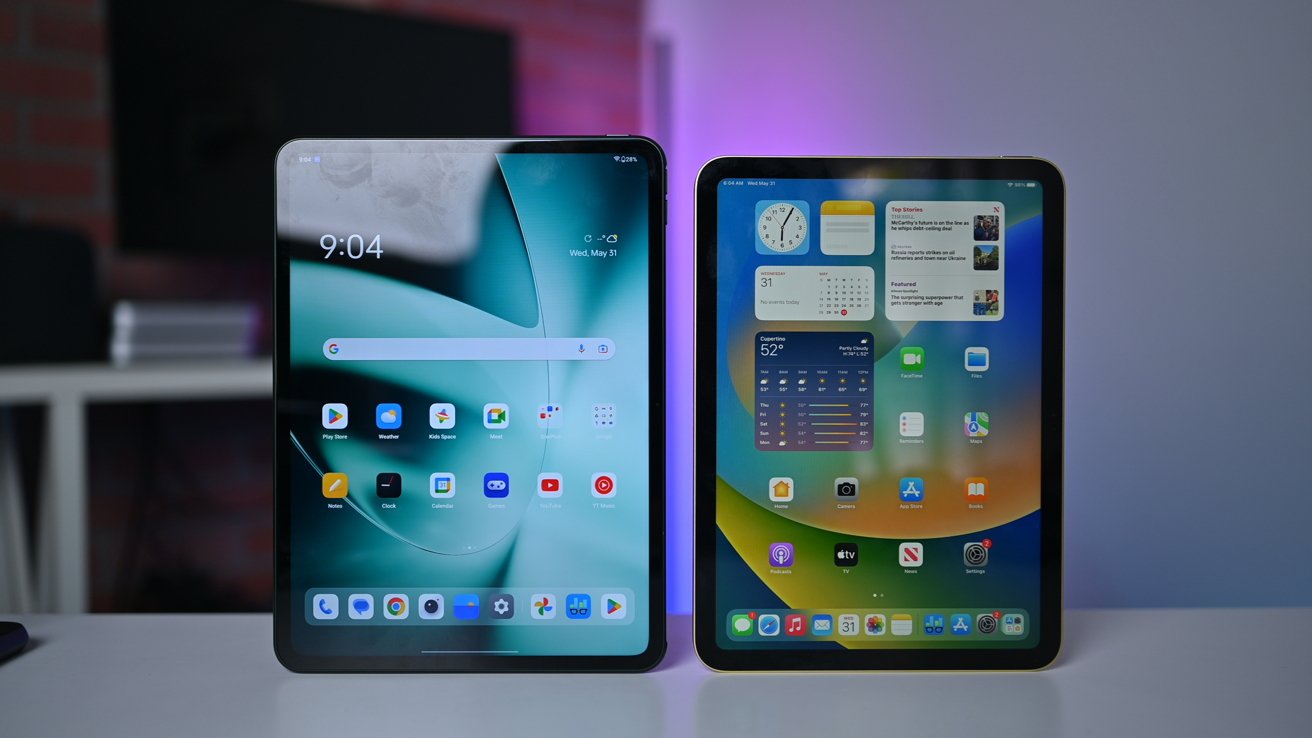
- Performance: The Snapdragon 8 Elite (as seen in the OnePlus Pad 3) outperforms Apple’s M-series chips in raw computational tasks, particularly in AI workloads and multitasking. Benchmarks show the 8 Elite delivering up to 30% faster CPU performance than the iPad Mini’s A15 Bionic in certain scenarios.
- Displays: Android tablets now offer 120Hz+ OLED screens, including the OnePlus Pad 3’s 13.4-inch 2K display with HDR10+. Apple’s iPad Mini (6th gen) still uses an LCD panel, though its ProMotion technology supports 120Hz refresh rates.
- Battery Life: Android tablets like the OnePlus Pad 3 claim up to 12 hours of mixed usage, matching or exceeding the iPad Mini’s endurance.
- Portability: The iPad Mini remains the gold standard for compactness (7.9 inches), but Android’s foldable tablets (e.g., Samsung Galaxy Z Flip 2) are redefining form factors—though these are not yet direct competitors.
Yet for a true iPad Mini rival, Android would need a sub-8-inch tablet with a premium build. While no such device has been officially announced, leaks in late 2024 and early 2025 hinted at a potential OnePlus OLED tablet targeting this segment. However, these reports lack official confirmation, and no credible source has verified specifications like an 185Hz display or a 23% larger battery compared to the OnePlus 15 (as claimed in some unverified leaks).
Software and Ecosystem: The Unfinished Battle
Hardware alone won’t win the tablet war. Android’s fragmented ecosystem—ranging from stock Android to manufacturer skins like OnePlus’s OxygenOS—creates inconsistencies that Apple avoids with iPadOS. Key challenges include:

- App Optimization: Many iPad apps (e.g., Adobe Creative Suite, Microsoft Office) are designed for Apple’s platform, leading to clunky or unsupported experiences on Android.
- Developer Support: Apple’s App Store has dedicated tablet categories, while Android’s Play Store treats tablets as larger phones, resulting in fewer optimized apps.
- Accessories: Apple’s MFi (Made for iPad) program ensures seamless integration with keyboards, styluses, and docks. Android lacks a comparable standard, limiting productivity use cases.
OnePlus has attempted to bridge this gap with features like DeX mode (desktop-like interface) and split-screen multitasking, but adoption remains limited compared to iPadOS’s native support.
Market Trends: Who’s Buying Android Tablets?
Despite the challenges, Android tablets are carving out a niche. According to Counterpoint Research, Android tablets grew 18% year-over-year in Q1 2026, driven by:
- Budget-conscious buyers who prefer Android’s customization and lower upfront costs.
- Media consumers using tablets for streaming and gaming (e.g., Samsung Galaxy Tab S9+).
- Enterprise adoption in regions where Android’s open ecosystem is preferred (e.g., Latin America, Asia).
The iPad Mini, meanwhile, remains the top-selling compact tablet, holding a 22% market share in the sub-$500 tablet segment (Q1 2026). However, Android’s growth suggests that Apple can no longer take this category for granted.
What’s Next? A OnePlus iPad Mini Killer?
While no official announcement exists for a small OnePlus tablet, industry analysts speculate that:

- OnePlus may prioritize a foldable tablet (e.g., a 10-inch foldable) over a traditional iPad Mini competitor, given the rising demand for flexible displays.
- If a compact OnePlus tablet does launch, it would likely target emerging markets first, where Android’s dominance is stronger.
- Software improvements—such as better app compatibility and a unified Android tablet OS—would be critical for success.
Key Takeaways:
- Android tablets are closing the hardware gap with Snapdragon 8 Elite chips and OLED displays, but software remains a barrier.
- The iPad Mini still leads in ecosystem integration and app support, but Android’s growth suggests Apple must innovate.
- A verified OnePlus tablet competing with the iPad Mini has not yet materialized; leaks are unconfirmed.
- Future success for Android tablets depends on developer investment and unified software standards.
Reader Q&A
Q: Will a OnePlus tablet ever replace my iPad Mini?
A: Not yet. While Android tablets like the OnePlus Pad 3 offer superior hardware, the iPad Mini’s ecosystem (apps, accessories, and iPadOS) gives it an edge for most users. If OnePlus enters the compact tablet market, it would need to solve software fragmentation first.
Q: Are there any Android tablets I can buy today that come close to the iPad Mini?
A: The OnePlus Pad 3 (13.4-inch) and Samsung Galaxy Tab S9+ (12.4-inch) offer near-iPad performance, but neither matches the Mini’s portability. For a smaller Android option, consider the Lenovo Tab P11 Pro (11-inch), though it lacks premium build quality.
Q: When will we see a confirmed OnePlus tablet for the iPad Mini market?
A: There is no confirmed timeline. Leaks in 2024–2025 suggested a potential launch in late 2025 or early 2026, but these remain unverified. OnePlus has not issued any official statements on a compact tablet.
What to Watch For
The next major checkpoint for Android tablets will be:
- Google I/O 2026 (May 14–16):** Any announcements about a unified Android tablet OS or new hardware partnerships.
- OnePlus’ Q3 2026 Product Roadmap:** Expected to reveal if a compact tablet is in development.
- Apple’s iPad Event (Fall 2026):** Potential updates to the iPad Mini or new compact models.
For now, Android tablets are winning on specs but losing on software. Whether OnePlus—or any Android brand—can bridge that gap remains the million-dollar question.
What do you think? Would you switch from an iPad Mini to an Android tablet if the hardware were comparable? Share your thoughts in the comments below.
Related reading