The boundary between desktop-class computing and portable gaming is officially dissolving. In a move that signals a significant escalation in the burgeoning handheld PC market, OneXPlayer has unveiled its latest lineup of handheld gaming platforms, designed to bring high-fidelity, AAA gaming experiences directly into the hands of enthusiasts. This announcement comes at a pivotal moment for the industry, as consumers increasingly demand the ability to play demanding titles like Cyberpunk 2077 or Elden Ring without being tethered to a desk.
For years, the handheld market was dominated by mobile-first architectures, but the recent surge in powerful APUs (Accelerated Processing Units) from AMD has shifted the paradigm. OneXPlayer’s new hardware strategy appears to lean heavily into this shift, focusing on modularity and raw computational power. By bridging the gap between the convenience of a Nintendo Switch and the performance of a gaming laptop, these new platforms aim to capture a growing segment of “prosumer” gamers who refuse to compromise on frame rates or visual fidelity.
As we analyze these new developments, it becomes clear that OneXPlayer is not just releasing another gadget; they are participating in a high-stakes arms race against established giants like Valve, ASUS, and Lenovo. The success of these new platforms will likely depend on how well they balance thermal management, battery longevity, and the often-finicky user experience of running desktop operating systems on small-form-factor hardware.
The Modular Revolution: A Closer Look at the OneXPlayer X1
The centerpiece of this latest announcement is the OneXPlayer X1, a device that pushes the concept of “modular gaming” to its logical extreme. Unlike the fixed-form-factor designs of the Steam Deck or the ROG Ally, the X1 features a unique architecture centered around detachable controllers. This design philosophy allows the device to transition seamlessly from a handheld unit to a tablet-style gaming machine, or even a desktop-adjacent device when paired with external peripherals.
This modularity is more than just a gimmick; it addresses a fundamental ergonomic challenge in handheld gaming. When playing intensive titles, the heat generated by the internal components can make a compact chassis uncomfortable to hold for extended periods. By detaching the controllers, users can maintain a more natural grip while the screen functions as a standalone unit. This versatility is a direct response to the diverse ways modern gamers consume media, ranging from quick sessions on a commute to long-form gaming in a lounge setting.
the X1’s ability to dock and connect to external displays via high-speed ports suggests a “single-device ecosystem.” For the modern enthusiast, this means the same machine used for a bus ride home can serve as the primary gaming hub in a living room setup, provided the user has the right docking station and peripherals.
Technical Specifications: Powering the Next Generation of Play
To support such high expectations, OneXPlayer has equipped its new platforms with top-tier silicon. While specific regional configurations may vary, the core of the X1 experience is built around the latest AMD Ryzen architecture. Specifically, the integration of the AMD Ryzen 8000 series processors provides the necessary compute density to handle complex physics engines and high-resolution textures that were previously the sole domain of dedicated desktop rigs.
Key technical highlights expected in the flagship configurations include:
- Display Excellence: A massive 8.8-inch touchscreen, often featuring resolutions as high as 2560 x 1600. With refresh rates reaching 120Hz or higher, the visual fluidity is designed to match the high frame rates delivered by the internal GPU.
- Memory and Storage: The use of LPDDR5x RAM ensures that the bandwidth-hungry APU can access data rapidly, minimizing stutter in open-world environments. High-speed NVMe SSD slots allow for the massive file sizes characteristic of modern AAA titles.
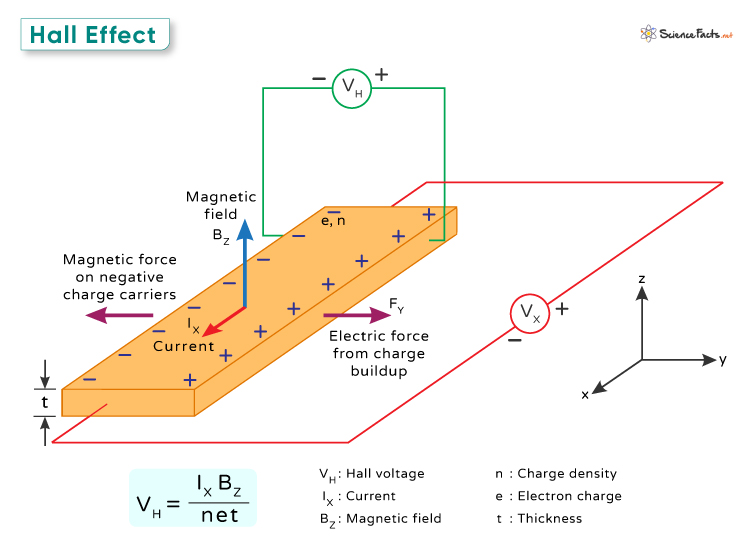
- Advanced Input: The inclusion of Hall Effect joysticks is a critical detail for enthusiasts. Unlike traditional potentiometers, Hall Effect sensors use magnets to detect movement, virtually eliminating the “stick drift” issues that have plagued many previous generations of gaming controllers.
- Thermal Engineering: To prevent the thermal throttling that often cripples tiny devices, OneXPlayer has implemented advanced cooling solutions, including expanded heat pipes and high-RPM fans designed to dissipate heat efficiently without excessive acoustic noise.
This level of hardware sophistication places OneXPlayer in a different tier than traditional mobile gaming devices. We are no longer talking about “mobile ports” of games; we are talking about native PC gaming in a portable shell.
The Competitive Landscape: Navigating the Handheld PC Wars
The announcement of these new platforms must be viewed through the lens of an incredibly crowded and competitive market. OneXPlayer is entering a battlefield where every player has a distinct identity and a dedicated following. To understand the stakes, one must look at how the X1 compares to its primary rivals.
The Valve Steam Deck: Valve’s entry remains the gold standard for user experience, thanks to SteamOS. The Steam Deck offers a “console-like” simplicity that is incredibly difficult to replicate on Windows-based devices. However, OneXPlayer aims to win on raw power. While the Steam Deck is optimized for efficiency and a specific library, the OneXPlayer platforms offer the unrestricted freedom of the Windows ecosystem, allowing users to access Game Pass, Epic Games Store, and Ubisoft Connect with much less friction.
The ASUS ROG Ally and Lenovo Legion Go: These are the direct competitors in terms of hardware capability. Both ASUS and Lenovo have deep pockets and established brand loyalty. The ROG Ally, in particular, has set a high bar for Windows-based handheld performance. OneXPlayer’s counter-move is its modularity. While the Legion Go offers detachable controllers, the X1’s approach to a more holistic “tablet-first” modularity offers a different kind of utility that may appeal to users who prioritize versatility over a traditional handheld form factor.
The Strategic Gap: OneXPlayer is carving out a niche for the “power user.” By focusing on higher-end specs and modular designs, they are targeting the gamer who finds the Steam Deck underpowered and the mainstream handhelds too restrictive. It is a high-risk, high-reward strategy that relies on the assumption that the market is hungry for more “PC-plus” capabilities in a mobile package.
Software Ecosystem: The Windows 11 Factor
One of the most significant hurdles for any handheld PC is the operating system. OneXPlayer has opted to stick with Windows 11, a decision that is both its greatest strength and its most significant challenge. On one hand, Windows 11 provides unparalleled compatibility. If a game exists for PC, it will almost certainly run on a OneXPlayer device. This opens the door to everything from niche indie titles to the most massive multiplayer online games (MMOs).

Windows 11 was never designed for touchscreens or small controllers. Navigating a desktop environment with thumbsticks can be an exercise in frustration. To combat this, OneXPlayer—like many of its competitors—must rely on specialized “overlay” software. These custom interfaces allow users to quickly access settings, adjust TDP (Thermal Design Power), and manage game libraries without constantly fighting the standard Windows UI.
The success of these new platforms will ultimately hinge on the maturity of this software layer. A device with the most powerful processor in the world is useless if the user spends more time fighting the interface than playing the game. We expect to see OneXPlayer continue to iterate on its proprietary software to provide a more seamless, “console-like” experience that masks the underlying complexity of Windows.
Key Takeaways for Gaming Enthusiasts
- Modular Versatility: The new OneXPlayer platforms, particularly the X1, offer a unique detachable controller design that allows for multiple modes of play.
- High-End Performance: By leveraging AMD Ryzen APUs, these devices are targeting AAA gaming performance that rivals mid-range laptops.
- The Windows Advantage: Native Windows 11 support ensures compatibility with almost all PC gaming storefronts and titles.
- Ergonomic Innovation: The use of Hall Effect sensors aims to solve the long-standing issue of controller stick drift.
- Market Positioning: OneXPlayer is positioning itself as a premium, high-performance alternative to both the Steam Deck and mainstream Windows handhelds.
The Future of Mobile Gaming: What Happens Next?
The unveiling of these platforms is not the end of the story, but rather the beginning of a new chapter in the evolution of portable computing. As OneXPlayer moves toward global distribution, the industry will be watching closely to see if their modular approach can gain significant market share. We expect to see further updates regarding regional pricing, availability in major markets like North America and Europe, and potential software optimizations based on early adopter feedback.
The next major checkpoint for the company will be the official launch and the subsequent independent reviews from hardware analysts, which will provide the definitive word on whether the thermal management and software experience live up to the ambitious marketing claims. As the handheld PC category matures, the competition will only drive innovation faster, potentially leading to even more radical designs in the years to come.
What do you think about the move toward modular handhelds? Would you trade the simplicity of a Steam Deck for the raw power and versatility of a OneXPlayer? Let us know in the comments below and share this article with your fellow gamers!
Related reading