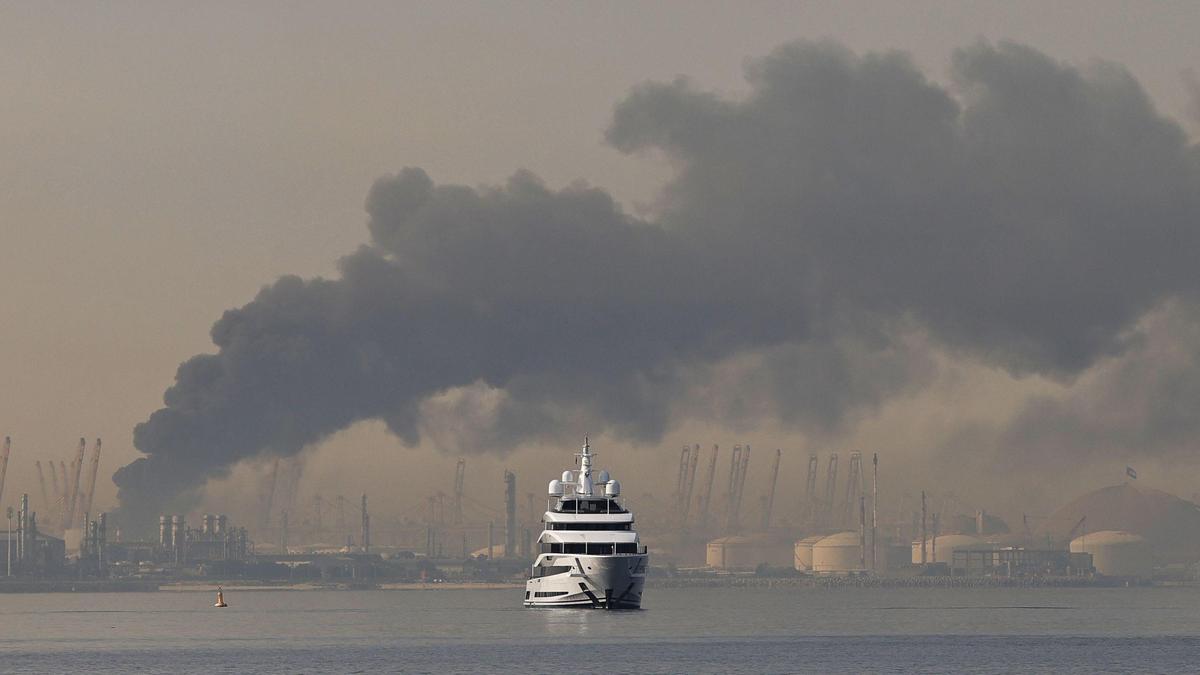
Sofia, Bulgaria – The Middle East is bracing for further instability following a wave of strikes conducted by the United States and Israel against targets within Iran on Saturday, February 28, 2026. The attacks, described by U.S. President Donald Trump as “major combat operations,” have triggered retaliatory actions from Iran’s Revolutionary Guard Corps (IRGC), escalating tensions across the region. Compounding the geopolitical uncertainty, the international community is closely watching for a response from OPEC+ regarding oil production, with a meeting of key members scheduled for Sunday, March 1, 2026.
The strikes targeted Iranian leadership sites and were presented by Israel as a “preemptive attack.” President Trump subsequently announced the death of Iran’s Supreme Leader Ayatollah Ali Khamenei, a claim confirmed by Iranian state television. According to the BBC, the IRGC has responded by targeting U.S. Bases and assets throughout the Middle East as part of an operation dubbed “Truthful Promise 4.” This escalation follows weeks of heightened rhetoric and negotiations surrounding Iran’s nuclear program.
Escalation and International Condemnation
The military actions have drawn swift condemnation from the international community. UN Secretary-General Antonio Guterres issued a statement warning that the use of force by the U.S. And Israel, and Iran’s subsequent retaliation, “undermine international peace and security.” Guterres called for an immediate cessation of hostilities and de-escalation, cautioning that failure to do so could lead to a wider regional conflict with severe consequences for civilians and regional stability. The BBC reports that Saudi Arabia has strongly condemned Iran’s retaliatory attacks on Bahrain, the UAE, Qatar, Jordan and Kuwait, denouncing what it termed “blatant Iranian aggression.”
The situation remains highly volatile. The strikes, which reportedly aimed to destroy Iranian missiles and potentially cripple its navy, represent a significant escalation in the long-standing tensions between Iran and the U.S. And Israel. As the Independent details, Western powers view Iran’s ballistic missile arsenal as both a conventional military threat and a potential delivery system for nuclear weapons, a claim Iran denies.
OPEC+ Weighs Output Increase Amidst Rising Oil Prices
The unfolding conflict is already impacting global energy markets. Brent crude, the international benchmark for oil prices, experienced a surge of over 3% on Friday, February 27, 2026, trading above $73 per barrel – a significant increase from $61 at the beginning of the year. This price jump has prompted expectations that the Organization of the Petroleum Exporting Countries (OPEC) and its allies (OPEC+) will consider increasing oil production to stabilize the market.
A virtual meeting of the “Voluntary Eight” (V8) – comprising Saudi Arabia, Russia, Iraq, the United Arab Emirates, Kuwait, Kazakhstan, Algeria, and Oman – is scheduled for Sunday, March 1, 2026. This group previously boosted production by approximately 2.9 million barrels per day (bpd) before announcing a three-month pause in output hikes. Analysts anticipate that the current geopolitical climate will lead to a reversal of that decision, with the V8 members agreeing to increase production to mitigate potential supply disruptions.
The Composition of the “Voluntary Eight”
- Saudi Arabia: A key player in OPEC and a major oil producer.
- Russia: A significant non-OPEC producer and a crucial partner in the OPEC+ alliance.
- Iraq: A substantial oil producer with a history of geopolitical instability.
- United Arab Emirates: A prominent OPEC member with significant oil reserves.
- Kuwait: A long-standing oil producer and a key player in regional politics.
- Kazakhstan: An emerging oil producer in Central Asia.
- Algeria: A major natural gas and oil producer in North Africa.
- Oman: A strategically located oil producer in the Arabian Peninsula.
Iran’s Missile Capabilities and Regional Implications
The recent strikes highlight concerns surrounding Iran’s ballistic missile capabilities. According to the Independent, Iran possesses the largest stockpile of ballistic missiles in the Middle East. These missiles, which are rocket-propelled and follow a free-fall trajectory, can deliver conventional or potentially nuclear warheads over varying distances.
Iran’s missile types and ranges include:
- Short-Range Ballistic Missiles (SRBMs): Capable of reaching targets within a few hundred kilometers.
- Medium-Range Ballistic Missiles (MRBMs): With a range of up to 2,500 kilometers, capable of hitting targets across the Middle East.
- Intermediate-Range Ballistic Missiles (IRBMs): Possessing a range of 2,500 to 5,500 kilometers, potentially reaching targets in Europe.
The potential for escalation remains high, with the possibility of further strikes and retaliatory actions. The situation is complicated by the involvement of multiple regional actors and the broader geopolitical context of Iran’s nuclear program. The attacks also raise questions about the future of diplomatic efforts to de-escalate tensions and prevent a wider conflict.
Past Incidents and Regional Tensions
This is not the first time Iran has been accused of involvement in attacks targeting regional infrastructure. The Independent notes that both Saudi Arabia and the United States believe Iran was behind a 2019 drone and missile attack on Saudi Arabia’s oil facilities, although Tehran has denied any involvement.
Looking Ahead
The coming days will be critical in determining the trajectory of this crisis. The outcome of the OPEC+ meeting on Sunday will be closely watched for its impact on global oil markets. The international community will be looking for signs of de-escalation and a return to diplomatic efforts. The immediate priority is to prevent a further widening of the conflict and to protect civilian populations in the region. The next official update is expected following the conclusion of the OPEC+ meeting later today.
World Today Journal will continue to provide live updates on this developing story. Share your thoughts and perspectives in the comments below.