
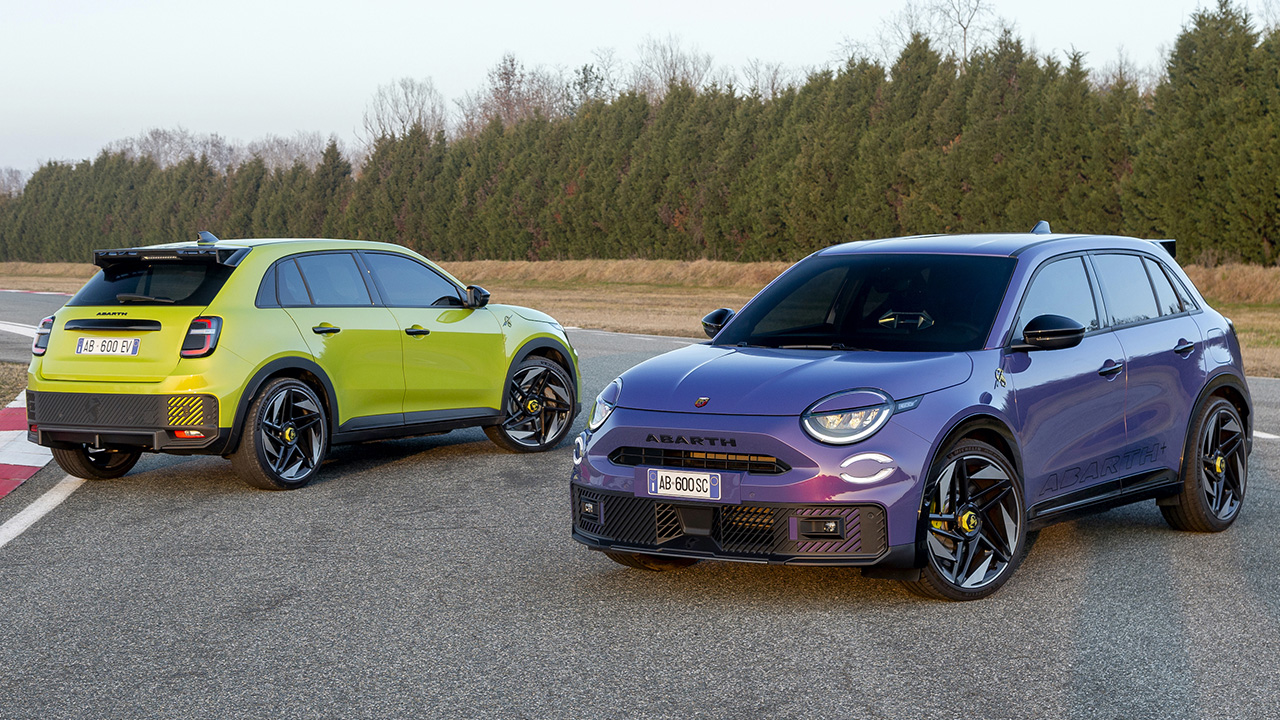
The landscape of compact electric vehicles is shifting as Stellantis refines its portfolio, moving from the utilitarian appeal of the Fiat 600e to the aggressive, track-inspired engineering of the Abarth 600e. For enthusiasts and tech-focused drivers, the transition represents a strategic pivot toward “accessible performance,” blending urban agility with high-output electric drivetrains.
The most recent developments center on a comprehensive overhaul of the Abarth 600e range. Introduced in February 2026, the updated lineup replaces the original Abarth 600e and the limited-edition Scorpionissima with two distinct trim levels: the entry-level Turismo and the top-tier Competizione. This restructuring allows the brand to capture both the daily commuter seeking a sporty edge and the performance purist demanding racing-grade hardware.
While the Abarth variants push the boundaries of speed and handling, other models within the Stellantis family, such as the Opel Frontera, continue to target the value-driven, utility-focused segment. The contrast between these vehicles highlights a broader industry trend: the bifurcation of the electric SUV market into specialized “performance” and “practicality” categories.
Abarth 600e Performance Updates: Turismo and Competizione
The new Abarth 600e range is designed to inject the brand’s racing DNA into a modern electric footprint. The Abarth 600e Turismo serves as the new entry point for the range, priced at £33,995 on-the-road. Delivering 240 HP, the Turismo is positioned for “everyday sportiness,” providing a balance of performance and accessibility for the urban environment.

For those seeking uncompromising power, the Abarth 600e Competizione replaces the Scorpionissima as the flagship model. Priced at £37,995 on-the-road, the Competizione is powered by a 207kW e-motor that produces 280 HP. This powertrain allows the vehicle to reach a top speed of 124 mph, with an acceleration time of 0–62 mph in 5.85 seconds, according to official Abarth announcements.
Engineering for the Track: The Competizione’s Hardware
The Competizione variant is not merely a software tune but a mechanical evolution developed in collaboration with Stellantis Motorsport. To manage its 280 HP output and improve cornering stability, the vehicle features a Torsen limited-slip differential, a critical component for maintaining traction during aggressive maneuvers.
Braking performance has been significantly upgraded to handle the stresses of dynamic driving. The Competizione utilizes Alcon front vented discs and monoblock calipers, which are engineered to provide increased braking stability and improved fade resistance. These components are paired with Sabelt sports seats, designed to provide maximum lateral support during track use, and Michelin tyres derived from Formula E technology, which utilize a double-compound tread to optimize grip and environmental efficiency.
Comparative Analysis: Performance vs. Utility
To understand where the Abarth and Fiat 600e sit within the current market, It’s useful to compare them against other Stellantis offerings like the Opel Frontera. While the 600e platform focuses on agility and electric efficiency, the Opel Frontera (specifically the 2024 1.2 Turbo GS eDCT) emphasizes cargo capacity and cost-effectiveness.
The Fiat 600e 54 kWh Sport (2026) offers a distinct advantage in acceleration and torque over the internal combustion Frontera. With 156 hp and 260 Nm of torque, the 600e is faster from 0-100 km/h (9 seconds) compared to the Frontera (11 seconds). The 600e features a 54 kWh battery and advanced driver aids such as highway assist and Traffic Jam Assist.
However, the Opel Frontera excels in practical metrics. It offers a significantly larger cargo volume of 1,600 liters with the seats down, which is approximately 29.98% greater than the 1,231 liters provided by the Fiat 600e. From a financial perspective, the Frontera is considerably more accessible, with a reported MSRP of 27,400.00 €, making it 9,090.00 € cheaper than the 36,490.00 € price tag of the Fiat 600e 54 kWh Sport, as detailed in comparative data.
| Feature | Fiat 600e 54 kWh Sport | Opel Frontera 1.2 Turbo GS |
|---|---|---|
| Horsepower | 156 hp | 100 hp |
| 0-100 km/h | 9 seconds | 11 seconds |
| Max Torque | 260 Nm | 205 Nm |
| Cargo Volume (Seats Down) | 1,231 l | 1,600 l |
| MSRP | 36,490.00 € | 27,400.00 € |
What This Means for the Consumer
The divergence in these specifications indicates that Stellantis is employing a tiered strategy. The Fiat 600e provides a balanced, modern electric experience for the city, while the Abarth 600e Competizione targets the enthusiast market with racing-derived hardware like the Torsen differential and Alcon brakes. Meanwhile, the Opel Frontera remains the choice for those prioritizing interior space and a lower entry price.
For the tech-savvy buyer, the Abarth 600e’s integration of Formula E-derived tyre technology and high-output electric motors represents the current ceiling for compact electric performance in this segment. The shift from the “mediocre” feel of the standard Fiat 600e to the “shining” performance of the Abarth 600e suggests that the brand is successfully leveraging its performance heritage to differentiate its EV offerings.
As the automotive industry continues to transition toward electrification, the focus is shifting from basic range and efficiency to “driving dynamics.” The introduction of the Turismo and Competizione trims proves that there is a viable market for high-performance electric compacts that do not sacrifice the agility required for urban environments.
The next official checkpoint for the Abarth 600e range will be the wider rollout of the Competizione and Turismo trims across international markets. Readers are encouraged to share their thoughts on whether racing-grade hardware like Torsen differentials are necessary in the electric SUV segment in the comments below.