
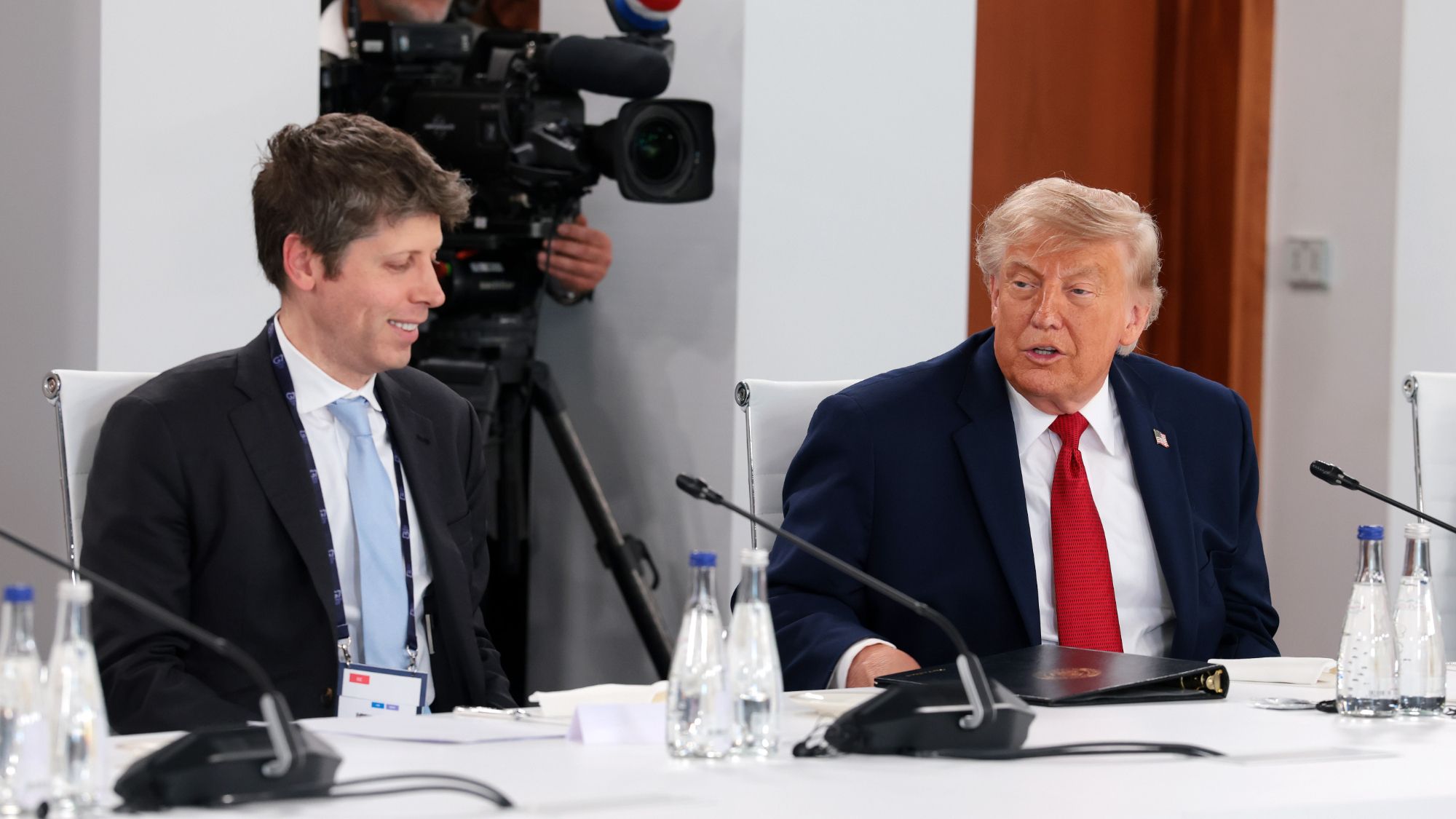
OpenAI has engaged in preliminary discussions regarding the transfer of a 5% ownership stake to the United States government, according to reports citing individuals familiar with the matter. The proposal, championed by CEO Sam Altman, envisions a broader industry framework where leading artificial intelligence developers contribute a uniform percentage of equity to a vehicle modeled on the Alaska Permanent Fund, which distributes annual dividends to residents derived from Alaska’s oil wealth.
The potential valuation of such a stake is significant. Based on the $852 billion valuation established during OpenAI’s most recent funding round in March, a 5% equity share represents approximately $42.6 billion. While the concept remains in early-stage development, implementing any deal might require an act of Congress.
The Proposed AI Sovereign Wealth Fund Model
The initiative seeks to integrate the public into the financial upside of the rapidly expanding AI sector. Under the model proposed by Altman, the government would not merely serve as a regulator but as a shareholder in the companies developing frontier models. This approach mirrors recent administrative actions involving the semiconductor industry. For instance, the federal government secured a 9.9% stake in Intel in August, following the conversion of grants into equity, priced at $20.47 per share. Furthermore, companies including Nvidia and AMD have previously agreed to relinquish 15% of their China chip revenue in exchange for export licenses.

The scope of the proposed “all-labs” structure is extensive, targeting major developers such as Google, Meta, and Anthropic. To date, these companies have not indicated a willingness to participate in such an arrangement. The discussions follow a period of heightened scrutiny regarding the trajectory of AI development. In recent weeks, Altman has reportedly communicated the proposal to President Donald Trump, Commerce Secretary Howard Lutnick, and Treasury Secretary Scott Bessent, alongside discussions with Senator Bernie Sanders (I-Vt.).
Regulatory Pressures and Model Deployments
These ownership discussions coincide with increased federal oversight of AI model releases. Just six days prior to the reports of the equity talks, OpenAI deferred the full public launch of its GPT-5.6 model following requests from federal officials. Reports indicate that Commerce Secretary Howard Lutnick cautioned against the release of the model without prior approval. This follows a period of restricted access for other industry players; Anthropic’s Claude Fable 5 and Mythos 5 models were subject to global deployment restrictions throughout June, marking the first instance of U.S. export controls being applied directly to an AI model rather than hardware components. Access to these models was restored yesterday.
The regulatory environment remains complex for AI developers. Beyond export controls, OpenAI is currently navigating an investigation involving a coalition of 42 state attorneys general. Both OpenAI and Anthropic have confidentially filed for initial public offerings (IPOs). A government-negotiated shareholding prior to a listing would lock in Washington’s position ahead of the ownership expansion that a full float brings.
Legislative Context and Public Ownership
The concept of public ownership in AI has gained traction within Washington. In June, Senator Bernie Sanders filed the American AI Sovereign Wealth Fund Act, which proposes the federal government acquire 50% of the voting shares in U.S. AI companies, through a fund his office valued at $7 trillion, potentially providing a $1,000 annual dividend to every American citizen. The 5% figure proposed in the OpenAI-linked discussions is the smallest figure we’ve seen to date attached to public ownership of the AI sector.

President Donald Trump stated last month that his administration is exploring options to grant the public an ownership stake in leading AI firms, with Vice President JD Vance emphasizing a preference for equity-based participation over cash payouts. OpenAI had previously proposed a “public wealth fund” in an April policy paper, and Altman first presented a proposal for government equity to the administration in early 2025, CNBC reported last month.
As of this reporting, OpenAI has declined to comment, and the White House has not immediately responded. Further developments regarding federal AI policy are expected as the administration continues to evaluate the intersection of national security, export controls, and corporate equity.