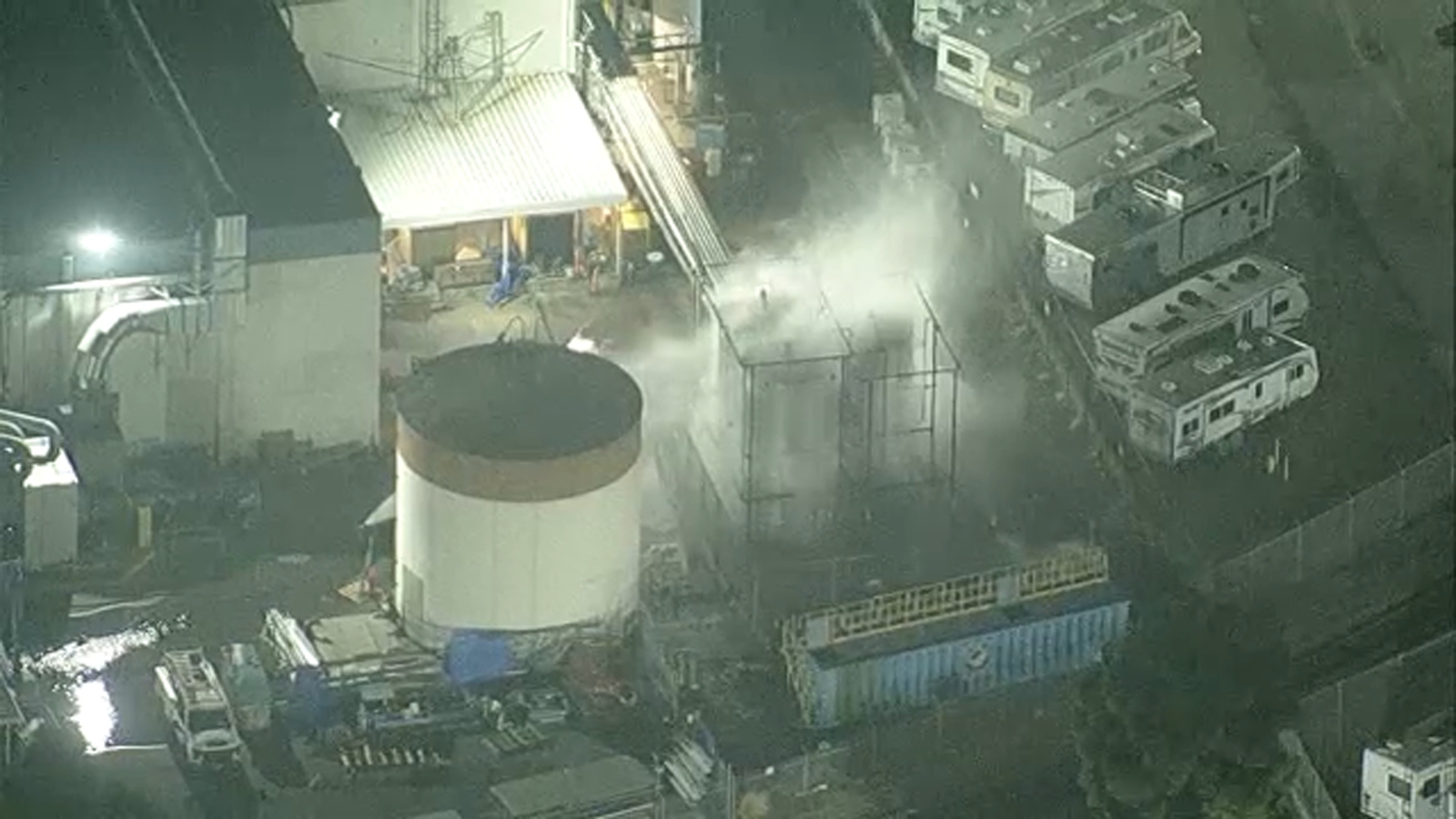
GARDEN GROVE, California — A high-stakes emergency operation is currently underway in Orange County as officials scramble to contain a leaking chemical storage tank at an aerospace manufacturing facility. The situation, which has placed thousands of local residents under immediate evacuation orders, carries the dual threat of a significant toxic chemical spill or a catastrophic explosion.
Emergency responders from the Garden Grove Fire Department and the Orange County Fire Authority (OCFA) have established a wide perimeter around the GKN Aerospace plant, where the incident originated. As of Saturday afternoon, the stability of the tank remains uncertain, prompting authorities to prioritize the immediate removal of civilians from the potential blast and inhalation zones.
The escalating crisis has turned a quiet industrial corridor into a staging ground for hazardous materials (hazmat) teams. While the specific chemical composition of the leaking substance is still being analyzed by specialists on-site, the volatility of the tank has forced a rapid, large-scale response to prevent a mass-casualty event.
The Situation at GKN Aerospace
The incident is centered at the GKN Aerospace facility located in Garden Grove. Aerospace manufacturing often involves the storage of highly reactive or pressurized chemicals used in specialized coating, cleaning, or component production processes. In this instance, a storage tank has begun leaking, and officials warn that the structural integrity of the vessel may be compromised.
The primary concern for incident commanders is the unpredictable nature of the leak. If the chemical involved is highly flammable or reactive to air, the risk of a thermal event—an explosion—increases exponentially. Conversely, if the leak continues unabated, a toxic plume could spread across residential neighborhoods, leading to widespread respiratory issues or long-term environmental contamination.
“The priority is life safety,” one official noted during a preliminary briefing near the exclusion zone. “We are managing two distinct but equally dangerous possibilities: a sudden release of energy through an explosion, or a steady release of hazardous vapors.”
Emergency Response and Containment Efforts
Hazmat specialists are currently working in close proximity to the facility, utilizing specialized protective gear to monitor pressure levels and chemical concentrations. The response involves a coordinated effort between municipal fire services and county-level authorities to manage the logistics of the exclusion zone and the technical aspects of the leak.
Containment strategies are being deployed to mitigate the leak, though the volatile environment makes direct intervention extremely dangerous. Responders are currently evaluating whether to attempt a mechanical repair of the tank or to focus entirely on cooling the vessel to prevent a rise in internal pressure that could trigger a rupture.
The Orange County Fire Authority has been instrumental in coordinating the multi-agency response, providing the heavy equipment and technical expertise required for large-scale industrial hazardous material incidents. Law enforcement has also been deployed to manage traffic flow and ensure that the evacuation routes remain clear for both residents and incoming emergency vehicles.
Evacuation Zones and Public Safety Measures
The evacuation orders issued by the Garden Grove authorities are effective immediately. Residents within the designated hazard zone are being instructed to leave their homes via established routes and to avoid any area near the GKN Aerospace facility until an official “all clear” is issued.
For those who may be situated just outside the primary evacuation zone but remain in the vicinity, officials have issued a “shelter-in-place” advisory. This includes the following safety protocols:
- Seal your home: Close all windows and doors immediately.
- Manage ventilation: Turn off air conditioning, heating, and any ventilation systems that draw air from the outside.
- Stay informed: Monitor local emergency alert systems and official social media channels for updates on plume direction and evacuation boundary changes.
- Avoid travel: Keep roads clear for emergency responders and prevent unnecessary congestion that could impede evacuation efforts.
Local shelters are being organized to accommodate the thousands of residents displaced by the order. Emergency management officials are working to ensure that vulnerable populations, including the elderly and those with limited mobility, are prioritized during the relocation process.
Understanding the Risks of Chemical Tank Instability
To understand why this situation is being treated with such extreme caution, it is necessary to look at the mechanics of industrial chemical storage. Large-scale tanks are designed to maintain specific internal pressures and temperatures. When a leak occurs, the equilibrium is lost.
The Risk of Explosion: If the leaking substance is a compressed gas or a volatile liquid, the drop in pressure can cause rapid changes in temperature. If the tank’s structural integrity is weakened by corrosion or the leak itself, the vessel may undergo a “BLEVE” (Boiling Liquid Expanding Vapor Explosion). This is a violent event where the sudden expansion of vapor causes the tank to rupture catastrophically.
The Risk of Toxic Exposure: If the substance is a toxic liquid or gas, the primary threat is inhalation. Even in low concentrations, certain industrial chemicals can cause immediate irritation to the eyes, skin, and respiratory tract. In higher concentrations, they can lead to systemic toxicity, affecting the nervous system or internal organs.
The proximity of the GKN Aerospace plant to residential areas in Garden Grove significantly amplifies these risks, as there is very little “buffer zone” to allow for the natural dissipation of chemicals before they reach populated areas.
Key Takeaways for Residents
| Category | Current Status / Action Required |
|---|---|
| Evacuation Status | Mandatory for residents in the immediate Garden Grove vicinity of GKN Aerospace. |
| Primary Threat | Potential chemical explosion or toxic vapor cloud release. |
| Safety Protocol | Evacuate if ordered; Shelter-in-place if outside the zone but in the vicinity. |
| Affected Facility | GKN Aerospace, Garden Grove, Orange County. |
Frequently Asked Questions
What should I do if I smell something unusual?
If you are outside the evacuation zone but notice an unusual chemical odor, move upwind immediately. Do not investigate the source. Seek shelter and contact local emergency services if you experience physical symptoms such as dizziness, nausea, or difficulty breathing.
How will I know when it is safe to return?
Do not return to the evacuation zone until local authorities, such as the City of Garden Grove or the Orange County Fire Authority, have issued an official “all clear.” Authorities will use emergency alerts, local news, and official social media to communicate this.
Is my property safe from chemical contamination?
The extent of contamination depends on the specific chemical involved and the wind direction. Emergency responders are currently using air monitoring equipment to track the spread of any vapors. If contamination is detected, officials will provide specific guidance on cleaning and safety.
Next Update: Authorities are expected to provide a formal briefing once the initial assessment of the tank’s pressure and the chemical identity is completed. We will continue to monitor the situation as it develops.
Please share this article with anyone you know in the Orange County area to ensure they are aware of the current evacuation orders. Leave your questions or updates in the comments below.
Keep reading