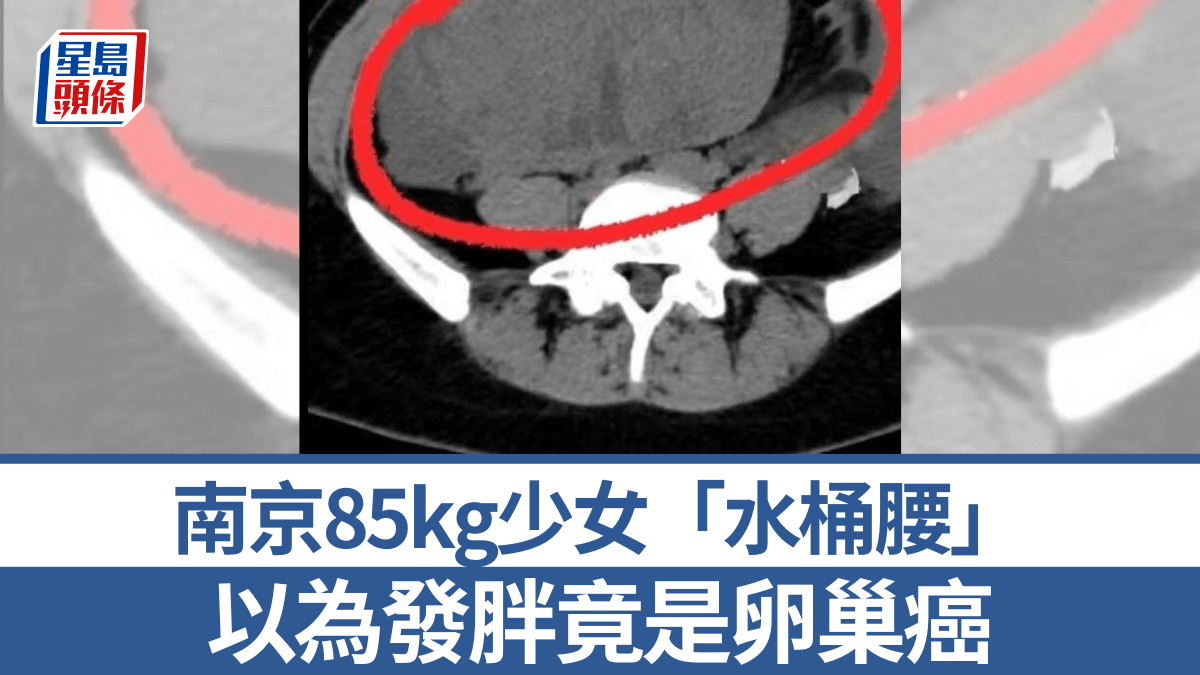
For many, a gradual increase in waistline or a feeling of persistent bloating is dismissed as a consequence of diet, a sedentary lifestyle, or simple weight gain. However, a recent and sobering case from Nanjing, China, serves as a critical reminder that the body’s signals are not always what they seem. A young woman, weighing 85kg, believed her expanding midsection—described as a “bucket waist”—was merely the result of obesity. It was only after seeking medical intervention that doctors revealed a far more sinister cause: ovarian cancer.
This case highlights a dangerous diagnostic gap in women’s health. Because the symptoms of ovarian cancer are often vague and overlap with common gastrointestinal issues or weight fluctuations, the disease is frequently detected only in its advanced stages. For young women, the shock is often greater, as the condition is more commonly associated with post-menopausal populations. When abdominal distension is mistaken for fat, the window for early, more effective intervention can narrow dangerously.
As a physician and health journalist, I have seen how “silent” symptoms can lead to delayed diagnoses. The tragedy of the “bucket waist” phenomenon is that it masks a medical emergency behind a social stigma—the assumption that a larger waistline is a failure of lifestyle rather than a symptom of pathology. Understanding the distinction between healthy weight gain and pathological abdominal swelling is a life-saving skill for every woman.
Understanding Ascites: Why “Weight Gain” Can Be a Warning Sign
The “bucket waist” described in the Nanjing case is often a clinical manifestation of ascites. Ascites is the abnormal accumulation of fluid within the peritoneal cavity—the space between the lining of the abdomen and the abdominal organs. In the context of ovarian cancer, this fluid buildup occurs as the tumor disrupts the lymphatic system or leaks fluid into the abdominal cavity, leading to a rapid increase in abdominal girth that can mimic obesity or pregnancy.
Unlike typical weight gain, which occurs as an increase in adipose tissue (fat) distributed across various parts of the body, ascites typically presents as a localized, often tense swelling of the abdomen. According to the Cleveland Clinic, ovarian cancer is often difficult to detect because symptoms may not develop until the cancer has already spread, often manifesting as abdominal bloating or a feeling of fullness.
When a patient experiences “rapid” weight gain specifically in the abdominal area without a corresponding change in caloric intake or a similar increase in weight in the arms or legs, it should be treated as a red flag. In the case of the young woman in Nanjing, the assumption that her 85kg weight was the primary cause of her appearance delayed the discovery of a tumor that was actively displacing her internal organs and filling her abdomen with fluid.
Ovarian Cancer in Young Women: A Different Profile
There is a common misconception that ovarian cancer is exclusively a disease of older women. While it is true that the most common type—epithelial ovarian cancer—predominantly affects women in their 50s and 60s, younger women are susceptible to different types of ovarian tumors, such as germ cell tumors. These tumors arise from the cells that produce eggs and can occur at any age, including childhood and adolescence.

The diagnostic challenge for young women is twofold. First, there is a statistical bias; clinicians may not immediately suspect malignancy in a patient in her teens or twenties. Second, there is a psychological bias; young women may be more likely to attribute abdominal changes to hormonal fluctuations, PCOS (Polycystic Ovary Syndrome), or weight gain. This combination can lead to a perilous delay in imaging and biopsy.
Genetic predispositions also play a significant role. Mutations in the BRCA1 and BRCA2 genes significantly increase the risk of both breast and ovarian cancers. As noted by the Mayo Clinic, these genetic factors can shift the onset of cancer to a much younger age, making family history a critical component of the clinical interview.
Key Takeaways for Early Detection
- Localized Bloating: Persistent abdominal swelling that does not fluctuate with your menstrual cycle or diet.
- Early Satiety: Feeling full exceptionally quickly after eating only a small amount of food.
- Urinary Changes: An increased urgency to urinate or frequency, caused by a pelvic mass pressing on the bladder.
- Rapid Girth Increase: A sudden increase in waist size that is disproportionate to weight gain in other areas of the body.
- Pelvic Pain: Persistent discomfort in the pelvic region or lower back.
Recognizing the “Silent” Red Flags
Ovarian cancer is frequently termed the “silent killer” because its early signs are subtle and easily overlooked. The Nanjing case demonstrates how a visible symptom—a large waist—can still be “silent” if it is misinterpreted. To move toward earlier detection, women must be educated on the specific nature of these symptoms.
One of the most overlooked signs is the feeling of “fullness.” While indigestion or bloating from food sensitivities is common, ovarian cancer-induced bloating is typically persistent. It does not go away after a few days and may actually worsen over time. This is often accompanied by a feeling of pelvic pressure, as the growing tumor or the presence of ascites crowds the pelvic cavity.
the intersection of weight and health can create a “diagnostic shadow.” When a patient is overweight, doctors may inadvertently focus on metabolic health (such as diabetes or hypertension) and overlook gynecological symptoms. It is imperative that patients advocate for themselves by specifying that their abdominal changes are new, rapid, or accompanied by other systemic symptoms like fatigue or unexplained weight loss in the extremities despite the abdominal growth.
The Path to Diagnosis and Recovery
Once a suspicion of ovarian cancer is raised, the diagnostic process must be swift and comprehensive. The first step is typically a pelvic examination and an ultrasound, which can visualize the presence of a mass on the ovaries or the presence of free fluid (ascites) in the abdomen. A CT scan or MRI may then be used to determine the extent of the disease and whether it has spread to other organs.

Blood tests, such as the CA-125 marker, are often used, although they are not definitive on their own, as other non-cancerous conditions can also raise CA-125 levels. The gold standard for diagnosis remains a biopsy or surgical removal of the tumor for histological analysis.
Treatment typically involves a combination of surgery to remove the tumor and chemotherapy to eliminate any remaining cancer cells. For younger women, the focus is often on “fertility-sparing surgery” if the cancer is limited to one ovary, allowing the patient the possibility of future pregnancy. The prognosis for ovarian cancer depends heavily on the stage at diagnosis; when caught early, the survival rates are significantly higher, which is why the Nanjing case serves as such a vital warning against ignoring “atypical” weight gain.
For those seeking further support or information on risk factors and advocacy, organizations like the National Ovarian Cancer Coalition provide resources for survivors and those navigating a new diagnosis, emphasizing the importance of genetic testing and community support.
The next critical step for those experiencing unexplained abdominal changes is to schedule a comprehensive pelvic ultrasound and a consultation with a gynecologic oncologist. Early detection remains the most powerful tool in transforming a life-threatening diagnosis into a manageable and treatable condition.
Do you or a loved one have concerns about persistent bloating or unexplained abdominal changes? Share your experiences or questions in the comments below to help raise awareness for early detection.