Washington, D.C. — In a high-stakes effort to prevent a total regional collapse, Lebanese and Israeli envoys meet at the U.S. State Department this Tuesday, April 14, 2026, as Israel continues to intensify its military campaign against the Iran-backed militant group Hezbollah.
The working-level peace talks, held amid a backdrop of escalating violence and a precarious ceasefire between the United States and Iran, represent a critical attempt to decouple the Israel-Lebanon conflict from the broader geopolitical struggle in West Asia. The meeting comes at a moment of extreme volatility, following what Lebanese authorities describe as the deadliest day of the current conflict.
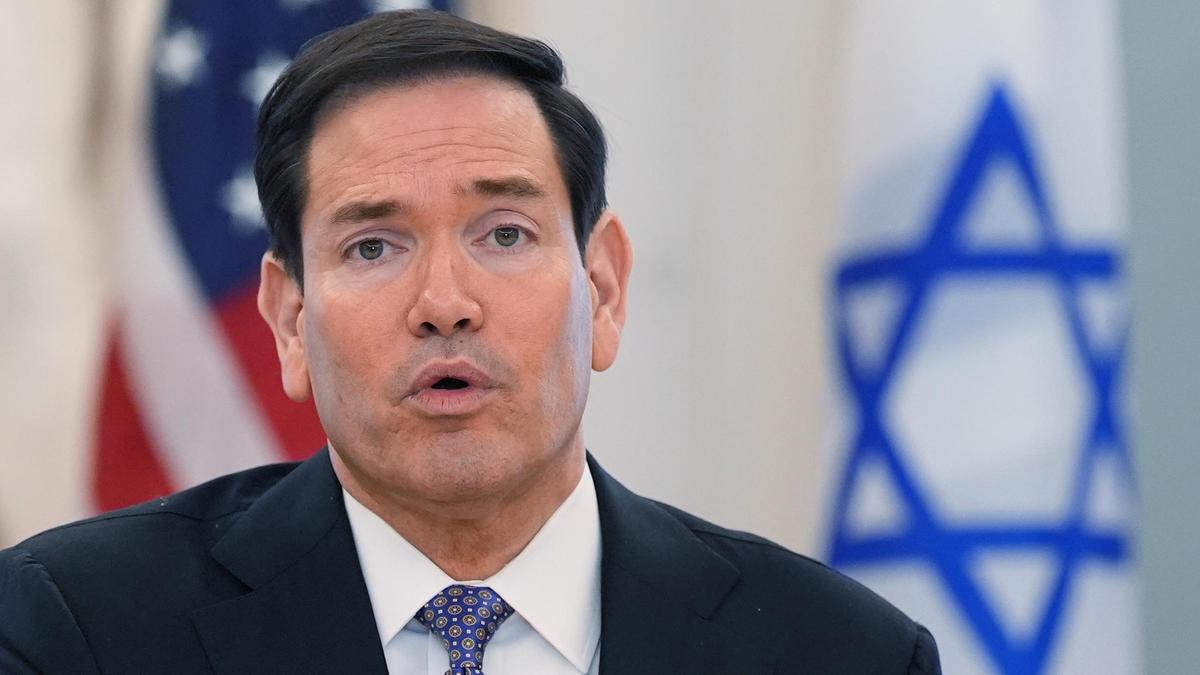
Israeli Ambassador to the U.S. Yechiel Leiter and his Lebanese counterpart, Nada Hamadeh Moawad, convened at the State Department to discuss a potential framework for peace. U.S. Secretary of State Marco Rubio joined the proceedings, framing the discussions not as a quick fix, but as the beginning of a long-term diplomatic effort. Rubio emphasized that the negotiations are a “process, not an event,” adding, “The hope today is that we can outline the framework upon which a permanent and lasting peace can be developed,” according to TIME.
A Fragile Ceasefire Strained by Escalation
The diplomatic efforts in Washington are occurring simultaneously with a fragile, tentative ceasefire between the United States and Iran. However, this truce is under severe pressure due to Israel’s dramatic escalation of attacks in Lebanon. Whereas the U.S. And Iran have attempted to stabilize their direct relationship, the parallel war between Israel and Hezbollah has become a primary complicating factor.
The tension reached a breaking point on April 8, 2026, when a 10-minute attack resulted in the deaths of over 300 people, according to Lebanese authorities. This event marked the deadliest single day in the Israel-Lebanon conflict, which reignited following initial U.S.-Israeli strikes against Iran on Feb. 28, as reported by TIME.
There is a fundamental disagreement regarding the scope of the current ceasefire. Iran has argued that the ongoing Israeli assaults in Lebanon constitute a “grave violation” of the temporary truce. This position is supported by Pakistan, the broker of the deal, which originally indicated that Lebanon was factored into the agreement. Conversely, both the United States and Israel maintain that Lebanon was never part of the ceasefire terms.
The Islamabad Stalemate and the Nuclear Hurdle
The fragility of the regional peace is further highlighted by the recent failure of high-level negotiations in Pakistan. Over a weekend preceding the current talks, U.S. And Iranian officials engaged in a private 21-hour negotiation session in Islamabad, which ultimately ended without an agreement.
Vice President J.D. Vance, who led the U.S. Delegation, identified the dispute over nuclear weaponry as the core obstacle to a lasting deal. Vance stated to reporters that the U.S. Requires “an affirmative commitment that they will not seek a nuclear weapon, and they will not seek the tools that would enable them to quickly achieve a nuclear weapon,” as detailed by TIME.
This diplomatic deadlock has left international observers concerned. While Canadian Prime Minister Carney has lauded the tentative U.S.-Iran ceasefire, questions remain regarding the actual commitment of both superpowers to the deal, according to CTV News.
Hezbollah and the History of Conflict
To understand the current volatility, We see necessary to examine the role of Hezbollah, a Shia Muslim political and military group in Lebanon. Backed strongly by Iran, Hezbollah opposes Israel’s right to exist and is designated as a terrorist organization by the U.S., the UK, and Israel, according to the BBC.
The group emerged from Shia militias formed to resist the 1982 Israeli invasion of southern Lebanon during the Lebanese civil war (1975-1990). The current cycle of violence escalated significantly in October 2023, when Hezbollah began firing rockets into Israel in solidarity with Hamas during the Gaza war.
By September 2024, Israel launched a wide-ranging campaign of air strikes and a ground invasion of southern Lebanon, citing the necessitate to allow tens of thousands of displaced Israeli civilians to return to their homes. This offensive left Hezbollah severely weakened and resulted in approximately 4,000 deaths in Lebanon, including many civilians, according to BBC reports. Between October 2023 and November 2024, Israel reported the deaths of 75 soldiers and 45 civilians.
A previous ceasefire agreement, announced on November 27, 2024, required both Hezbollah and Israeli forces to withdraw from southern Lebanon. However, the deadlines for this withdrawal—initially January 26 and later extended to February 18—did not result in a permanent cessation of hostilities, leading to the current state of conflict.
Key Timeline of Recent Escalations
| Date | Event | Impact |
|---|---|---|
| February 28, 2026 | U.S.-Israeli strikes against Iran | Reignited the Israel-Lebanon conflict |
| April 8, 2026 | 10-minute attack in Lebanon | Over 300 people killed; deadliest day of conflict |
| April 9, 2026 | U.S.-Iran tentative ceasefire announced | Fragile truce established; Lebanon status disputed |
| April 14, 2026 | State Department Meeting | Working-level talks between Leiter and Moawad |
What This Means for Regional Stability
The current diplomatic effort suggests that the U.S. Is attempting a “two-track” strategy: managing the direct tension with Iran while simultaneously trying to resolve the proxy war in Lebanon. However, the interdependence of these conflicts is evident. Iran views the attacks on Hezbollah as a violation of the broader peace process, while Israel views Hezbollah as an extension of Iranian aggression that must be neutralized regardless of the U.S.-Iran status.
For the people of Lebanon, the stakes are humanitarian. With over a million people displaced since October 2023, the failure to reach a “permanent and lasting peace” means continued instability and loss of life.
As the working-level talks continue in Washington, the world watches to see if a framework can be established that satisfies Israel’s security concerns and Lebanon’s sovereignty, without triggering a full-scale war involving Iran.
The next confirmed checkpoint in this diplomatic process is the continued “working-level” dialogue at the State Department, though no specific date for a follow-up summit has been announced.
World Today Journal encourages readers to share this report and join the conversation in the comments section below.
Keep reading