
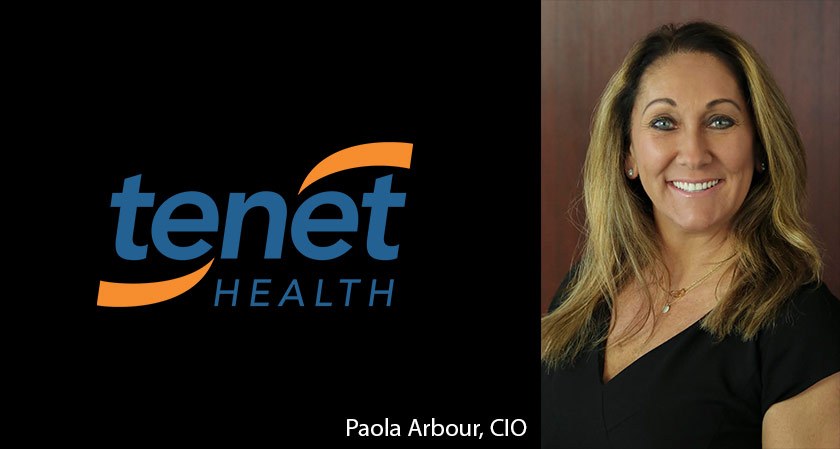
Tenet Healthcare has announced that its Executive Vice President and Chief Information Officer, Paola Arbour, will retire from her leadership position at the end of the year. The move marks a significant transition for the healthcare giant as it navigates the increasingly complex intersection of patient care and digital infrastructure.
In a strategic move to ensure organizational stability, Arbour will not depart the company immediately upon her retirement from the EVP and CIO roles. Instead, she is slated to transition into a part-time capacity, where she will continue to provide essential transition and support services through early 2028 according to industry reports.
For a healthcare system of Tenet’s scale, the role of the CIO is pivotal. As the industry shifts toward more integrated data systems and AI-driven diagnostics, the continuity of leadership in information technology is critical to maintaining patient safety and operational efficiency. The decision to retain Arbour in a supporting role suggests a commitment to a seamless handover of these complex systems.
Managing the Leadership Transition at Tenet Healthcare
The announcement that the Tenet Healthcare CIO retirement is set for the end of 2026 allows the company, traded on the NYSE as THC, to begin a structured succession process. In the high-stakes environment of medical informatics, an abrupt change in leadership can create vulnerabilities in system updates, cybersecurity posture, and the rollout of new clinical technologies.
By extending Arbour’s involvement through early 2028, Tenet Healthcare is employing a “phased retirement” strategy. This approach is increasingly common in the C-suite of major health systems, where the institutional knowledge held by a departing executive is deemed too valuable to lose overnight. Arbour’s transition to a part-time role is specifically designed to provide the necessary support services to her successor and the broader IT organization as noted in recent corporate updates.
The Critical Nature of Healthcare IT Leadership
From my perspective as a physician and journalist, the role of a CIO in a modern health system is no longer just about managing servers and software; it is about the delivery of care. The Chief Information Officer oversees the Electronic Health Records (EHR), telehealth platforms, and the data interoperability that allows a patient’s medical history to follow them across different facilities.
When a leader like Paola Arbour steps down, the organization must ensure that ongoing digital transformations—such as the integration of predictive analytics or the hardening of networks against ransomware—do not lose momentum. The stability of these systems directly impacts clinical workflows and, by extension, patient outcomes.
Key Takeaways of the Announcement
- Retirement Date: Paola Arbour will retire as EVP and CIO by the end of 2026.
- Transition Period: She will move into a part-time role to assist the company.
- Duration of Support: Arbour’s support services are expected to continue through early 2028.
- Organizational Impact: The phased exit is intended to maintain continuity in Tenet Healthcare’s digital and IT operations.
What This Means for Tenet Healthcare (NYSE: THC)
For investors and stakeholders, the clarity of the timeline—retiring at year-end with a support window extending into 2028—is generally viewed as a sign of mature corporate governance. By announcing the retirement well in advance and securing a transition agreement, Tenet minimizes the risk of leadership vacuums that can lead to operational friction.
The focus for the remainder of the year will likely be on identifying a successor who can build upon the digital foundation established during Arbour’s tenure. The healthcare sector is currently facing an acute shortage of leaders who possess both the technical expertise of a CIO and the clinical understanding required to operate within a complex hospital environment.
As we look toward the end of the year, the primary checkpoint will be the official naming of the new EVP and CIO, which will signal the start of the formal handover process. We will continue to monitor official filings from Tenet Healthcare for further updates regarding their executive leadership team.
Do you think phased retirements are the best way to handle C-suite transitions in healthcare? Share your thoughts in the comments below or share this article with your professional network.
Worth a look