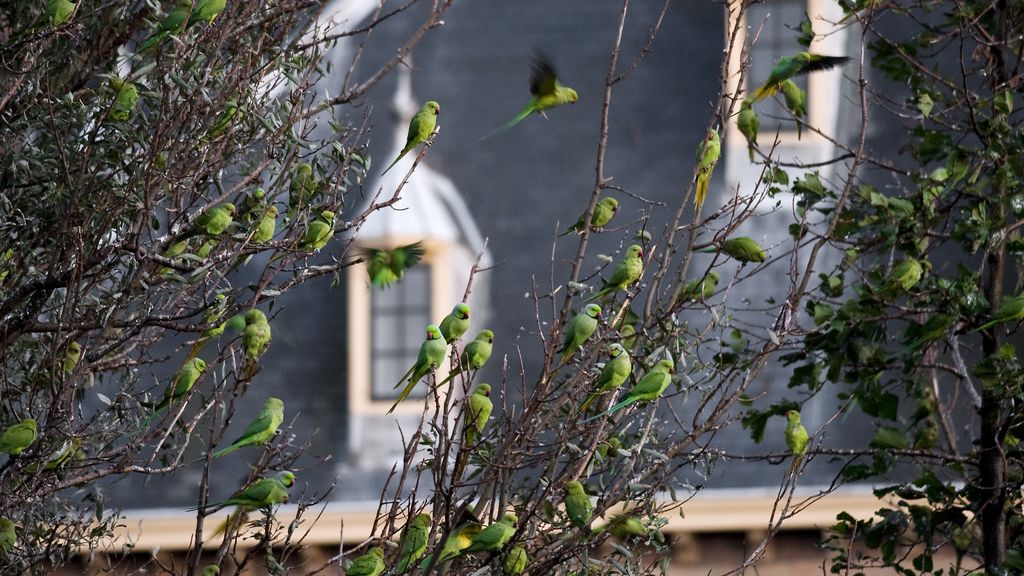
The ongoing, multi-billion euro renovation of the Binnenhof, the Dutch parliament complex in The Hague, is facing an unusual challenge: damage caused by a large population of Indian rose-ringed parakeets. The birds, known for their vibrant green plumage and distinctive calls, are reportedly gnawing on the building’s facades and, critically, on electrical cables, creating a potential safety hazard. The situation has prompted authorities to deploy a falconer to manage the bird population, marking a novel approach to preserving a historic landmark.
The Binnenhof, a national monument and the heart of Dutch politics, has been under extensive renovation since 2002, with completion currently projected for the summer of 2031, at a cost of approximately €2.7 billion. As reported by NOS Nieuws, the project has been plagued by delays, and this latest issue adds another layer of complexity to the already ambitious undertaking. The damage inflicted by the parakeets, while perhaps seemingly minor, poses a genuine risk to the safety of workers and the integrity of the electrical systems supporting the construction.
Parakeet Damage and Safety Concerns
According to reports from Omroep West and NOS Nieuws, the parakeets are particularly attracted to the wooden elements of the building, including painted window frames, sealant, wooden roof edges, and roofing materials. However, the most pressing concern is the damage they are causing to electrical cables connected to a crane on the Hofplaats. The birds’ gnawing poses a risk of short circuits and potential power outages, necessitating immediate action.
The Rijksvastgoedbedrijf (Government Real Estate Agency) has deemed the situation a safety risk and has contracted a falconer to address the issue. The falconer will be deploying a trained falcon to patrol the area around the Binnenhof daily until March 11th, aiming to scare away the parakeets. The agency has emphasized that this method is intended to be a humane way to mitigate the nuisance. The extent of the damage is still being assessed, with a spokesperson for the Rijksvastgoedbedrijf stating that it is difficult to determine the total cost of repairs until a full inspection is completed. However, they confirmed that significant restoration work will be required.
The Rise of the Rose-Ringed Parakeet in the Netherlands
The presence of a substantial population of Indian rose-ringed parakeets around the Binnenhof – estimated at around 600 birds – is not a new phenomenon. These birds, originally native to Africa and Asia, have established a growing presence in the Netherlands, particularly in urban areas. Their adaptability and ability to thrive in diverse environments have contributed to their increasing numbers. They are most active during twilight hours, when their loud calls can be particularly disruptive.
The species’ introduction to Europe is a complex story, often linked to escaped pets. While the exact origins of the Dutch population are debated, it’s believed that multiple releases over several decades have led to the self-sustaining colonies seen today. The birds are now a common sight in parks and gardens across the country, and while generally considered a non-native species, they have become a part of the urban landscape. Their impact on the local ecosystem is a subject of ongoing study, with concerns raised about their potential effects on native bird populations and plant life.
A Diervriendelijke (Animal-Friendly) Approach
The Rijksvastgoedbedrijf’s decision to employ a falconer reflects a commitment to finding a solution that minimizes harm to the birds. This approach, described as “diervriendelijk” (animal-friendly) by the agency, avoids more drastic measures such as culling or trapping. The use of a falcon is based on the natural predator-prey relationship, aiming to discourage the parakeets from frequenting the area without causing them physical harm. The strategy was developed in consultation with Vogelbescherming Nederland (Bird Protection Netherlands) and the Omgevingsdienst Haaglanden (Haaglanden Environmental Agency).
The effectiveness of this method remains to be seen, but it represents a conscious effort to balance the necessitate to protect a historic building with the welfare of the local wildlife. The falcon’s presence is intended to disrupt the parakeets’ routines and encourage them to seek alternative feeding and roosting sites. The daily flights will continue until March 11th, after which the Rijksvastgoedbedrijf will assess the situation and determine if further measures are necessary.
Impact on the Binnenhof Renovation Timeline
The parakeet-related damage adds another challenge to the already complex Binnenhof renovation project. The project, which began in 2002, aims to modernize the parliamentary complex while preserving its historical significance. The renovation involves extensive structural repairs, upgrades to electrical and mechanical systems, and improvements to accessibility. The project has faced numerous setbacks, including delays caused by the discovery of unexpected asbestos and the complexities of working within a historic building.
The current estimated completion date is summer 2031, with a total cost of €2.7 billion. The additional repair work required due to the parakeet damage is likely to add to both the timeline and the budget, although the exact impact remains unclear. The Rijksvastgoedbedrijf is working to minimize disruptions and ensure that the project stays on track as much as possible. The ongoing renovation is a significant undertaking, and the parakeet issue highlights the unexpected challenges that can arise when working on historic structures in urban environments.
The situation at the Binnenhof serves as a reminder of the increasing interactions between wildlife and human infrastructure, particularly in urban areas. As cities expand and wildlife populations adapt, finding sustainable solutions that balance the needs of both humans and animals will become increasingly important. The use of a falcon to address the parakeet problem represents a creative and humane approach to a unique challenge, and its success will be closely watched by those involved in similar projects around the world.
The next update on the situation is expected following the conclusion of the falconer’s deployment on March 11th, when the Rijksvastgoedbedrijf will assess the effectiveness of the intervention and determine any further steps needed to protect the Binnenhof. We will continue to follow this story and provide updates as they become available. Share your thoughts on this unusual situation in the comments below.