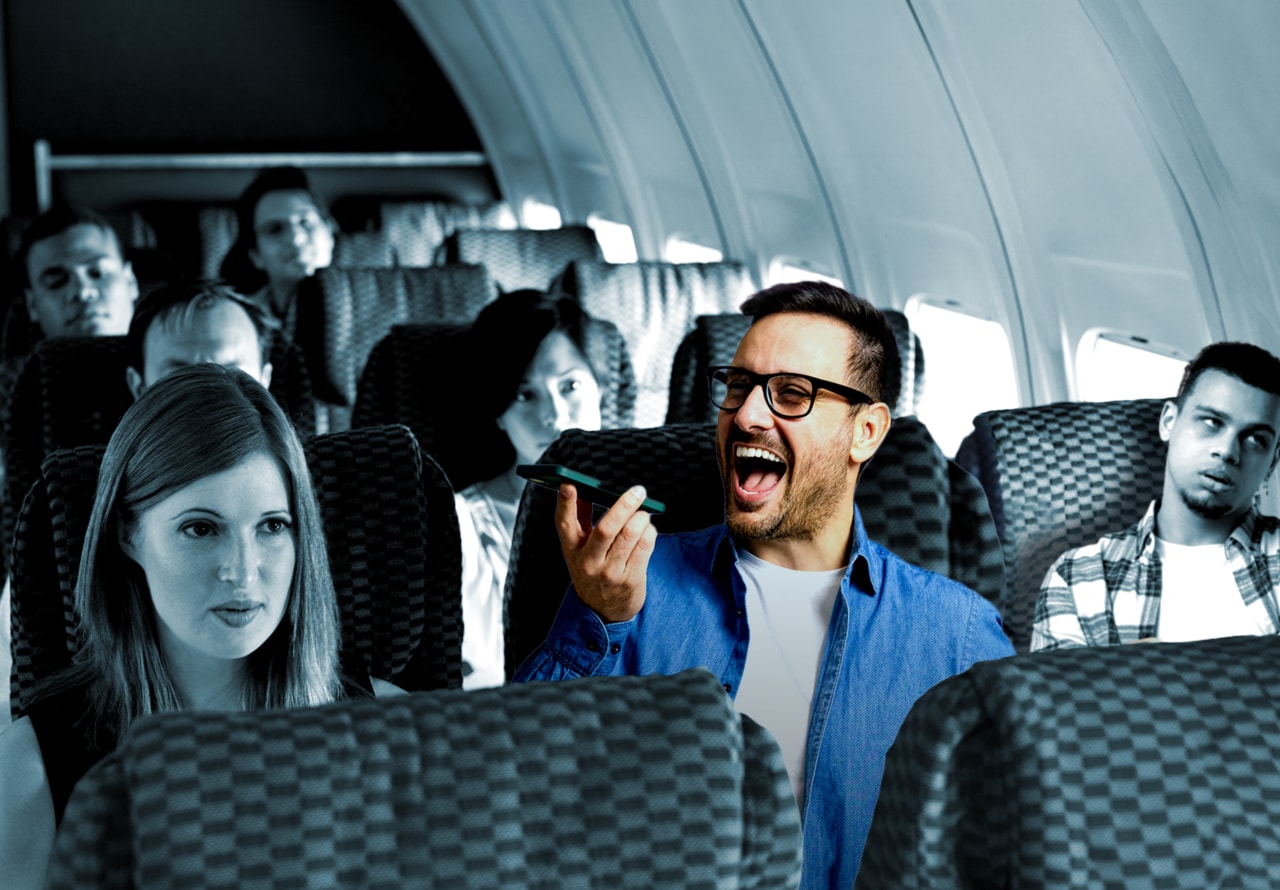
Air travel has long been a study in patience, but as cabins become more crowded and tensions rise, the definition of a “disruptive passenger” is being tested. From loud arguments and hygiene issues to the more eccentric—such as a passenger spraying perfume on a fellow traveler—flyers are increasingly wondering where the line is drawn between a mere nuisance and a compensable offense.
For most passengers, the goal isn’t necessarily a legal battle, but rather a gesture of goodwill from the airline. However, securing airline compensation for disruptive passengers is rarely as simple as filing a complaint. While airlines have a “Contract of Carriage” that governs the flight, these documents are notoriously skewed in favor of the carrier, often leaving passengers to navigate a gray area of customer service discretion rather than codified rights.
The reality is that airlines are not legally mandated to pay passengers for the “emotional distress” of a rude seatmate. Unlike flight delays or cancellations, which are governed by strict regulations such as EU Regulation 261/2004, passenger conduct falls under a different set of rules. Compensation in these cases is typically an act of “customer recovery” rather than a legal obligation.
Whether you are dealing with a passenger who refuses to put away their seatback or someone causing a genuine safety hazard, understanding the hierarchy of disruption is key to knowing if you are likely to receive a travel voucher, miles, or a full refund.
The Hierarchy of Disruption: From Nuisance to Hazard
To determine if you are eligible for compensation, it is helpful to categorize the behavior of your fellow passengers. Airlines generally view disruptions on a spectrum, and your likelihood of receiving a gesture of goodwill increases as the behavior moves from “annoying” to “unsafe.”
The ‘Social Nuisance’ (Low Probability of Compensation)
This category includes passengers who are loud, have poor hygiene, or engage in minor irritations—such as the aforementioned perfume incident. In these cases, the airline’s primary responsibility is to attempt to resolve the situation. If a flight attendant is unable to move you to a different seat, the airline may offer a small amount of loyalty points or a modest discount code after the flight as a courtesy. However, these are not guaranteed and are often denied if the cabin is full.
The ‘Policy Violator’ (Moderate Probability of Compensation)
When a passenger violates specific airline policies—such as smoking in the lavatory, refusing to wear a seatbelt during takeoff, or aggressively ignoring crew instructions—the situation escalates. If the disruption is significant enough that it affects your ability to use the service you paid for (for example, if you are forced to move to a lower class of service to get away from a volatile passenger), you have a much stronger case for a partial refund or a significant travel voucher.
The ‘Safety Threat’ (High Probability of Compensation)
Behavior that triggers a “divert” or an emergency landing is the highest tier of disruption. If a passenger’s chaos results in the plane returning to the gate or landing at an unplanned airport, the airline is often more inclined to provide substantial compensation to all affected passengers to mitigate the massive PR fallout and operational cost. In these instances, the disruption is no longer just about one person’s experience. it is a systemic failure of the flight’s progress.
Navigating the Contract of Carriage
Every airline operates under a Contract of Carriage, a legal document that outlines the terms and conditions of transport. If you are seeking compensation, this is the first place you should appear, though it is often written in dense legal language. Most contracts include a “Conditions of Carriage” section regarding “unruly passengers.”
Crucially, these contracts typically grant the captain (the Pilot in Command) absolute authority. If the captain determines that a passenger’s behavior is a threat to the safety or comfort of others, they have the right to remove that person. However, the contract rarely specifies that the victims of the disruption are entitled to money. Instead, it focuses on the airline’s right to deny boarding or remove a passenger.
To move the needle toward compensation, you must frame your request not as a complaint about a person, but as a failure of the airline to provide a “safe and reasonable environment.” When a crew member fails to intervene in a situation that clearly violates the airline’s own safety or conduct policies, the airline becomes the party responsible for the diminished experience.
Step-by-Step: How to Request Compensation After a Bad Flight
If you have experienced a chaotic fellow passenger, the way you document and report the incident will determine whether you receive a “sorry” email or a tangible voucher. Follow these professional guidelines to increase your chances of a successful claim.
- Document in Real-Time: Note the seat number of the disruptive passenger and the names of the crew members you alerted. If the disruption is visual or audible, a brief, non-intrusive recording can serve as evidence, provided it does not violate airline safety rules or local privacy laws.
- Alert the Crew Immediately: You cannot claim compensation for a situation the airline was unaware of. Ensure the flight attendant logs the incident in the flight report. Ask the crew member, “Can you please make a note of this in the official flight log?”
- Avoid Social Media as the First Step: While “tagging the CEO” on X (formerly Twitter) can sometimes trigger a fast response, it often leads to a generic customer service representative handling your case. A formal, written complaint via the airline’s official “Contact Us” or “Claims” portal creates a paper trail that is harder to ignore.
- Be Specific About the Impact: Instead of saying “the flight was miserable,” explain the impact. For example: “The passenger in 12C was spraying aerosol perfume continuously for two hours, causing a respiratory reaction and making the seat unusable.”
- Ask for a Specific Remedy: Do not ask “what can you do for me?” Instead, ask for a specific amount of miles, a travel voucher of a certain value, or a partial refund of the fare. This gives the agent a baseline to negotiate from.
What Happens Next: The Airline’s Internal Process
Once a complaint is filed, it typically goes through a “Customer Relations” or “Guest Experience” queue. These agents have a set “discretionary budget”—a limit on how many miles or dollars they can award without managerial approval. This is why many passengers receive a standard 5,000-mile apology. To get more, you must demonstrate that the disruption was an outlier that exceeded the “normal” frustrations of air travel.
In extreme cases of passenger misconduct, the airline may involve their legal department, especially if the incident led to a physical altercation or a medical emergency. If the airline is facing a potential lawsuit from the disruptive passenger or a third party, they may be more cautious about admitting fault through compensation to other passengers.
Common Compensation Outcomes
| Level of Chaos | Likely Airline Action | Typical Compensation |
|---|---|---|
| Minor (Loud talking, perfume, reclining) | Apology email | Small mileage credit or 5-10% discount code |
| Moderate (Aggressive behavior, hygiene issues) | Seat reassignment during flight | Travel voucher ($50–$200) or significant miles |
| Severe (Threats, physical fights, diverted flight) | Passenger removal / Police intervention | Partial to full refund or high-value travel credit |
The Role of Regulatory Bodies
While the Department of Transportation (DOT) in the United States or the Civil Aviation Authority (CAA) in the UK handle many aspects of air travel, they rarely intervene in “passenger vs. Passenger” disputes. Their oversight is primarily focused on the relationship between the consumer and the carrier regarding ticketing, baggage, and delays.
However, if the airline’s response to a disruptive passenger is a violation of safety protocols, regulatory bodies may take interest. For instance, if a crew fails to follow the Federal Aviation Administration (FAA) guidelines for managing unruly passengers, the airline could face fines, though this rarely results in direct payments to the passengers on that specific flight.
For those seeking a higher level of recourse, the only path is typically through a small claims court or a civil lawsuit for negligence, arguing that the airline failed in its “duty of care” to provide a safe environment. These are costly and time-consuming paths that are rarely worth the effort for anything less than a serious injury or significant financial loss.
Final Thoughts for the Modern Traveler
The “chaos threshold” for compensation is high because airlines view the behavior of other passengers as an “act of God” or an external variable beyond their control. To the airline, they provided the seat and the transport; what the person in the next seat does is often seen as a social misfortune rather than a service failure.
the best way to handle a chaotic passenger is immediate communication with the crew and a calm, documented approach to the post-flight complaint. While you may not get a full refund for a passenger who sprays too much perfume, a firm, evidence-based request can often turn a miserable experience into a future free flight.
The next major checkpoint for aviation passenger rights will likely be the continued evolution of the DOT’s automatic refund mandates, which may eventually expand to cover more types of “service failures.” Until then, the “goodwill gesture” remains the primary currency for those dealing with unruly seatmates.
Have you ever received compensation for a disruptive fellow passenger? Share your experience in the comments below or let us recognize if you think airlines should be held more accountable for cabin conduct.
Related reading